
magical merlin
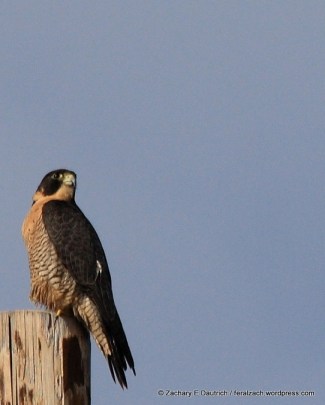
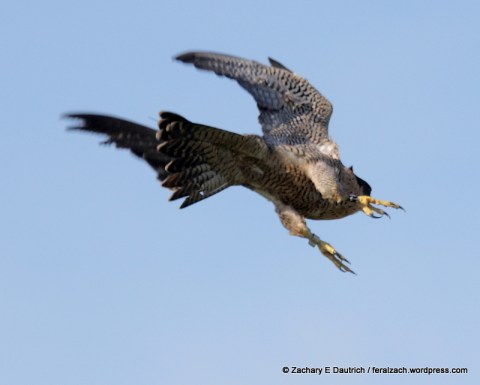
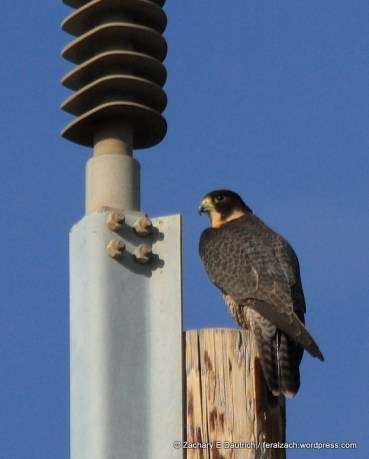
This fella was busy eating on a perch this morning, plagued by yellow jackets trying to get some of his breakfast – and finally chased off by a female kestrel after eating the last morsels. What a great sighting, with really good views and light!

merlin / Laguna de Santa Rosa CA

merline / Laguna de Santa Rosa CA
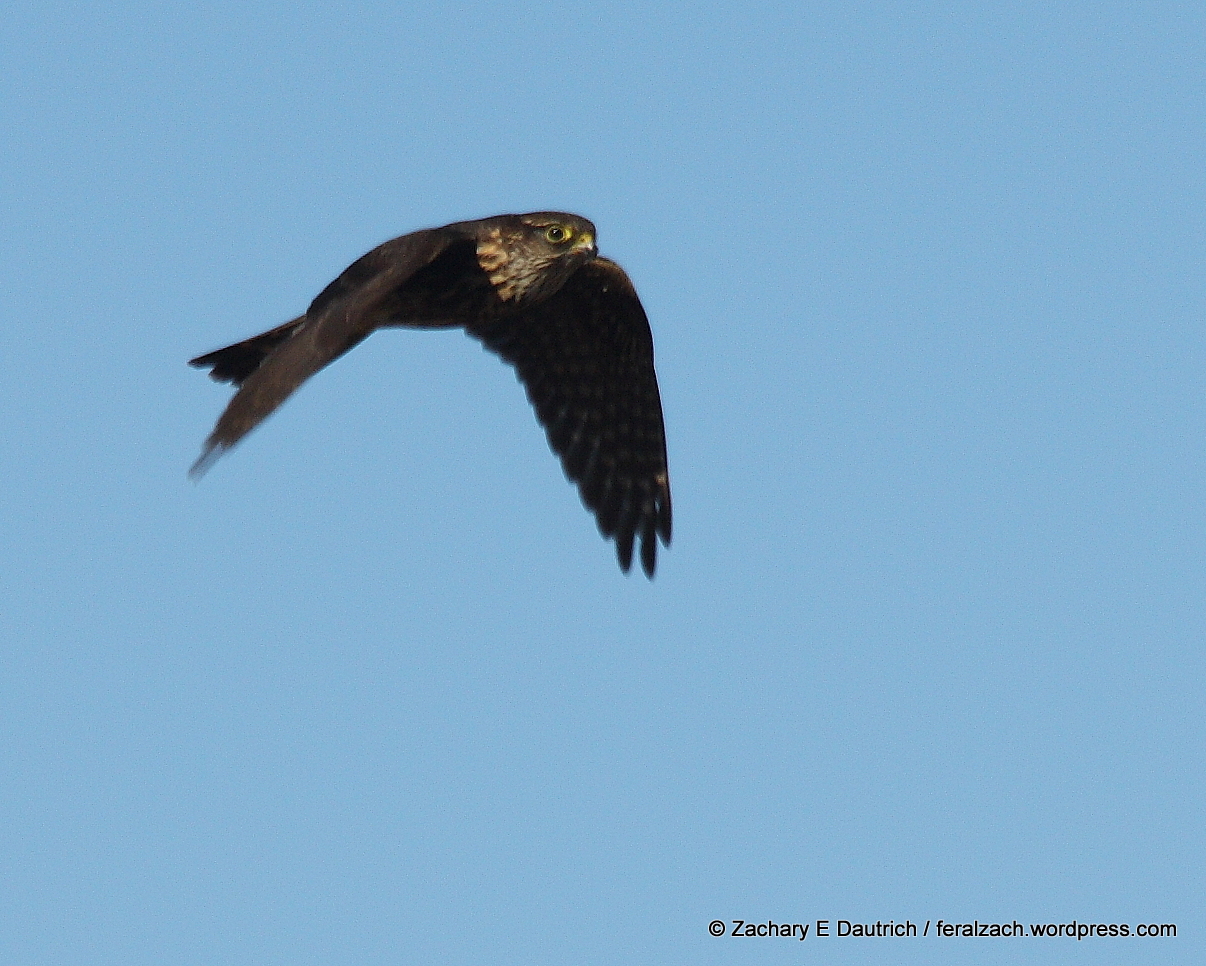
merlin / Laguna de Santa Rosa CA
I’m guessing that this a male based on the blue-grey feathers on its back and upper wing coverts, the bit of rufous coloring on its chest and also because it was quite a bit smaller than the female kestrel that chased it off its perch. Females are larger and tend to have more of a brown coloring on the upperparts and lack any rufous wash.
grand canyon expedition
Rafting down a river is a fun adventure unto itself … to do it in the bottom of the Grand Canyon is an experience not rivaled by much of anything. And to do it with my dad as part of the expedition (who proclaimed many years ago that he “is not a camper”) made it priceless.
We went down the river with an company called Western River Outfitters, and they were absolutely great. They provided rafts and (amazing) guides as well as gear and food. As phenomenal as it was, it was still a bit agonizing for me not to be able to explore everything that called to me on my own timetable – though I’d probably still be there if that was the case. A person could spend lifetimes exploring it – I guess I’ll have to return (I always seem to say that about places like this – my bucket list only seems to grow as I attempt to cross things off it).

grand indeed
Temperatures were “warm” – which is to be expected when you’re in the desert in August. We actually all wet our beds to keep cool! Meaning I carried a bed sheet to the river and soaked it in the cold water (approx 55 deg F) to sleep on it to stay cool (it was still above 90 deg F one night as we were going to sleep after dark). Despite the intense heat and lack of rainfall, the riparian area along the river provides habitat for a lot of wildlife, for whom this place is literally an oasis. I was constantly searching for sign of the ringtail (a relative of the raccoon), which evidently can be found along the banks – unfortunately I never spotted one or any conclusive sign (though there were a few scats that looked like they could have been from a ringtail’s rear).
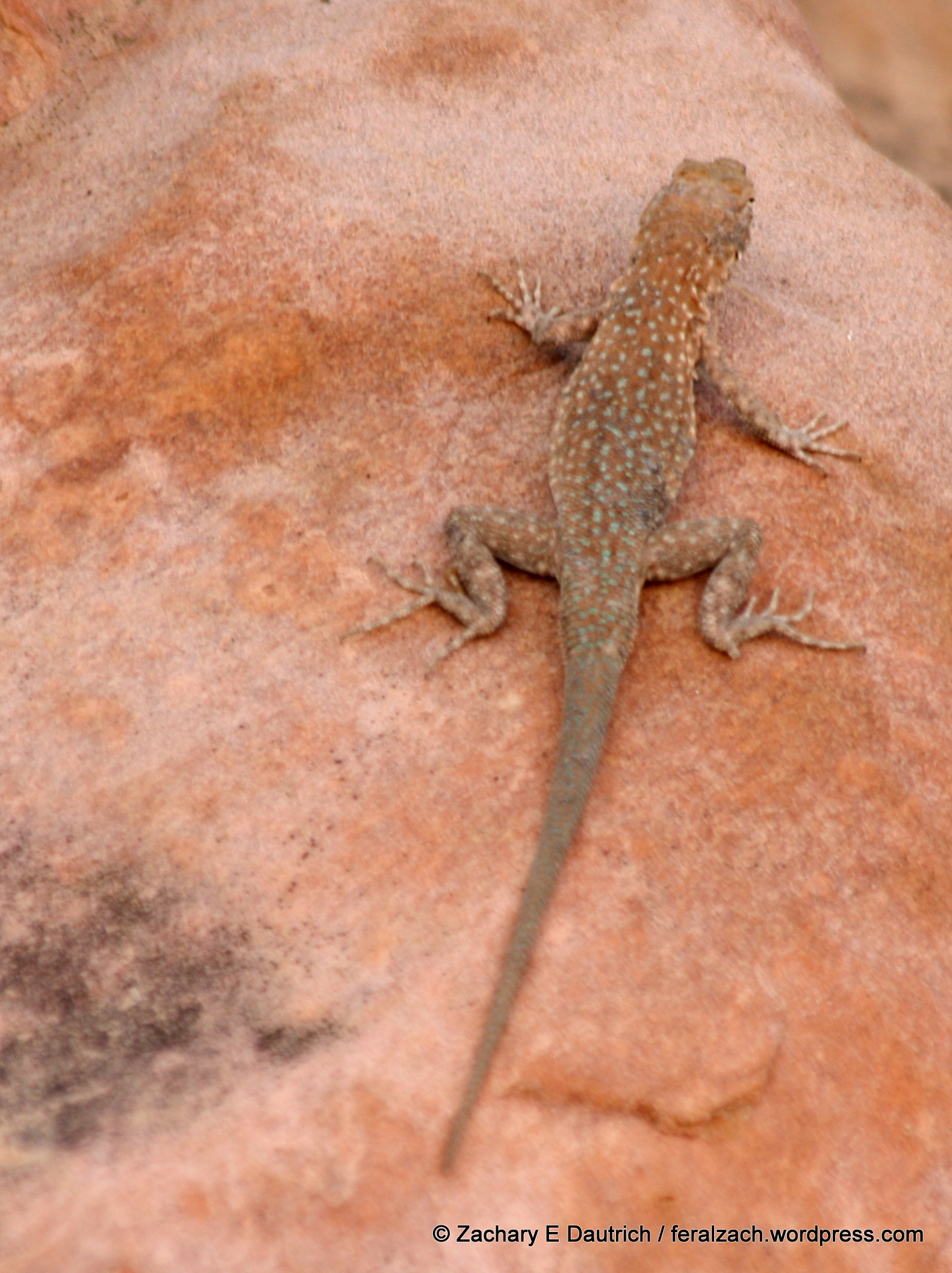
desert side-blotched lizard

desert bighorn sheep (male)

cicada shell
What was really noticeable to me were the variety of rocks that are exposed in the canyon. It is a geologist’s dream. Walking down a wash that fed into the main canyon on one of my little side excursions, I was aware of the large number of different rocks that were strewn around and mixed together, something I don’t often see. Usually the geology of a place is fairly uniform, or composed of a small constituent of rock types. Here, the river and erosion have teamed up to expose rocks that span two billion years. BILLION! There are some time gaps that are unaccounted for in this geological record, which are individually referred to as an “unconformity” – now a new nickname for me from my pops, after one of them called “the Great Unconformity.” Probably fits! Sounds like a magician of mediocre skill.
As the sides of the exposed cliffs erode away, pieces of the ages fall and co-mingle at the bottom. The oldest rock is called Vishnu Schist and it starts to become visible towards the bottom of the canyon – it is beautiful. To touch something that old and be in its presence is profound, especially while floating on a calm section of river in the silent heat of midday in the canyon. Just as when standing in an ancient forest of redwoods or giant sequoia trees, time seems to slow down and your perspective shifts. It’s bearing witness to immensity, it’s very definition in both time and space.
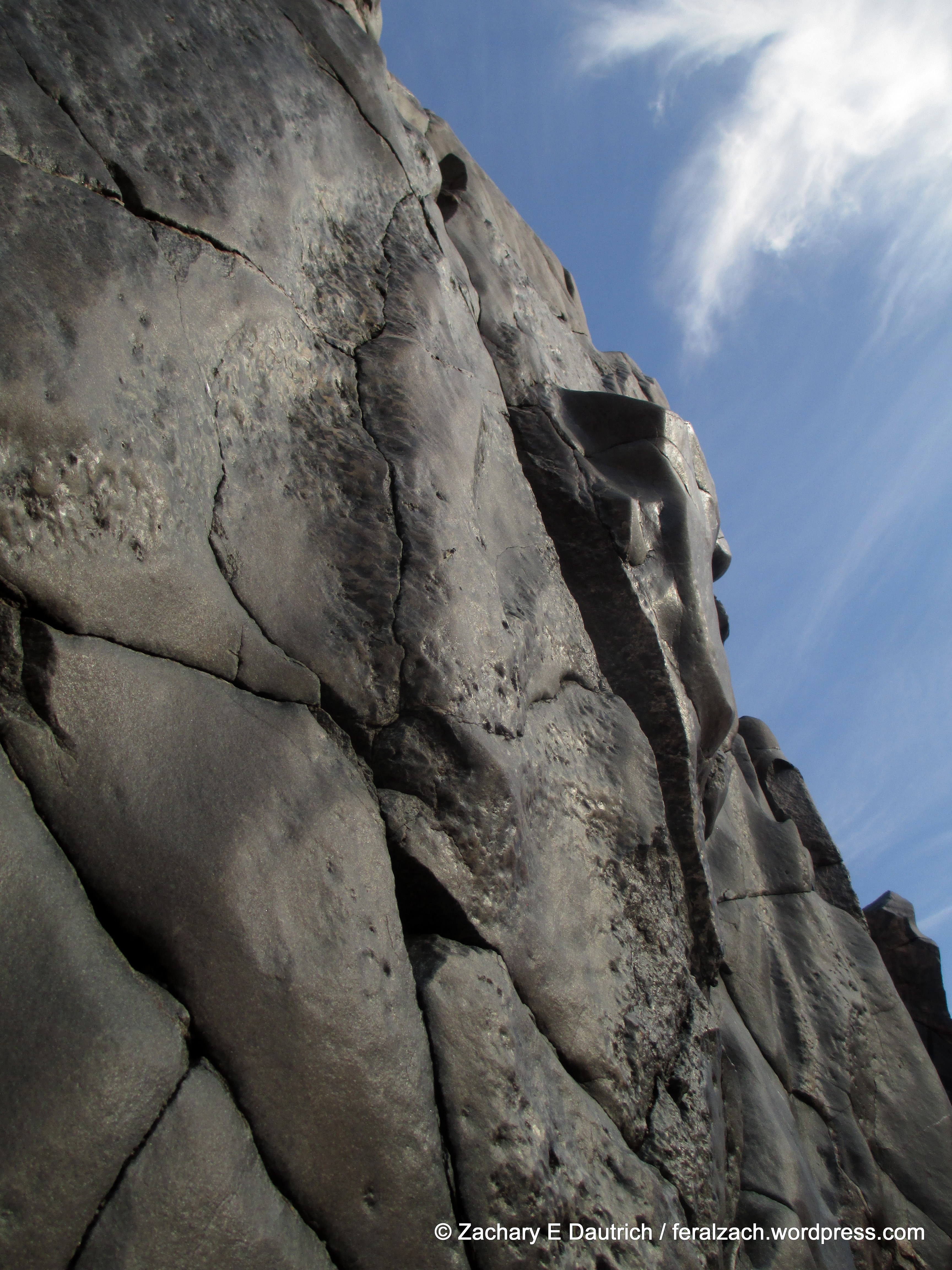
vishnu schist – 2 billion year old rock!!!

traverstine rock formation by Pumpkin Springs
Just as we were about to rendezvous with a boat at Lake Meade at the conclusion of our rafting trip, we stopped for a quick “pee break” along the banks of the river. As I jumped off the raft, my eyes were immediately devouring the “spoor extravaganza” that was before me – it was literally a tracking workshop laid out in the muddy river silt bank! First, desert bighorn tracks. Then raven. And great-horned owl. And some other large raptor. Beaver. And more. I clicked away to capture some of them, but literally had to jump on board the raft as it cast off just minutes later. It was torturous to pull away from this canvas full of tracks! I did manage to catch a few of them on cam.

beaver tracks

beaver track

great-horned owl tracks
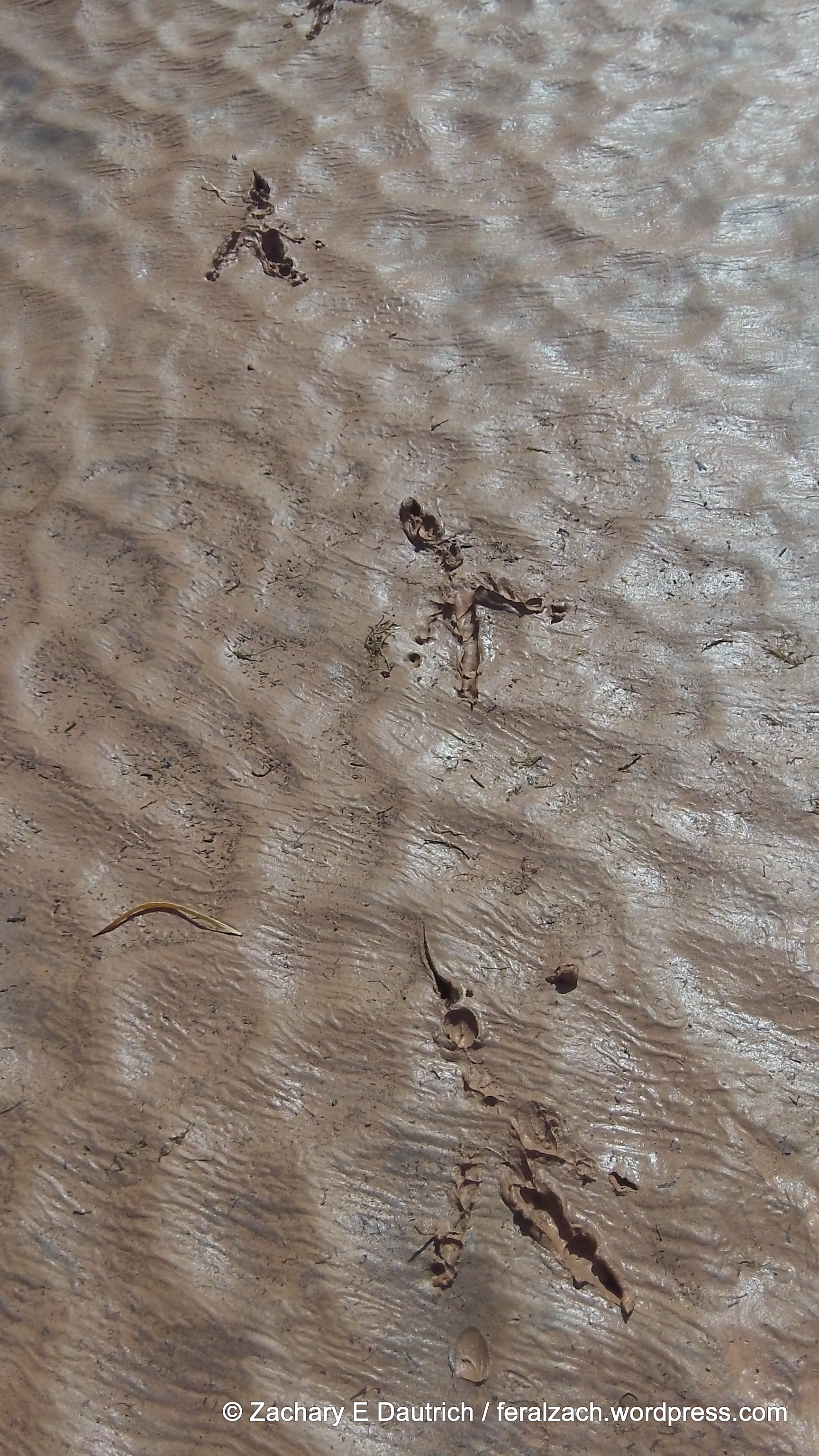
large raptor tracks
The canyon itself has an amazing history, both before and after people of European descent found it. (White) Man’s desire to explore and conquer as attempted within these canyon walls is recorded in stories that vary from comedic to chaotic (and deadly), and several groups of native people still call this place home. It’s truly grand in all aspects of the word.

fruit of the brown-spined prickly-pear cactus (cut open)
soaring
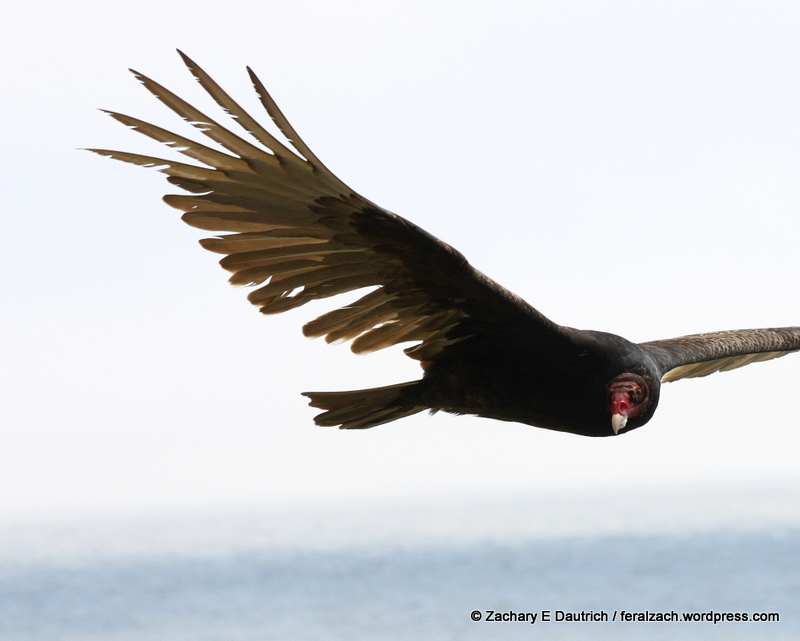
turkey vulture / Goat Rock Sonoma Coast State Park CA
gliding in
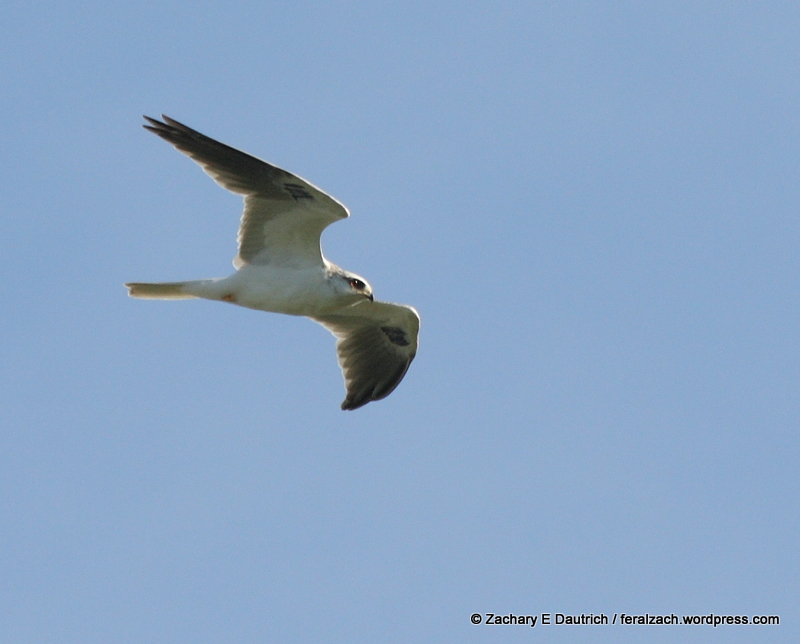
white-tailed kite
sonoma coast northern harriers

male Northern harrier / Sonoma Coast CA
On this picture you can see the owl-like facial disk that Northern harriers wear:

male Northern harrier / Sonoma Coast CA

female Northern harrier / Sonoma Coast CA
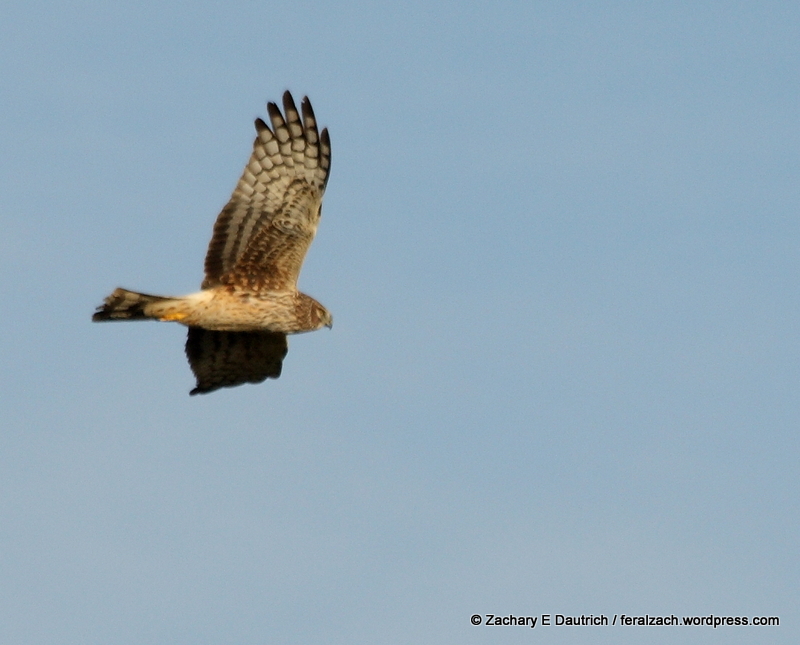
female Northern harrier / Sonoma Coast CA
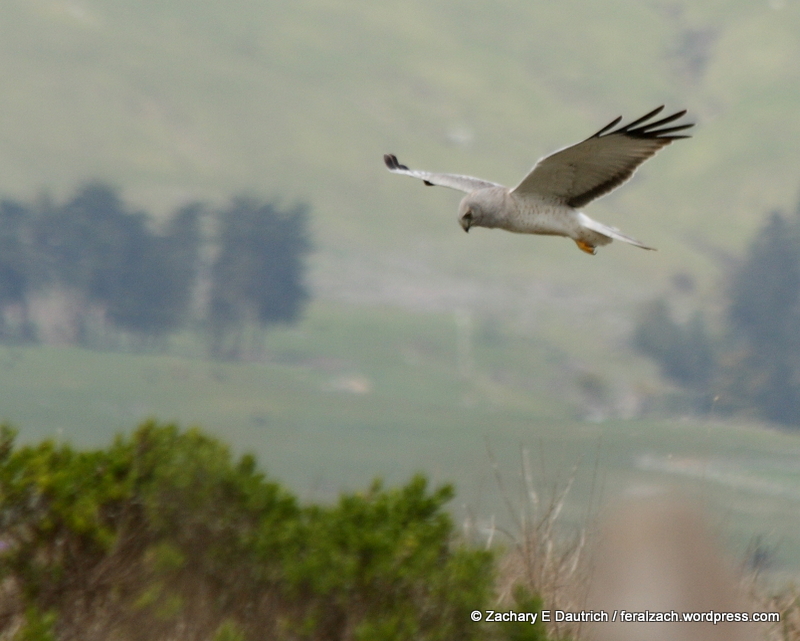
male Northern harrier / Sonoma Coast CA

male Northern harrier / Sonoma Coast CA
Northern harriers are found in open grass and marsh lands (historically called the “marsh hawk”), and they tend to fly low over the landscape in search of small mammals, insects and lizards which are one of their main sources of prey. They have a small facial disk, similar to owls, and it is believed they use this to use focus sound when hunting in the same way that it is said that owls do.
Males and females are sexually dimorphic, meaning in this case that they have very different adult plummages. Males are white and gray with black on the wingtips of the primary feathers, while females (and sub-adults) are dark brown overall with a cinnamon or pumpkin coloring on their underside (sub-adults tend to have more of a cinnamon coloring). One of their features that is helpful for in-flight ID is their white rump patch, seen on all of them. They also tend to hold their wings in a slight dihedral (v-shape), while gliding low over the ground.
Interesting, these birds nest on the ground.
They are fun to watch, as they glide over the landscape almost like butterflies teetering in the wind.
a morning of birds on the russian river

killdeer / Russian River Sonoma County CA
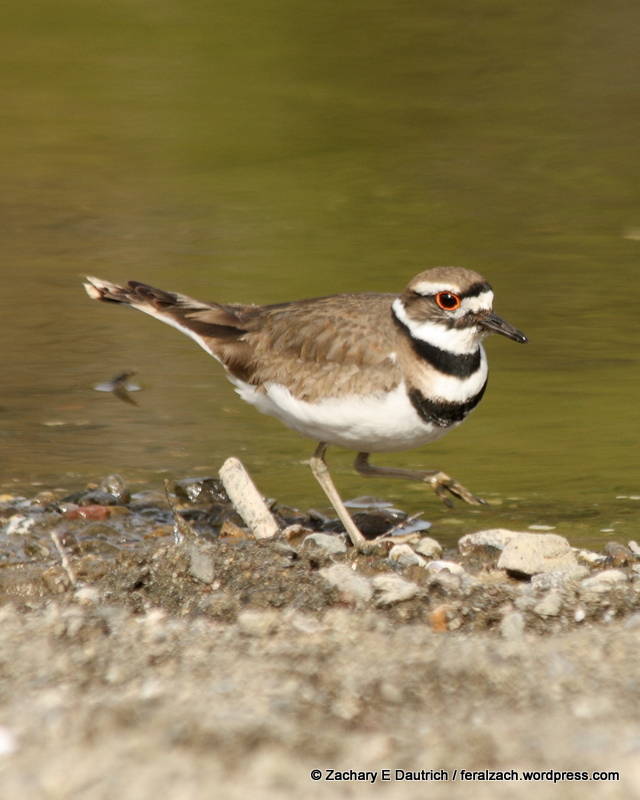
killdeer / Russian River Sonoma County CA
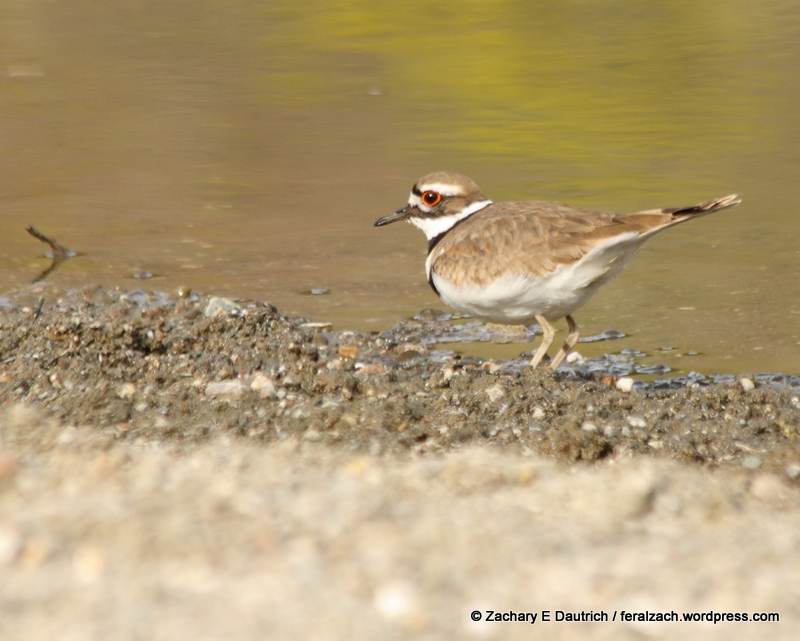
killdeer / Russian River Sonoma County CA
Want to get better at shooting birds in flight? Try practicing on tree swallows flying over a river catching insects … in poor light. Everything else becomes much easier, let me tell you! Just to remain standing and not spun around and on my face in the sand or river was a minor success.
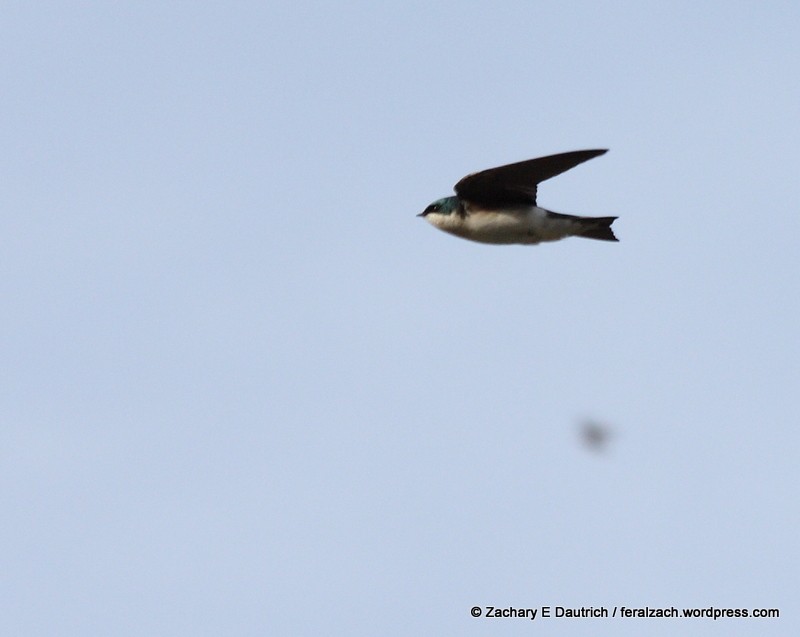
tree swallow / Russian River Sonoma County CA

tree swallow / Russian River Sonoma County CA
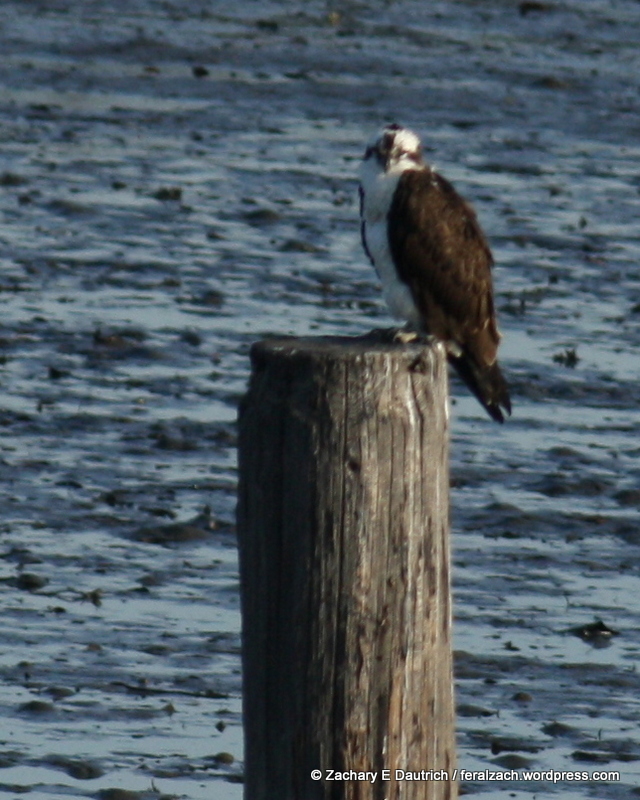
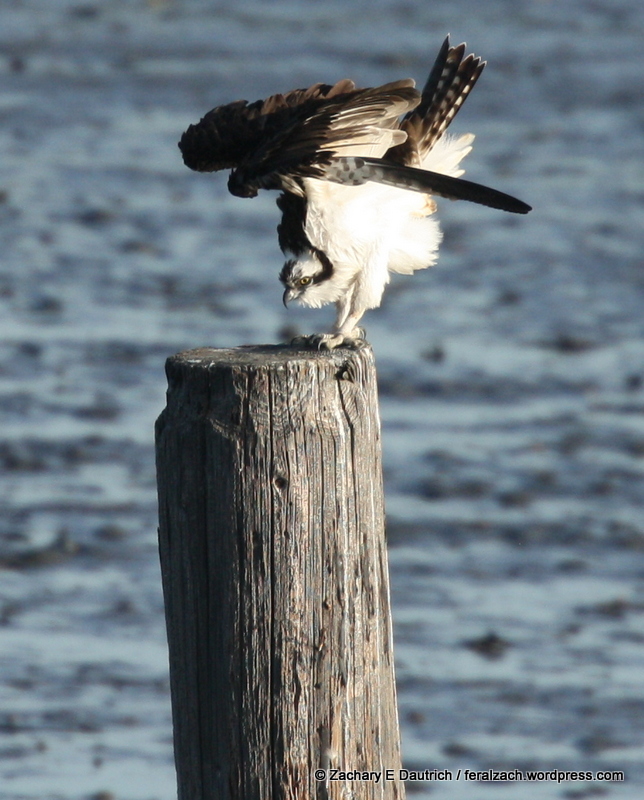
The osprey were out and about as well, with two or three pairs fishing and perched in the area. There are many nests around the river and out towards the coast in Sonoma County, always amazing to see these birds in action. They seemed as interested in me as I was in them …

osprey / Russian River Sonoma County CA

Watching it all unfold was a tree full of vultures, trying to warm up on a chilly and foggy West County morning on the river.

vulture roost / Russian River Sonoma County CA

turkey vulture / Russian River Sonoma County CA
Northern saw-whet owl
This little fella (lady?) was confused by all the commotion beneath its roosting tree today at Tilden Regional Park … as evidence by the disapproving “scowl” caught in the second pic below.
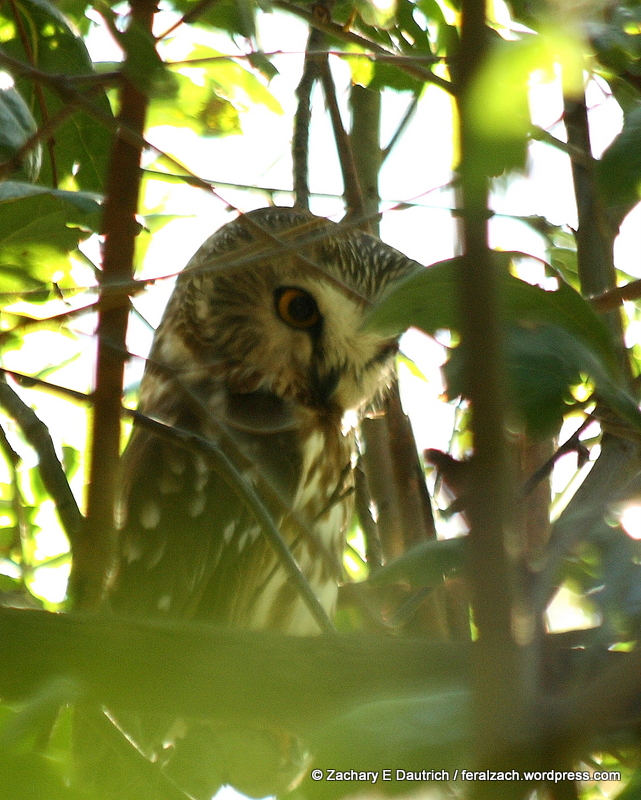
saw-whet owl
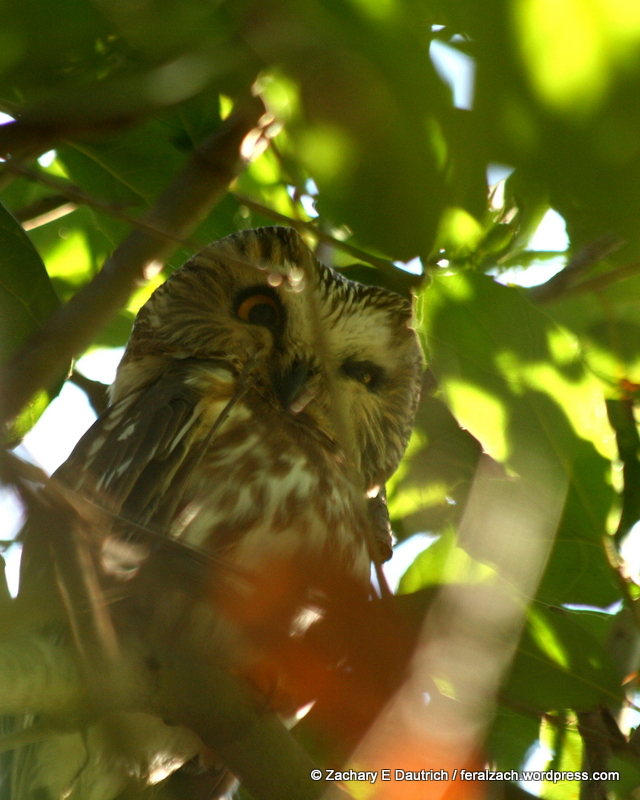
saw-whet owl
Ok, maybe it wasn’t a scowl. Just a sleepy bird.
Many thanks to Anthony Fisher of East Bay Regional Parks who led us on this adventure!
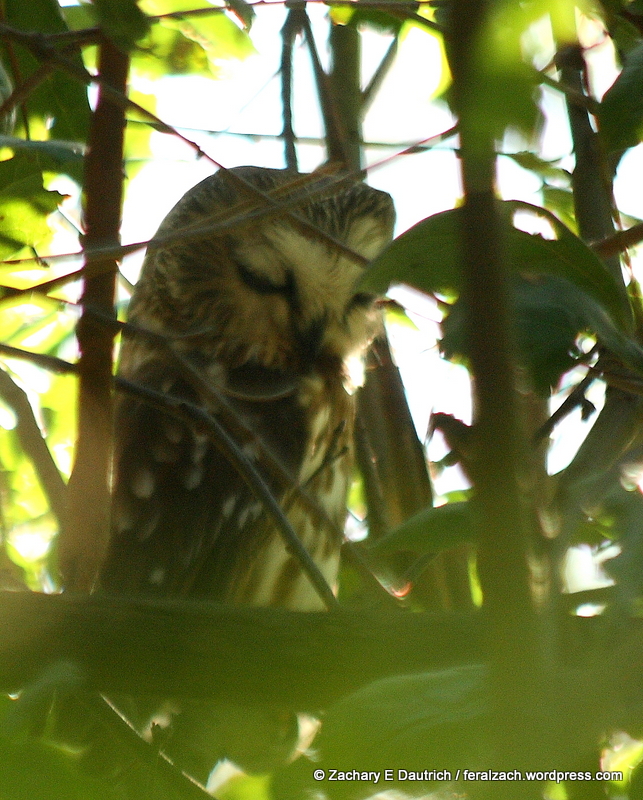
saw-whet owl
rough day
Rough-legged, that is.
Hawk.
Last Saturday I helped lead a raptor tour at Lynch Canyon for Solano County Land Trust with Larry Broderick of West County Hawk Watch … and I don’t think anyone was disappointed. Two rough-legged hawks made an appearance along with the many resident red-tailed hawks, white-tailed kites, kestrels, northern harriers, red-shouldered hawks, turkey vultures, and a pair of golden eagles. We also had two peregrine falcons soar over us. Good day. Rough-legged hawks breed in the Arctic and it is uncommon to see them this far south, though this year there seem to be more of them than usual during the winter here in the Bay Area.
Check out some of the other tours that Larry Broderick leads at the Sonoma Land Trust and Solano Land Trust websites – he is the raptor magnet and always fun to tour with.
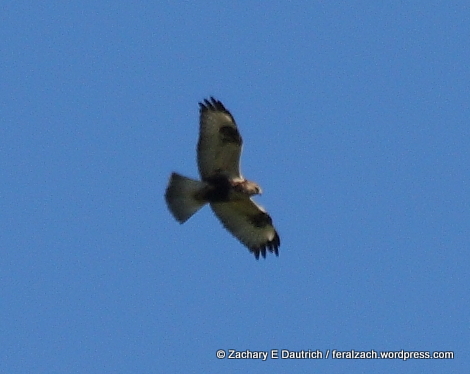
rough-legged hawk
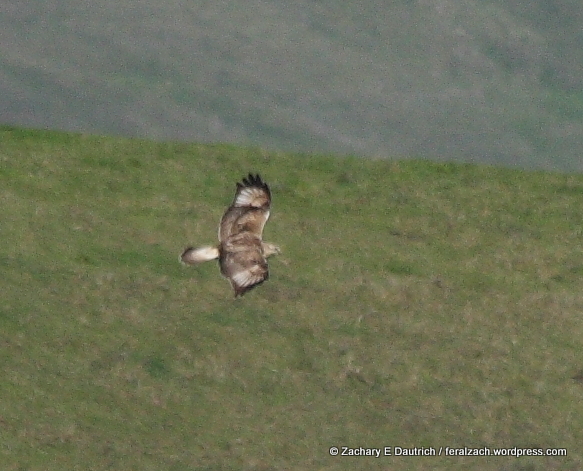
rough-legged hawk
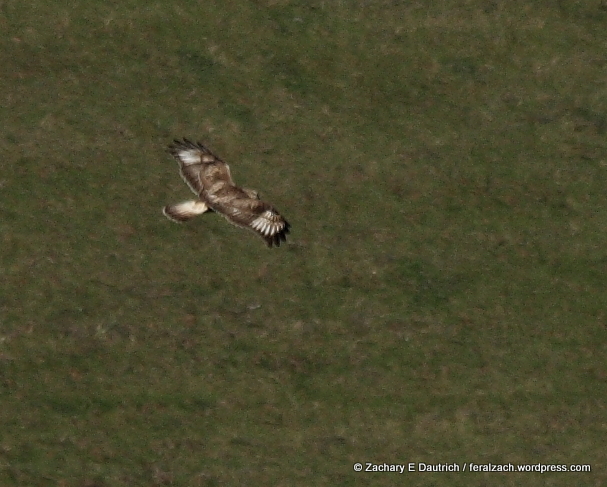
rough-legged hawk
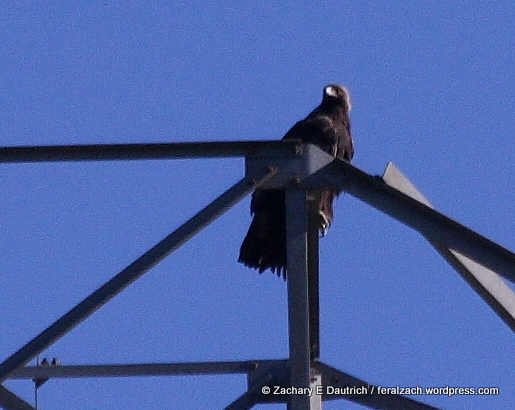
golden eagle
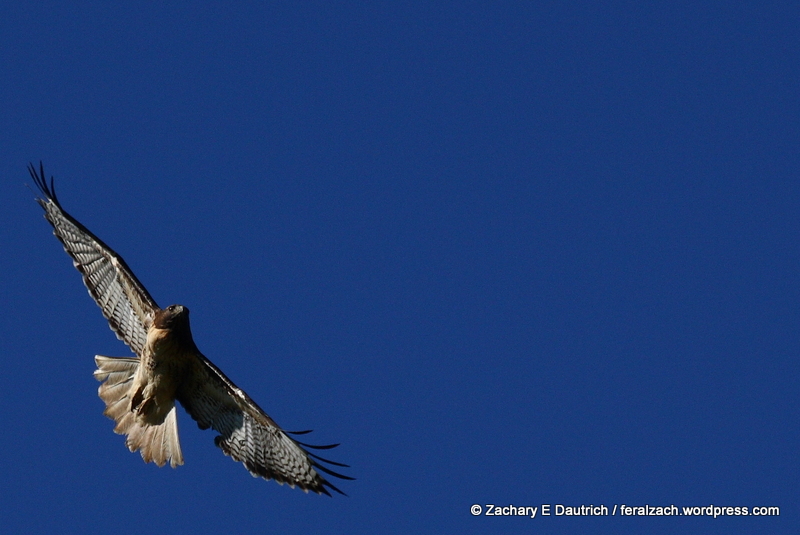
red-tailed hawk
Albany mudflats opsrey – a Canon lens comparison
I was spoiled the other day while observing peregrine falcons (besides the fact that I was observing peregrine falcons!) – a fellow East Bay photographer, George Suennen, let me borrow his “more advanced” (aka more expensive) lens setup for a couple of shots (Canon EF 300mm f/2.8L IS II USM Telephoto Lens with a 2x teleconverter). I REALLY REALLY don’t want to like this piece of equipment, but … WOW. Very gracious of him to offer for me to use it, I’m not sure if I thank him or curse him for putting that thing in my hands!!
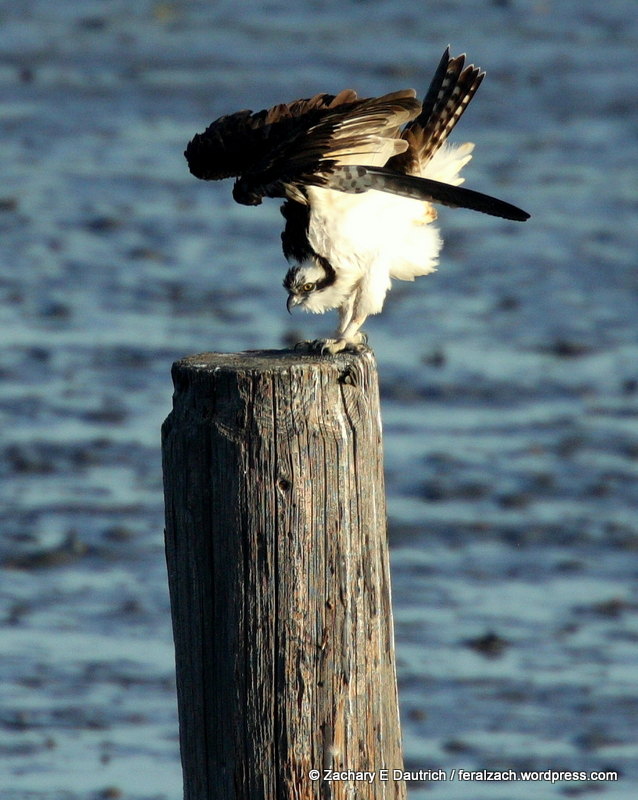
oprey / Albany mudflats CA
Right now I typically shoot with a different Canon 300mm lens – the Canon EF 70-300mm f/4-5.6 IS USM (but I DON’T have a 2x teleconverter attached – which brings the L-series lens setup to an equivalent of 600mm!). To understand the difference in lenses, a visual comparison is in order of course. Both images below are cropped close to 100% but no other post-processing has been applied (sharpening, contrast/brightness adjustment, etc). The same camera body was used. The difference between the lens setups is very evident.
 Canon 70-300mm zoom lens |
 Canon L-series 300mm fixed lens w/ 2x teleconverter |
Are the results worth 14x the amount of money more? I suppose that’s an individual choice. It’s certainly understandable why this lens is rated one of the best in the Canon lineup, and a standard for many sports and wildlife photographers. Until I make the jump, I’ll have to continue to get close to subjects without disturbing them to get clear shots … which is a large part of the fun – and helps to force me to really get the most out of my equipment and techniques.
conversations with a coyote
A few days ago I spent a late afternoon in Briones East Bay Regional Park, a large expanse of mixed-use wooded/grazing land just over the hills from the East Bay. I knew it was going to be a good couple of hours when I spotted a hatch year (juvenile) bald eagle right after getting out of my jeep.
hatch year (juvenile) bald eagle
The eagle lazily circled and started to track south, and a few of the local resident red-tailed hawks went up to “usher it” onward and away from their territory.
My wandering quickly took me off the trail, onto a trail only known to my feet beneath me and the heart in my chest. My feet walked, climbed and scrambled up higher and higher onto a ridge line. I suppose I’m always looking for pumas and puma sign, and it seemed to be a likely starting point to find it. Once I was up on one of the highest peaks in the immediate area, there was a bit of a flat wooded area that I started to explore.
As I was quietly coming up a saddle from the main flat area down towards another little flat area, I saw a few young steer that started to move away from me – unused to seeing a person up there, I imagine. Also unused to seeing a person up there was the coyote that I just caught a glimpse of as it left its resting spot at the top of the saddle and slipped over the hill top out of sight, just 25 feet from me. I decided to have a little bit of fun with it, so I dropped down off the saddle towards a ravine that was thick with bay laurel trees and some oaks. I could hear the coyote moving there just out of sight below me as it trotted and paused in the crunchy dead leaf hubris of the forest floor, and for some reason I decided to give a short little bark. It was an earnest attempt to connect with this other being, not much thought went into it other than a deep desire to say hello.
What happened next was a 15 minute exchange of the two of us “talking” back and forth and checking each other out from a distance. At first I think the coyote wasn’t quite sure what I was (manimal?!!!). Below is a short recording of one of our exchanges. The coyote was probably within 25 yards of me the entire time, until some other hikers started to come up into the area after hearing the noise and the coyote departed. My voice is the short yip initiating the “conversation,” followed by the coyote and then us alternating.
It seemed as if it was alone, and I was very grateful to get to spend some time with it that evening. After scouting around I found an old deer kill, but otherwise I found no reason for the coyote to be so curious or possibly defensive. It’s probably too early for a den to be active with pups in January.
After watching the sunset perched underneath an oak that was sitting on high hill by itself, I followed a ridge line down into the valleys towards my vehicle. After hearing a pair of great-horned owls hooting right as the sun set, I was on the lookout – and they didn’t disappoint. As I approached the parking lot, one of them flew nearby and landed on an old fence post, surveying the encroaching dark for its breakfast.
white-tailed kite

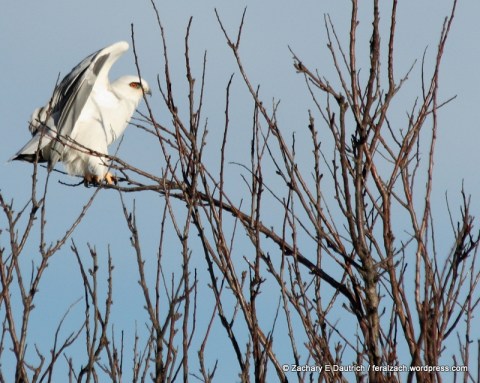

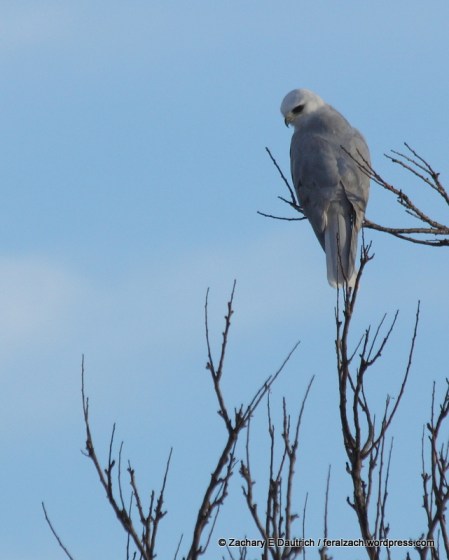
white-tailed kite / Elanus leucurus
Berkeley, CA
There’s something other-worldly about these birds … an ethereal white body like an angel combined with coal-rimmed eyes of deep shining red, they float and dance in the air like a flower petal caught in the wind moving from one invisible island to the next. To get so close to one perched was exciting.
a bald and white Christmas in PA
Yes, Christmas will always be bald and white for me with regard to one definition of those terms at this point in my life, but this particular Christmas we were treated to other, more fun benefactors of those descriptors – a snowy Christmas eve yielded a white Christmas morning, and we got quite a show by some local nesting bald eagles.
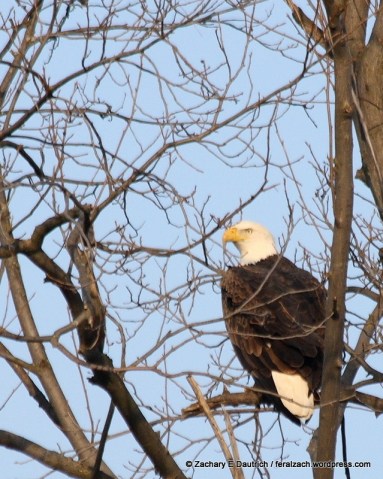
adult bald eagle 01
These are presumably the same birds that have been nesting at this site for the past few years not far from my parent’s house in PA (see my post from last year here). It’s great to see them still successfully using this nest as it is more exposed and closer to human activity than most nests. This is actually a GOOD thing, as it indicates that most of the other more ideal nesting spots and territories around the Susquehanna River are already taken by breeding pairs.
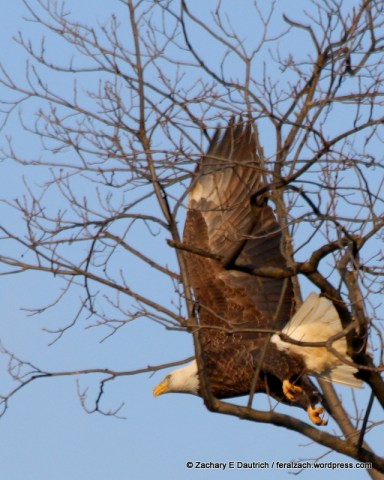
adult bald eagle 02
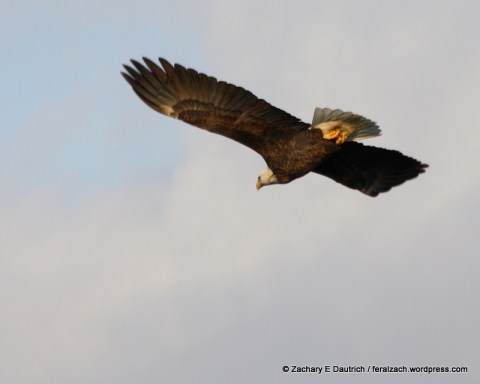
adult bald eagle 03
The snow also allowed us to see who was using the landscape … snow tracks! It’s far from wilderness here, but this beautiful agricultural area still has quite a bit of wildlife that manages to survive in an area that continues to have more and more human development replace farms and forests. We were still able to find the tracks in the nearly melted snow of white-tailed deer, cottontail rabbit, and two red fox – and ultimately I was able to find what I think is the red fox den! A couple of red-tailed hawks were hunting in the cold air above us, and we spooked a coopers hawk with a meal from its perch in a grove of fir trees.
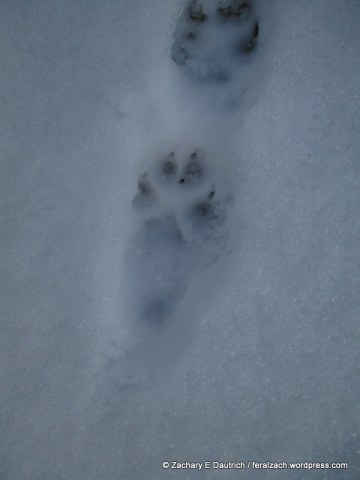
red fox tracks
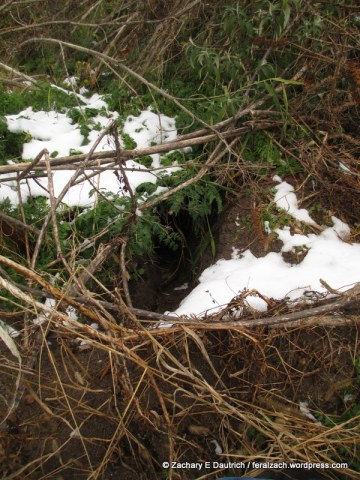
red fox den
los vaqueros reservoir
I haven’t been lucky enough to see a jaguar in the wild yet, but I did see this fella (lady?) last Thursday at Los Vaqueros Reservoir in Contra Costa County just after sunset.
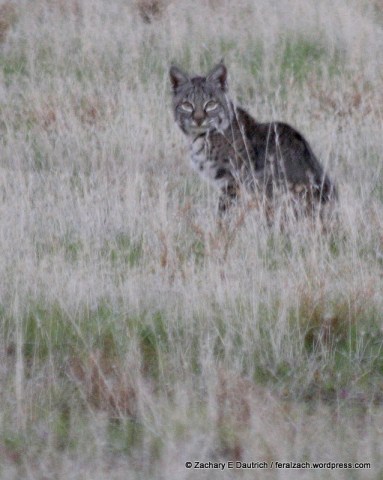
bobcat
Hiding just out of sight was this little one, probably trying to avoid being a bobcat breakfast.
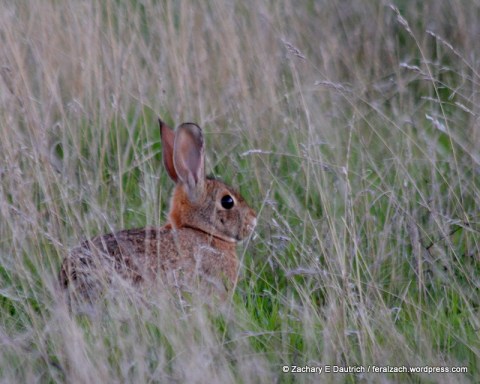
brush rabbit
It is a surreal landscape here – large mountainous hills that grow out of the flat grassy planes East of Mount Diablo, south of the Sacramento-San Joaquin river delta. It is almost completely devoid of trees, other than a small riparian area at the dam outlet, but once atop any of the peaks that surround the reservoir, there must be thousands of giant wind turbines in sight. It’s staggering the number of turbines in view, for as far as the eye can see in some directions, over land that has been cleared for grazing.

out in “nature” – Los Vaqueros Reservoir and a small portion of the visible wind turbines
Ironically, this general area has the highest concentration of nesting golden eagles in the world. It is home to many raptor and bird species, and has also been shown to be a main migration route for birds in the Autumn and Spring. It probably goes without saying that wind turbines and soaring birds don’t go well together (not for the birds, certainly). The mortality rate of golden eagles in this region is high due to collisions with the wind turbine blades, and is probably under-reported.
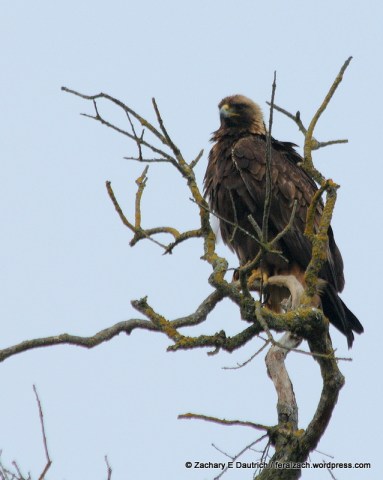
golden eagle / Mount Diablo Nov 2011
It’s hard to determine visually where the wind farms end or if they are part of different farms – to the north is the Shiloh Wind Power Plant, and to the south is Altamont Pass Wind Farm (of notorious history, for its vastly negative impact on raptor and other bird species). They are two of the four largest wind farms in CA. I’m not sure who owns the ones pictured above, I suspect it’s part of the Altamont Pass Wind Farm. The picture below shows a view to the north from above the reservoir – if you look closely you can see a LARGE number of turbines stretching across the horizon. I suspect these are part of Shiloh Wind Power Plant. It’s hard to differentiate where they start or end though because the turbines seem to be concentrated densely there to the north, then they sporadically run from that point far to the north all along the eastern edge of the Diablo range, then southeast towards Altamont Pass and out of sight.
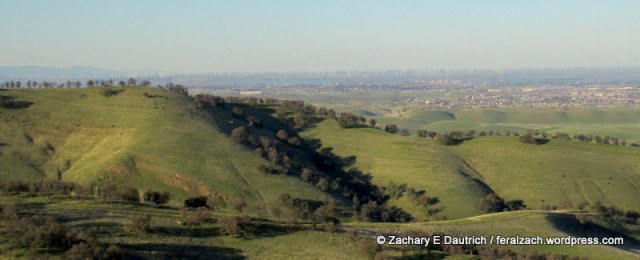
distant wind turbines
Despite the jarring visual impact, these turbines are “green energy” and certainly have a lot of benefits over other energy production techniques. They are part of the compromise that we currently must make in our effort to satisfy energy demands while still attempting to minimize our impact on the environment – both to the creatures who live there now, and in a global capacity long term. No easy answers. No black and white.
Every day the sun rises though, and the cycle of life continues. Coyote doesn’t care so much about politics.
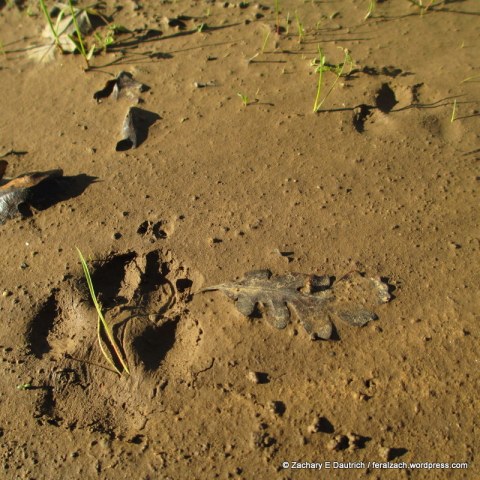
coyote tracks
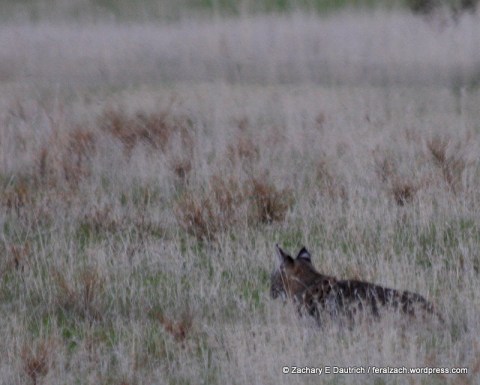
a hunting bobcat after sunset
free!!
Haya was released successfully on Monday, it was quite a day.
Good luck Haya!!!
Haya 1
the toss to freedom!
Haya 2
dark morph extravaganza
Lot’s o dark morphs lately! Delicious.
The rains have passed and the light was perfect for a few more shots of the intermediate/dark morph in Berkeley …
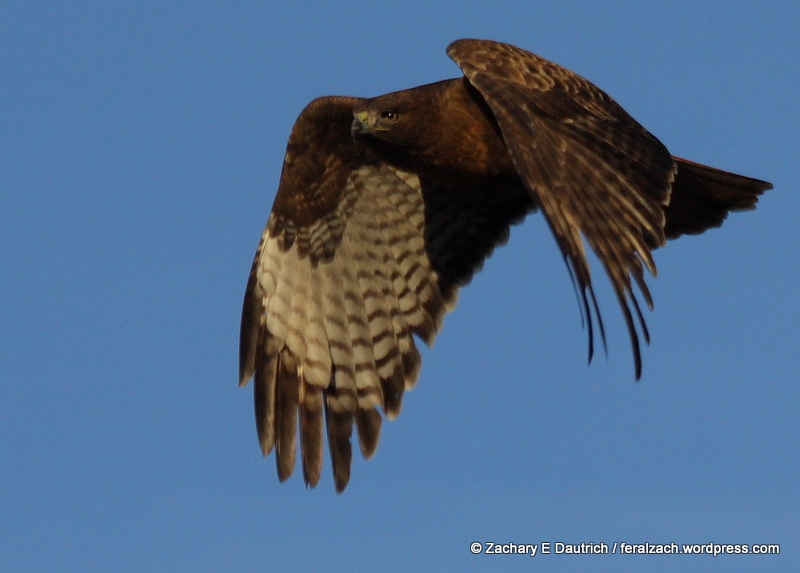
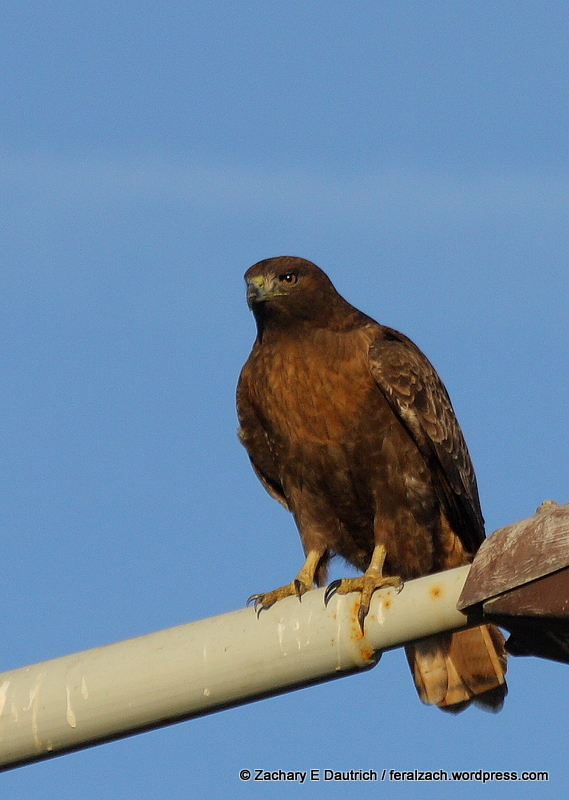
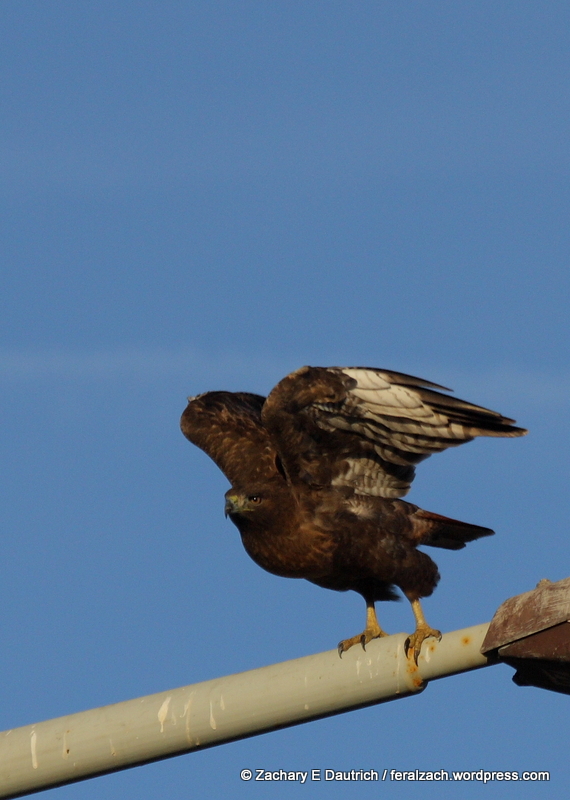
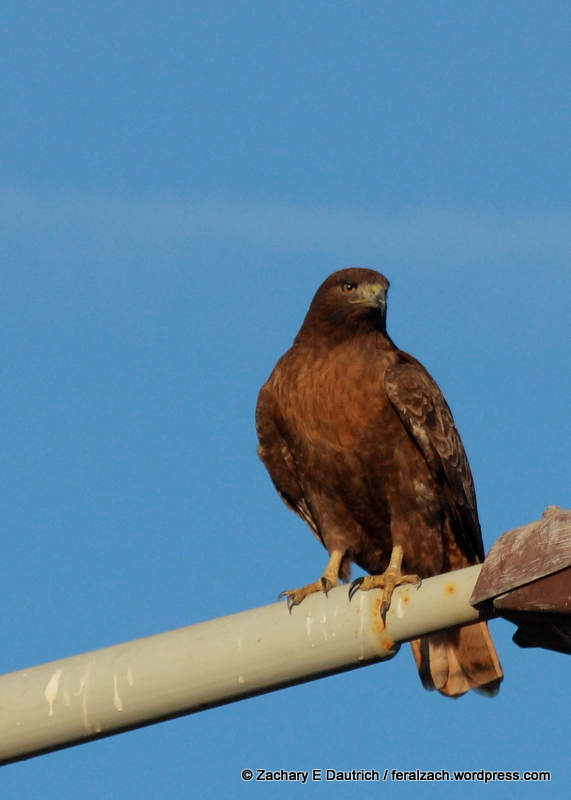
day of the dark morphs
We saw a dark morph ferruginous hawk in Sonoma County the other week (!!), it’s been hanging around with a light morph ferruginous hawk in an area that also has at least one dark morph red-tailed hawk (probably the one that I photographed and posted here from last year). A rare treat in Sonoma County to see ferruginous hawks of any plumage – the largest hawk native to the United States.
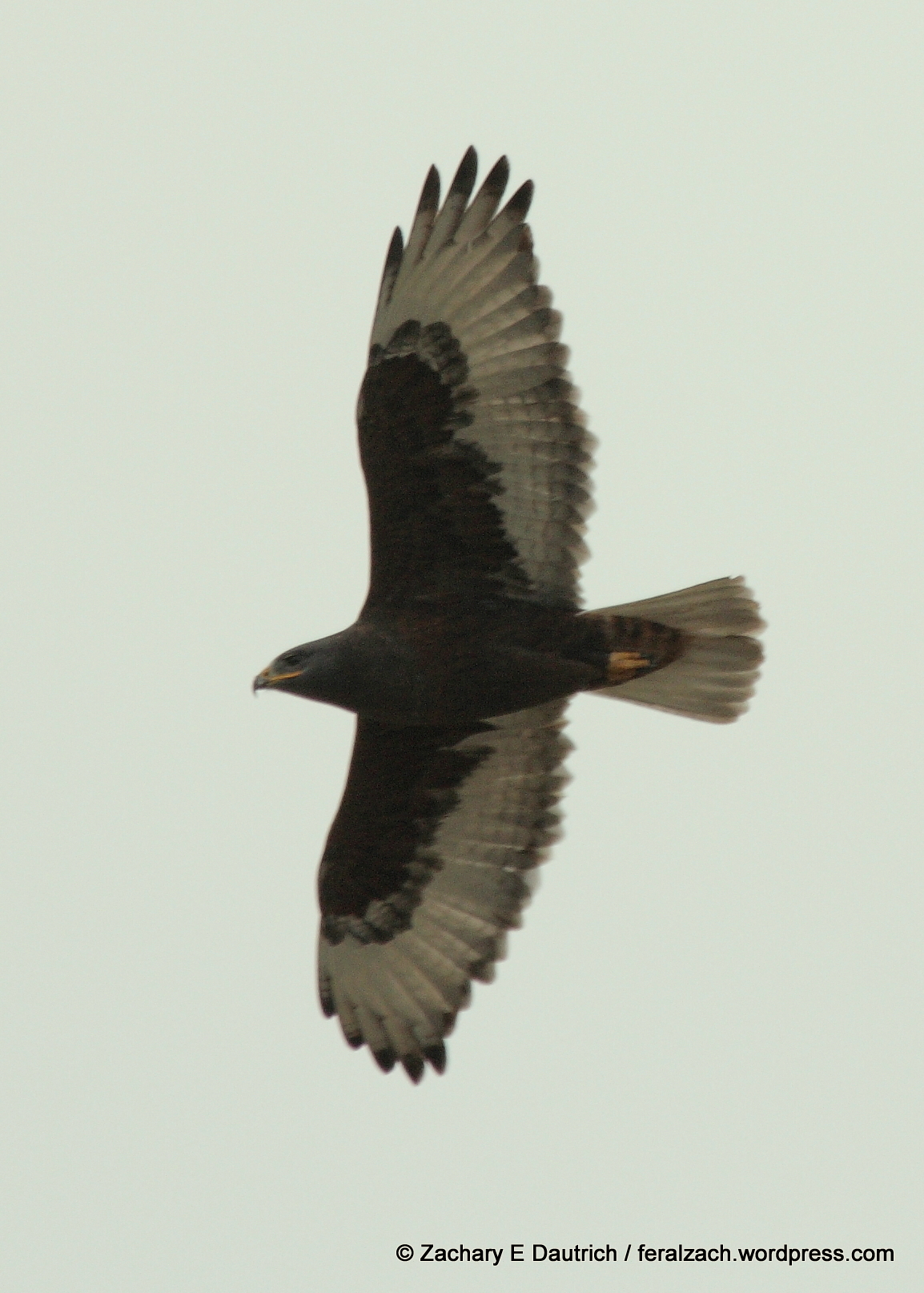
dark morph ferruginous hawk / Sonoma County CA
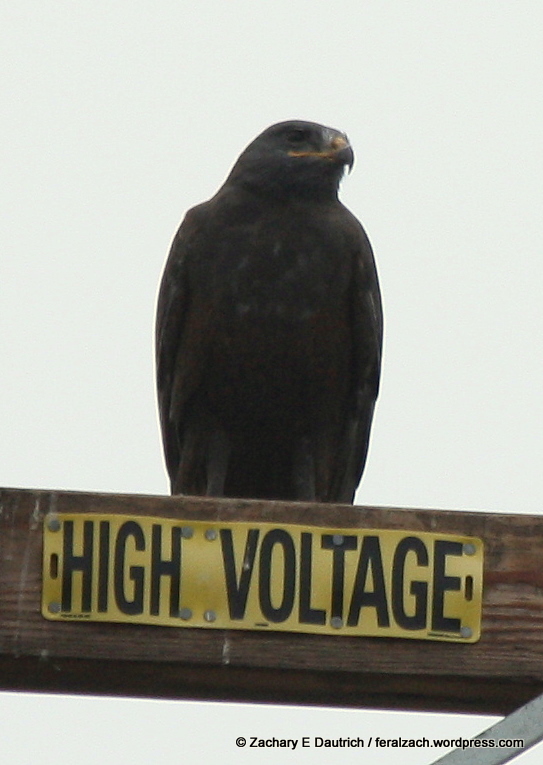
dark morph ferruginous hawk / Sonoma County CA
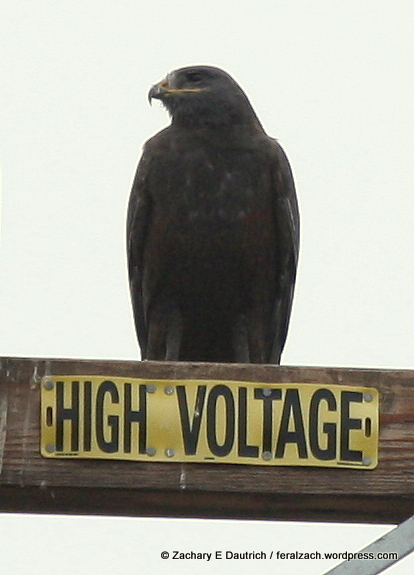
dark morph ferruginous hawk / Sonoma County CA
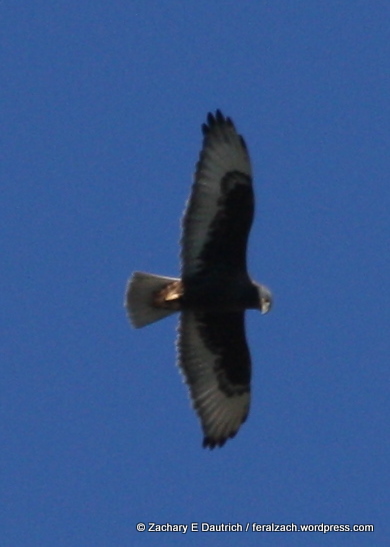
dark morph ferruginous hawk / Sonoma County CA
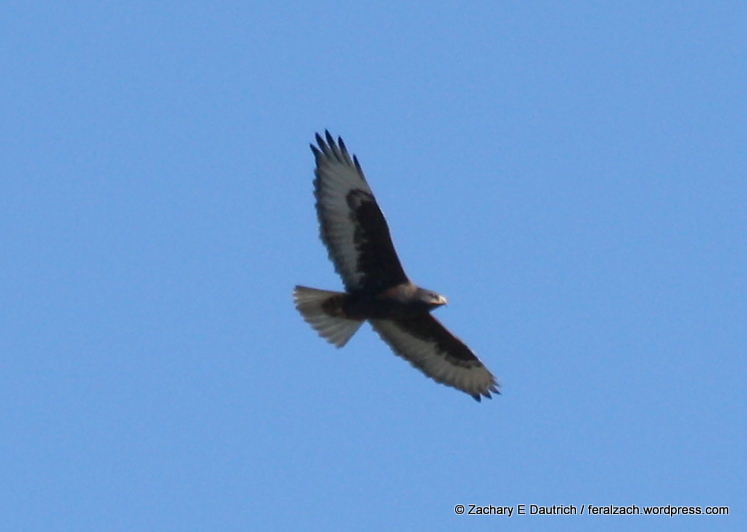
dark morph ferruginous hawk / Sonoma County CA
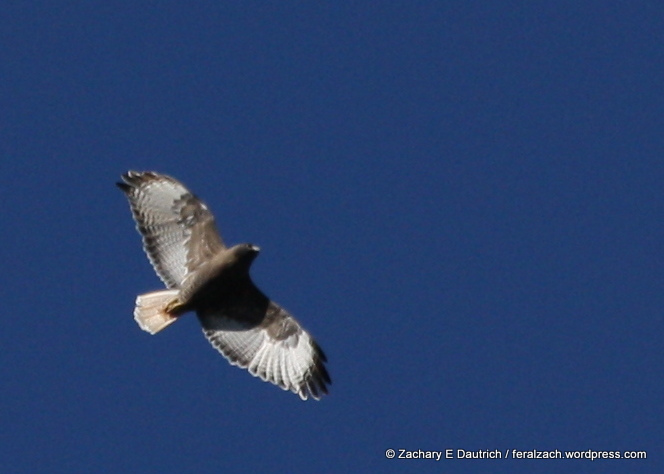
dark morph red-tailed hawk / Sonoma County CA
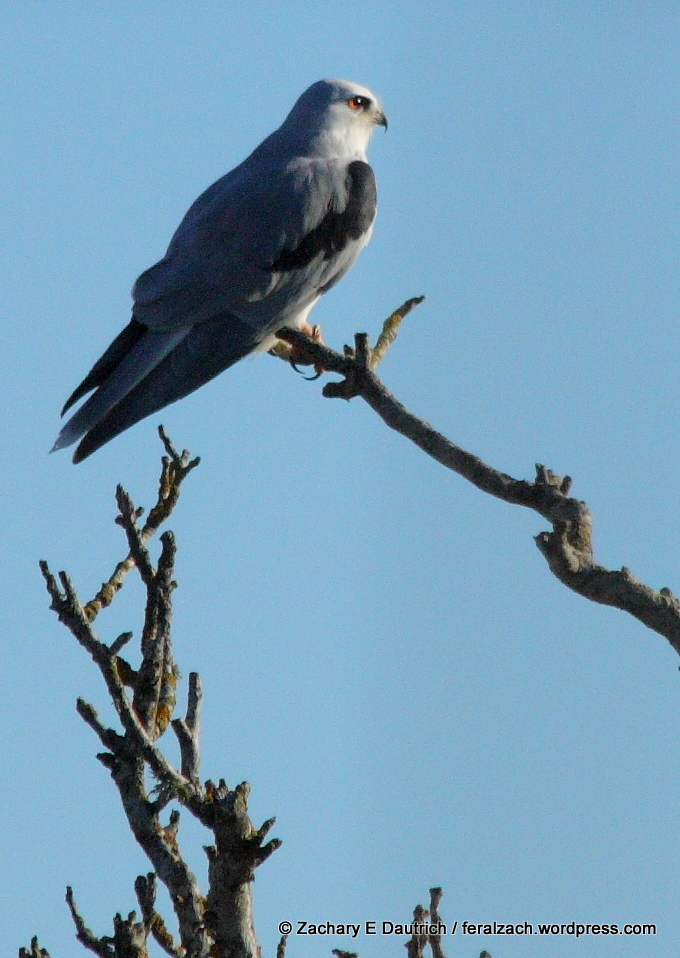
white-tailed kite / Sonoma County CA
back in the skies!

Happy news for our falcon friend from Oakland that was shot along with two of her fledglings a little over a year ago (see link and link) – she is scheduled to be released back into the skies! Whatever destiny is hers to follow, it will be on her own wings and flying free. Good luck Haya! Many many thanks to all the people who worked so hard to make her release possible.
From the Lindsay Wildlife Museum’s Facebook page (link):
“After spending a year and a half in care and going through three surgeries, a bone infection, countless radiographs and anesthesia, broken feathers and falconry training, it is with great pride that we announce that Haya has been evaluated
and will be released! We are hoping to release her in the next couple of weeks. Be sure to sign up for our release program for an opportunity to see her return to the wild!http://wildlife-museum.org/hospital/releasesThis has been a long and incredible journey for this falcon as well as for those caring for her. We would like to extend our deepest gratitude to all of you who have been following her progress. Without your constant support we would not be able to help animals like Haya return to their wild lives.”
Her one surviving offspring, a huge female falcon named Marina, is unable to be released and will spend the rest of her life in captivity (and I seem to recall that she is being used as a surrogate mother for captive breeding ).
I took this picture the evening before she was shot – she was feisty as ever, yelling at some of the bridge workers (for whom she had developed a distaste, since they had escorted bird banders weeks prior up to her nest to band her fledglings – she always recognized their uniforms and was proactive in “defending” her nest area after that intrusion).

Haya May 31, 2012
autumn elk
Autumn is my favorite time of year, and I’m always excited by the usual harbingers of Fall … pumpkins, raptor and bird migration, amazing light, crisp electric air, foliage color changes, bay nuts, and an instinct deep within me that drives me to figure out what ridiculous costume I’ll wear for Halloween.
There is also the call of the rutting bull elks, if you’re lucky enough to be close to some – a sound that reminds me of whale calls penetrating the surface of the water and echoing across the landscape. I love to see and hear them, especially at this time of year, when the bulls have their “harems” of cows protectively corralled close to them. If one tries to stray too far, the bull will herd her back. And if another male comes too close, a fight can ensue.
They make their bellowing, haunting calls often, seemingly to advertise their virility to the females and their dominance over other bulls -with the occasional chirping siren-like responses from the females, and other males calling back to defend their own space and ladies. It’s all about the ladies at this time of year.
On Sunday we visited the herds at Tomales Point to immerse ourselves in this Autumn rite, and though initially we were disappointed by the thick fog that enveloped just the very tip of the peninsula where the elk live, it turned out to be a good thing. Fog is one of the natural states of this area, and the landscape comes alive when it is foggy. Not only that, the fog allowed us to get closer to the elk than we would have been able to otherwise, creating a smoke screen for us as we approached from downwind to find a nice rock outcropping overlooking two small herds. And, as an added bonus, most of the two-leggeds depart with the fog!
Ironically, the best pictures I got were when we were leaving in our vehicle as a herd was milling about near the exit road. Vehicles can be the best blinds … and they’re mobile!
Oh, and the fog made a stunning scene for pictures.
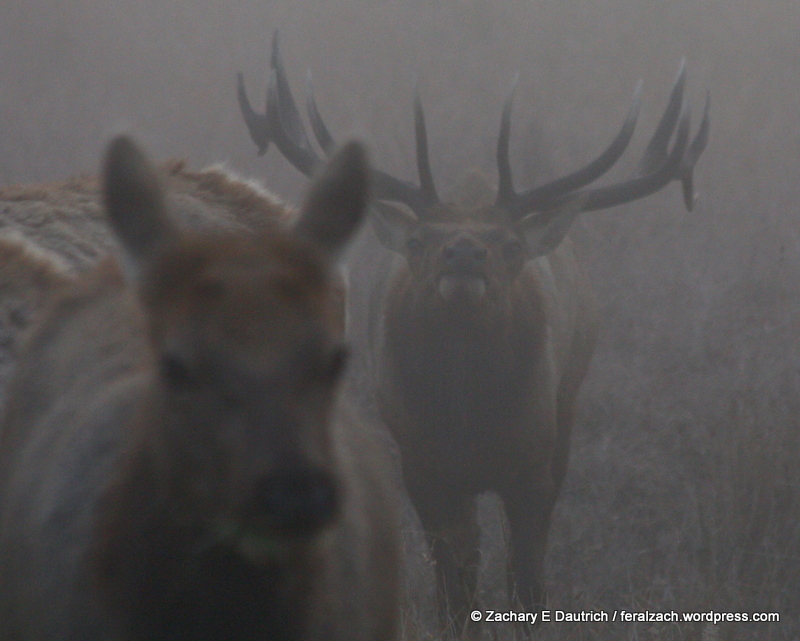
elk 01 / Tomales Point, Point Reyes Nat Seashore CA
I caught this one mid-bellow!!!!!!!!! The sight and sound was incredible.
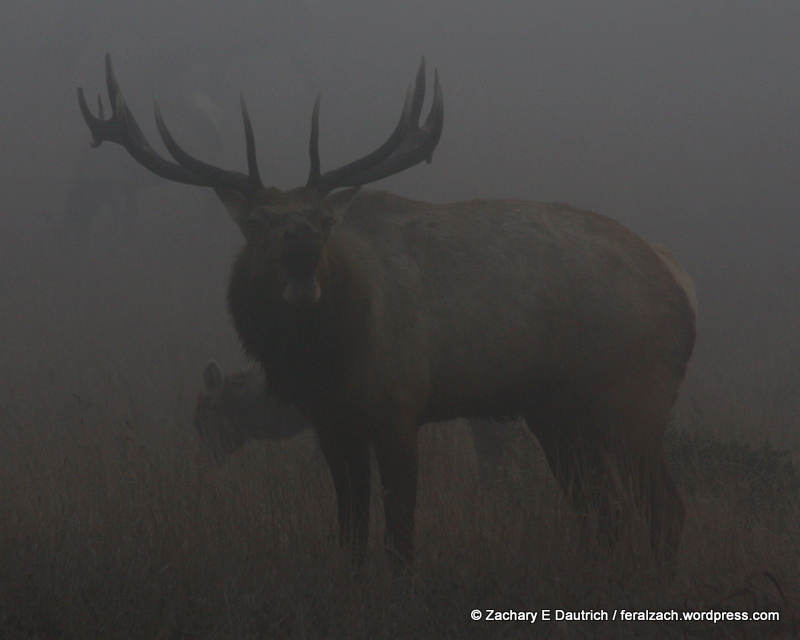
bull elk calling!!
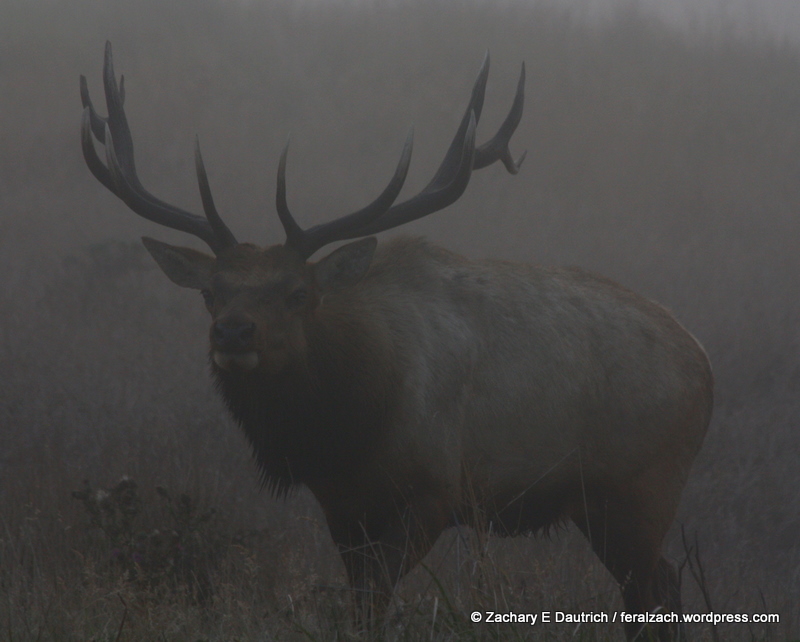
bull elk 02
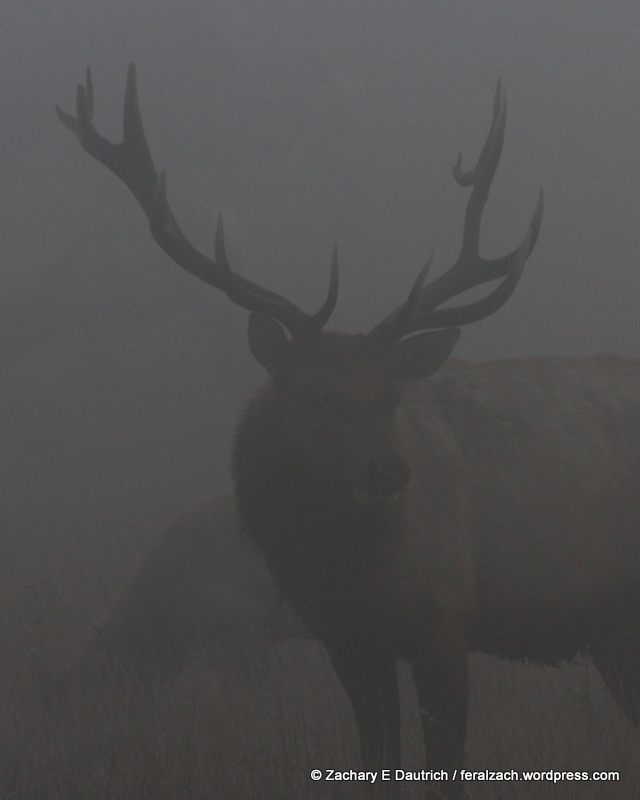
bull elk 03
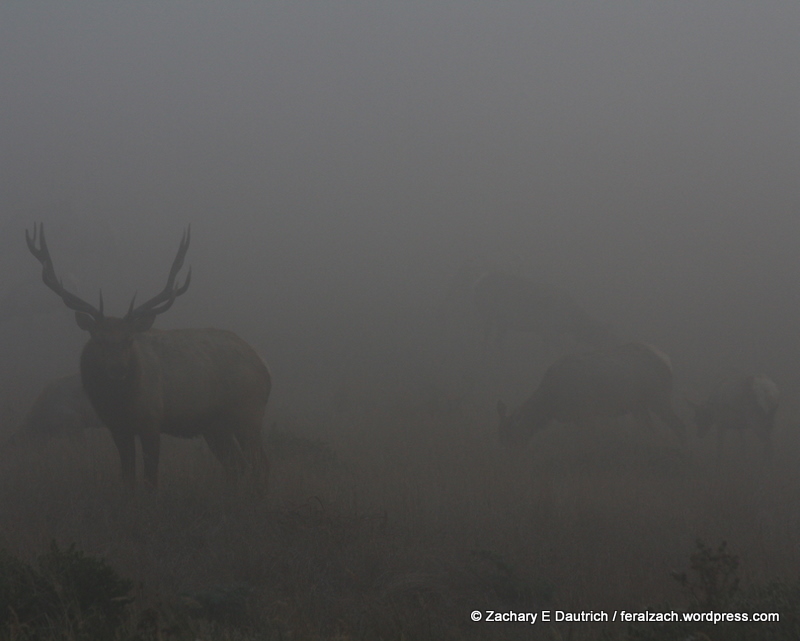
elk 02
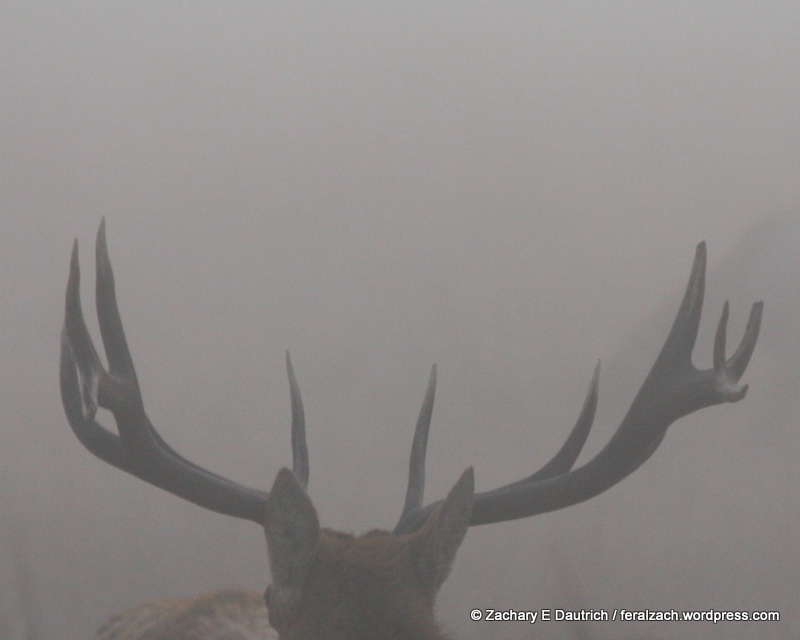
bull elk antlers
As we were leaving the Point Reyes area, heading East back towards the big city, we saw a great-horned owl perched on top of a utility pole, just a shadow highlighted by the twilight. We stopped to watch it, and suddenly we heard the unmistakable sound of a begging juvenile great-horned owl very close by. Within a minute or two, it had flown up to land on the utility wires, begging intensely for its breakfast. After shredding its prey, the adult jumped over next to the juvenile and handed it over. Oddly, the young one didn’t stop begging, it just perched on the wire with the food in its talons. The only time it paused was when I mimicked its begging call, at which point it would look at me for a few moments, then return to begging. Must have been a spoiled young one … it does live in Marin County, after all.
🙂
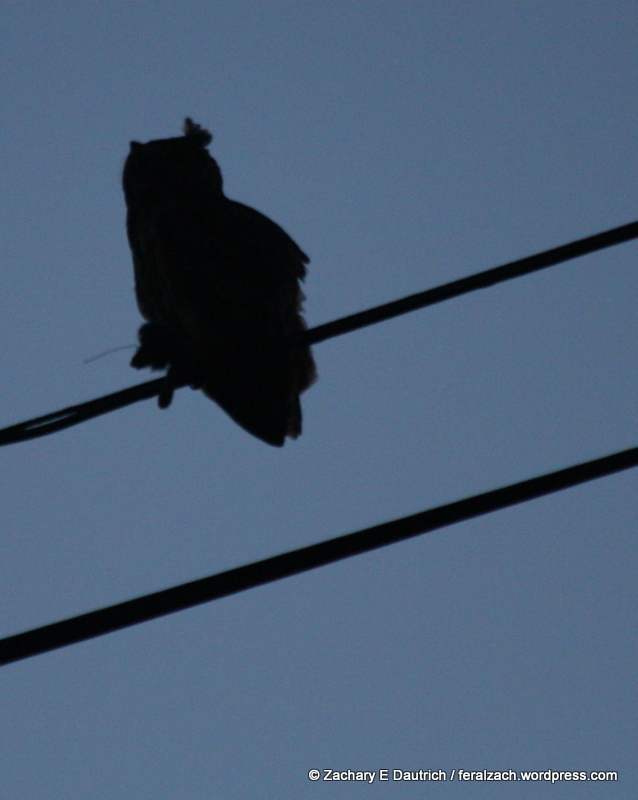
juvenile great-horned owl with prey
intermediate morph red-tailed hawk
In drastic contrast to the “spirit” red-tailed hawk in the last post, I found this fella hunting here in Berkeley. Red-tailed hawks are one of the most “polymorphic” hawks, meaning they show a large variety of individual plumage within the species. This one is a “rufous” or “intermediate” morph (in contrast to light morph, dark morph, or leucistic) – it’s entire body is dark brown – with a bit of a rufous or gold hue on his chest feathers – and its underwing coverts are dark as well (in contract to the flight feathers which are still white with dark banding). These are found more commonly here in the Western U.S., and I always am especially thrilled to see one as they are somewhat rare. And beautiful.
The lighting wasn’t so good because the sun had already set behind some clouds/fog to the West. But you get the idea.
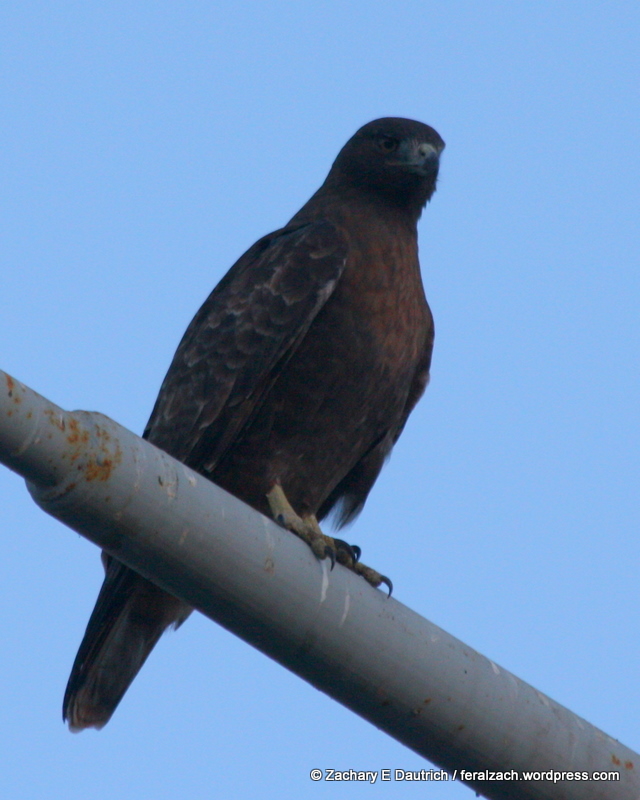
intermediate morph red-tailed hawk / Berkeley CA
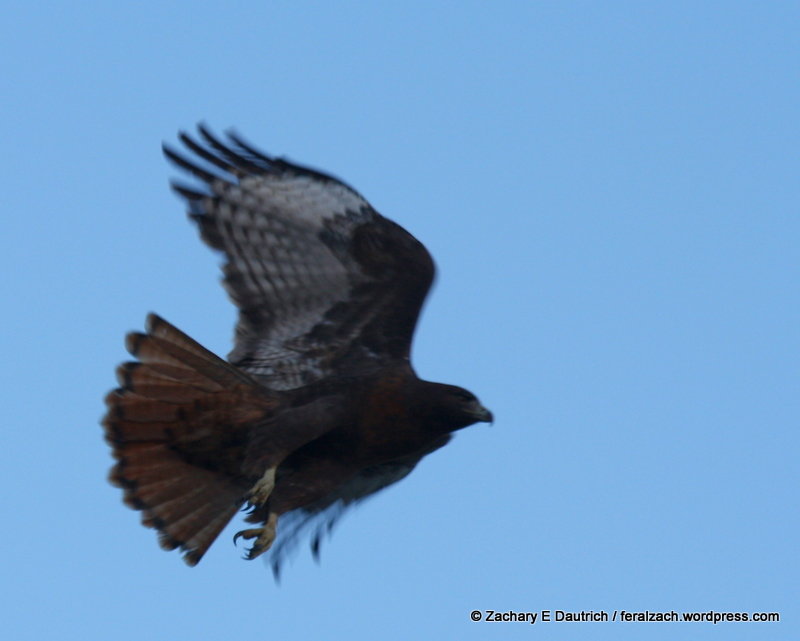
intermediate morph red-tailed hawk in flight / Berkeley CA
For some other pictures of a dark/intermediate morph red-tailed hawk, see my other post here.
As I was biking home after the sunset, I was stumbled on a lone great egret looking for a last fish before dark. It was chased off while I watched, by a heron that swooped in almost on top it, squawking like how I imagine a pterodactyl must have sounded. The whole scene was prehistoric and awkward, with both the birds gangling wings and legs flailing about, finally leaving me in the relative silence of twilight between worlds … and between the Berkeley Aquatic Park and Route 880/580 during rush hour!
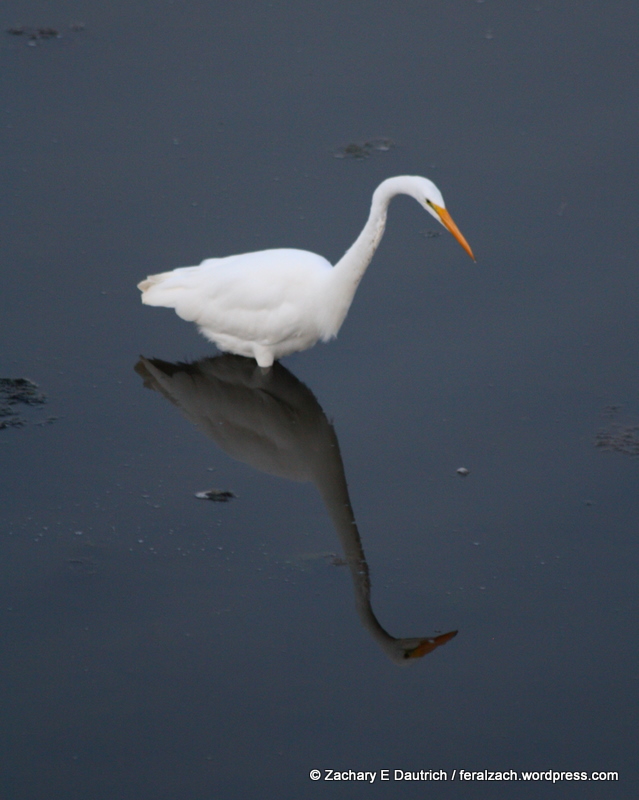
great egret / Berkeley CA
partial leucistic red-tailed hawk
(the following picture was added after the original post)
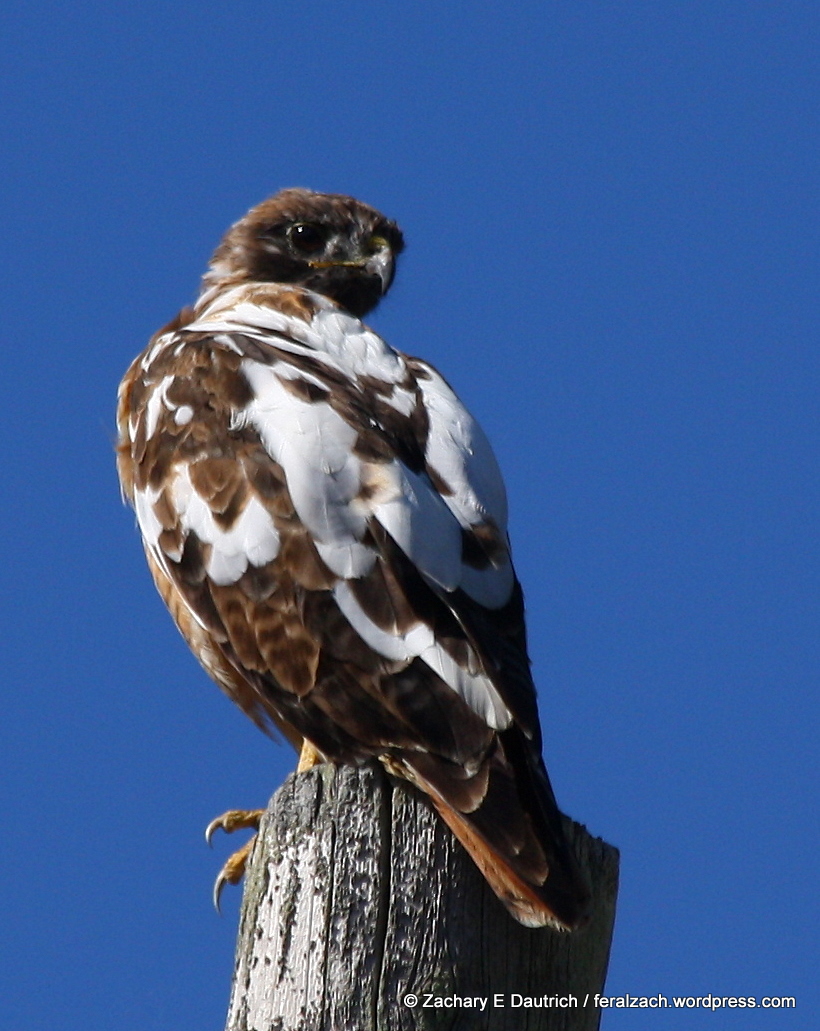
partial leucistic red-tailed hawk
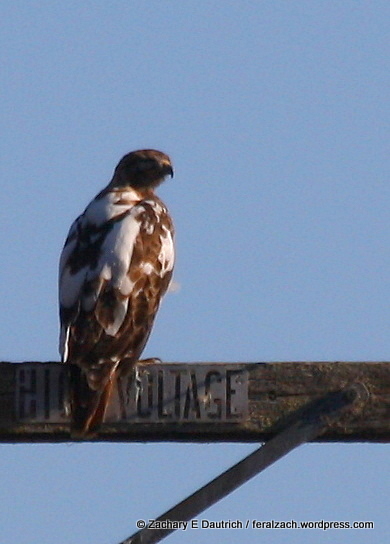
partial leucistic red-tailed hawk 01 / Sonoma County CA
Thanks to a tip from Larry “the raptor magnet” Broderick of West County Hawk Watch, I was able to see another amazing bird yesterday. Leucism is a recessive gene defect that affects the pigment cells’ development in some parts or an entire animal, causing either the whole animal or some of its feathers, fur, hair or skin to be white. It’s similar to (but different than) albinism, which only affects the melanin pigment cells. The effect can be really cool to see, as it is in this red-tailed hawk that I photographed in Sonoma County yesterday.
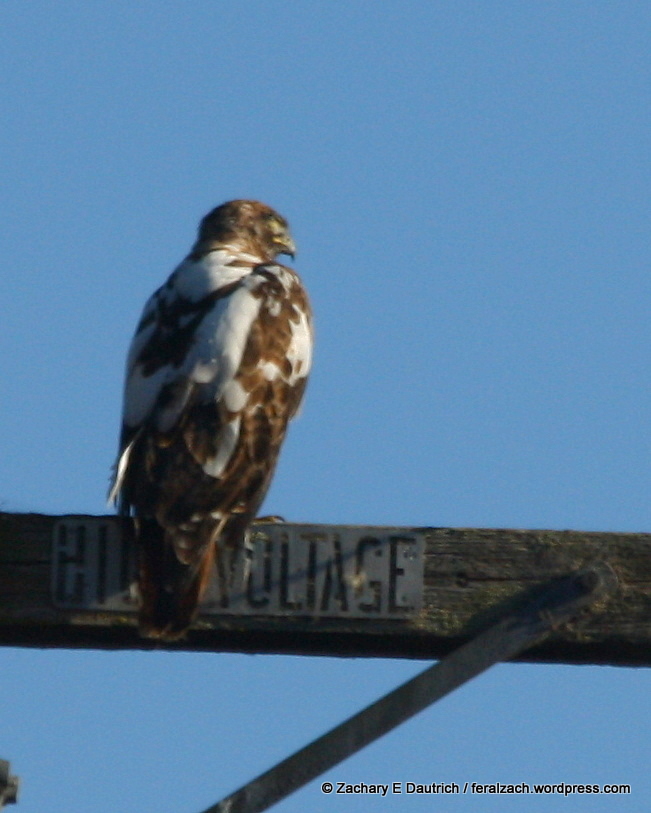
partial leucistic red-tailed hawk 02 / Sonoma County CA
Viewing the bird from the front or from underneath, it’s difficult to tell that it has different plumage than a typical red-tailed hawk, though on close inspection of it flying from underneath, you can see a couple of flight feathers that are all white. From a rear or top-down view while flying, it is obvious (and not easy to photograph!! I forgot to bring my jet pack yesterday).
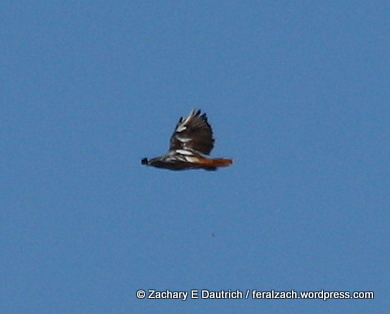
partial leucistic red-tailed hawk 03 / Sonoma County CA
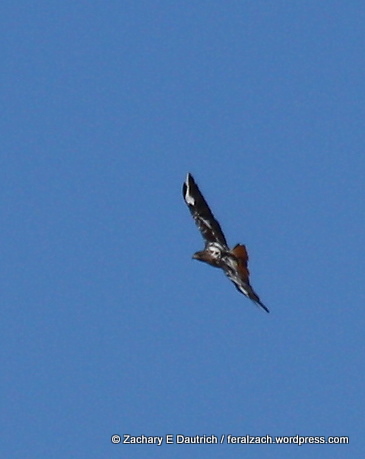
partially leucistic red-tailed hawk 04 / Sonoma County CA
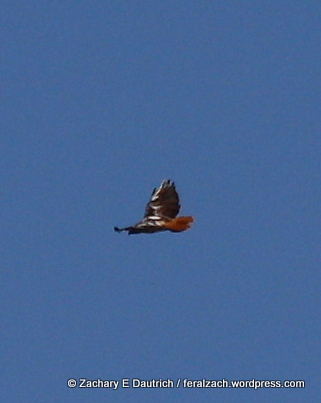
partially leucistic red-tailed hawk 05 / Sonoma County CA
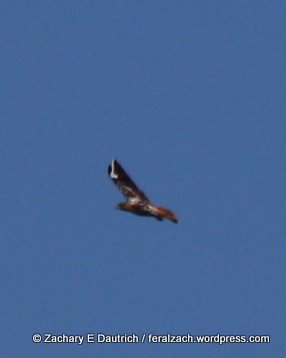
partially leucistic red-tailed hawk 06 / Sonoma County CA
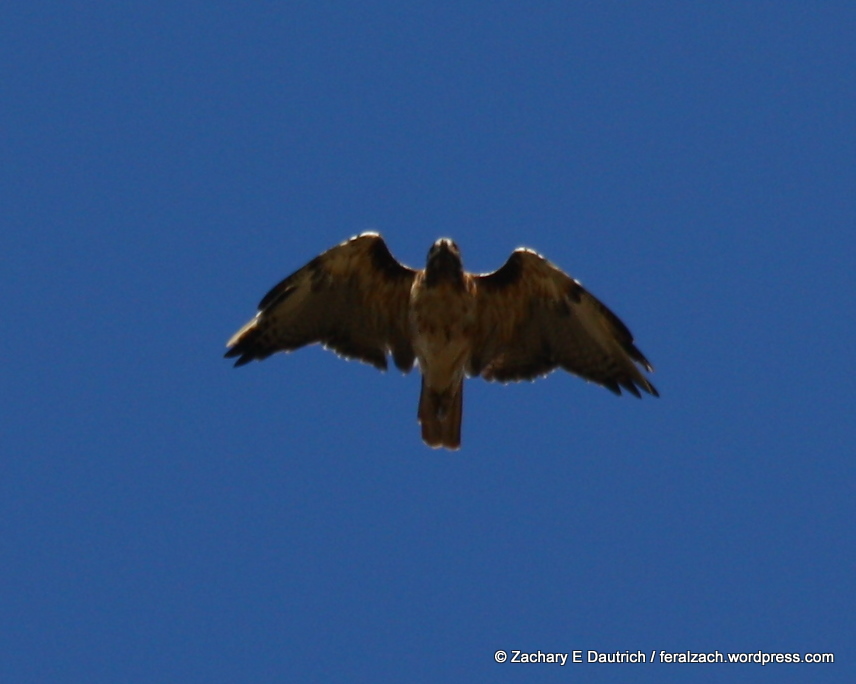
partially leucistic red-tailed hawk 07 / Sonoma County CA
A bald eagle that I photographed last winter also has leucism, and it was striking. See those posts with pictures again here.
Another local raptor expert, George Eade, photographed an almost completely white red-tailed hawk here in the Bay Area a few years ago, his pictures can be seen here. The bird and the pictures are absolutely amazing.
bald eagle trapping
Last week before I left Wyoming, I was fortunate enough to get out in the field with Brian Bedrosian, who is the Avian Program Director at Craighead-Beringia South. The task at hand was to catch a bald eagle, the last push to get the final of six transmitters attached to local bald eagles in the Upper Green River / New Fork River drainages, for a research project that is studying the effects of local energy extraction development on wildlife (aka gas wells aka fracking sights). For more on the details, see here.
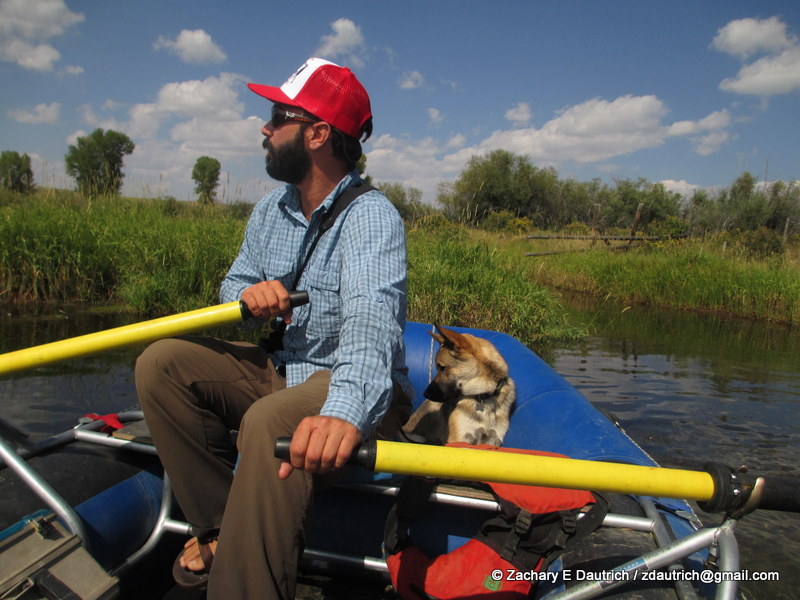
Brian and Chief / New Fork River WY
We spent 10 hours on the New Fork River on Wednesday, rowing down the low and slow water with Chief, Brian’s dog, directing us.
To the East are the jagged peaks of the Windy Mountain Range, poking above the horizon eerily in the forest fire haze, and they look similar to the drastic edges and slopes found in the Teton Range. Meandering back and forth through the dry high-desert landscape is the New Fork River, a lush riparian zone that is home to many plants and animals, and a literal oasis.Everywhere else around us, as far as the eye can see, are sage-covered hills, slopes and small mesas – a sight which resembles a snapshot from the ocean, just beyond the breakers where the surface of the water is starting to peak and trough into rolling, moving hills of water.
And, also as far as the eye can see, are natural gas extraction pads. So it is that this area is the center of much debate and ecological concern.
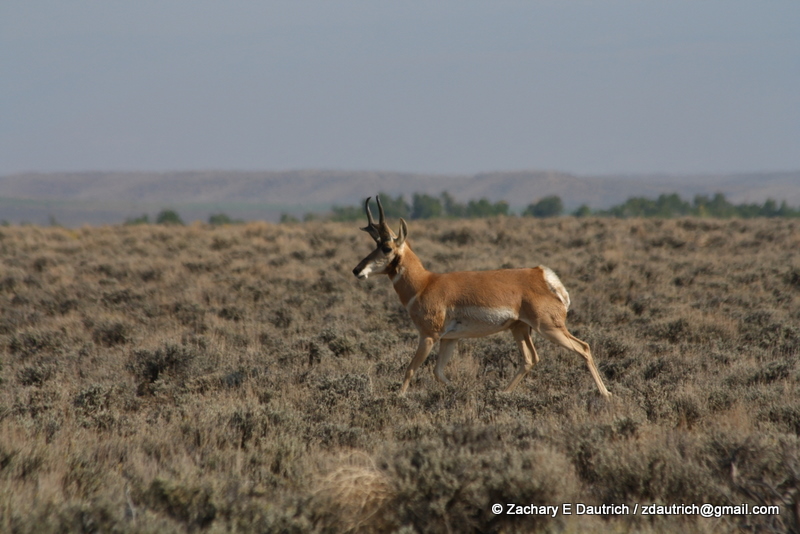 pronghorn antelope / Sublette County WY |
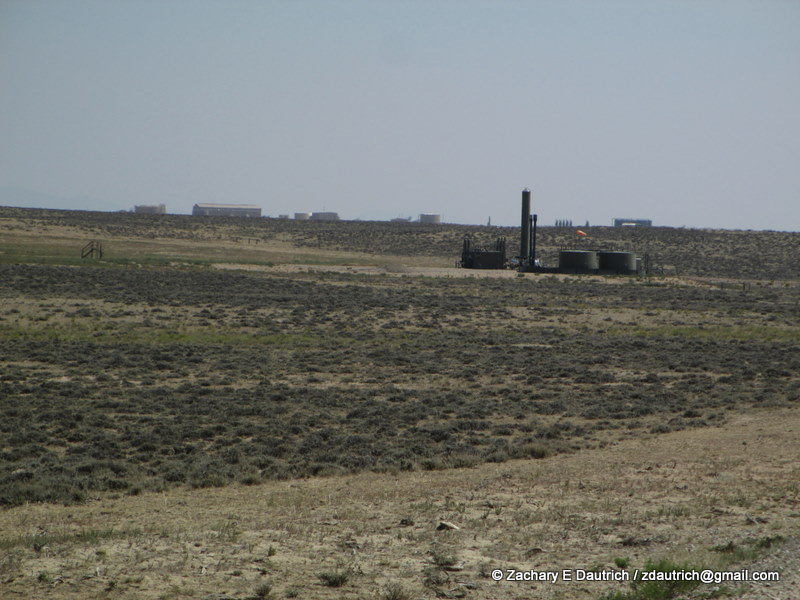 natural gas extraction pads / Sublette County WY |
We went through three separate bald eagle nesting areas during the float, using a trapping technique called a “float fish.” As we approached a nesting site, and there were eagles perched, we placed in the water upstream of us one or two of the float fish traps, then paddled quickly downstream ahead of them. These traps are essentially fresh-caught trout that have been modified with nooses of fishing wire and attached to a floating log with a few feet between the two. The concept is that when the eagle grabs the fish, the nooses secure around the eagle’s talons. The log is light enough that the bird can fly or swim safely to shore while we make our way back to grab it. Unfortunately the day yielded no results for our primary purpose (bald eagles trapped = 0), but it was a beautiful day to spend on a river. When your “work” entails floating and paddling down a river in August in Wyoming, life is good.
The next morning, we took a different tactic and instead of floating down the river, we selected two known bald eagle perch sites that were accessible by foot. We readied traps early in the morning – with Trapper Haynam joining us, also from Craighead-Beringia South – and before sunrise set them floating in the river below two separate eagle perch sites. After setting the traps we monitored them from not far away, above the river banks.
We then prepared for a long wait.
Suddenly, at 6:20 am, not 20 minutes after we had climbed back up the steep banks of the river to wait in the truck, an adult bald eagle soared over the fish and landed right by it! It seemed to toy with the fish and our emotions for a few moments, then after some careful scrutiny it took off. We hadn’t fooled it. Shortly thereafter a juvenile bald eagle came and circled above the fish a few times, then it was chased off by the resident adults who then perched upstream. It did not look promising.
Now the real waiting began. We had no eagle action after the initial excitement, but we did have several bull moose move through the area, including one who seemed to walk directly over the fish trap. I was worried that maybe we suddenly discovered a mutant carnivorous zombie moose and that we would have to free it from the fishing cord after it tried to eat our fish, but luckily it was the regular non-zombie, plant eating variety.
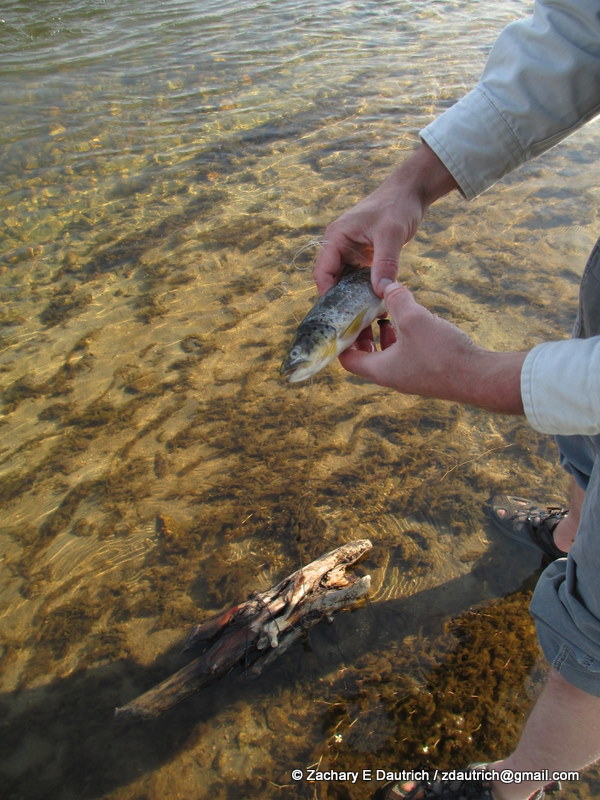 float fish trap |
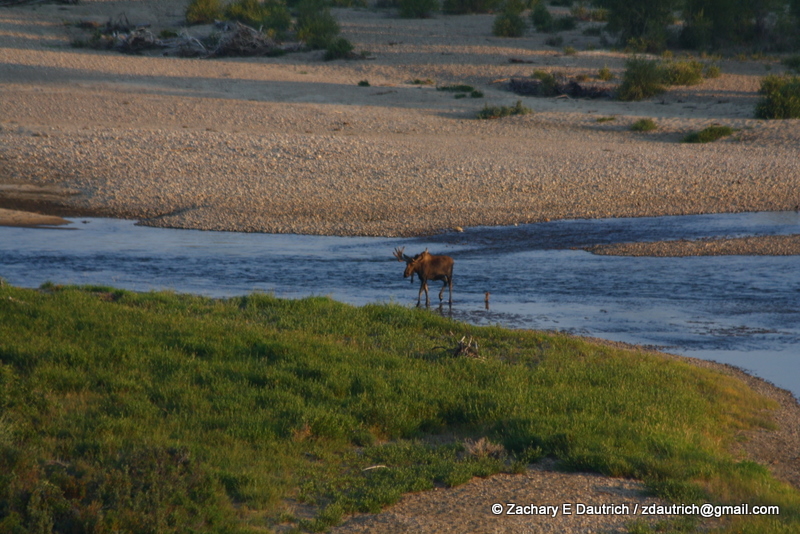 bull moose / New Fork River WY |
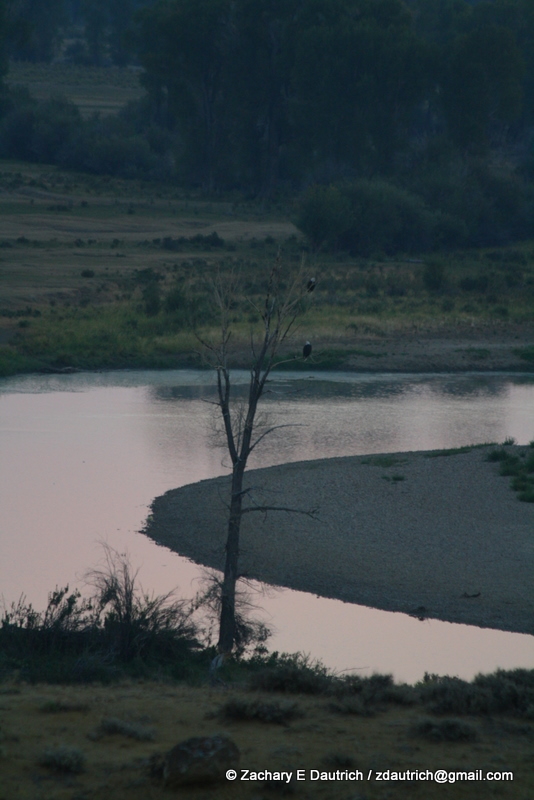 perched bald eagles at sunrise / New Fork River WY |
We decided that our setup was probably not going to attract any further attention from the eagle family, so we retrieved the trap and went to meet up with the rest of our crew at the other trap site that seemed to still hold some promise. The eagles hadn’t seen the fish yet but were in the area, and they had two of their young in the trees around them begging for food. My time there was limited as I had a long drive to do before the day was over, and just as I was about to leave for my drive back to California, we got one!
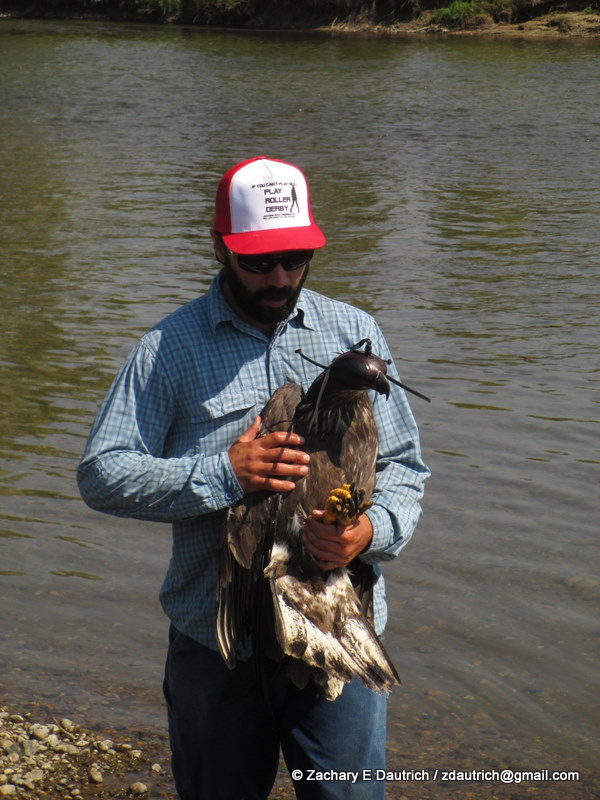
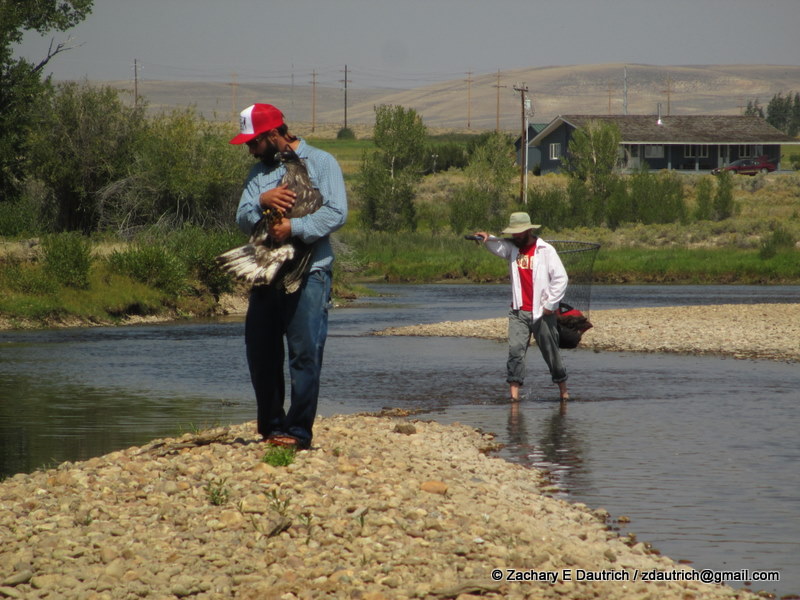 bald eagle capture 01 / New Fork River WY |
 bald eagle capture 02 / New Fork River WY |
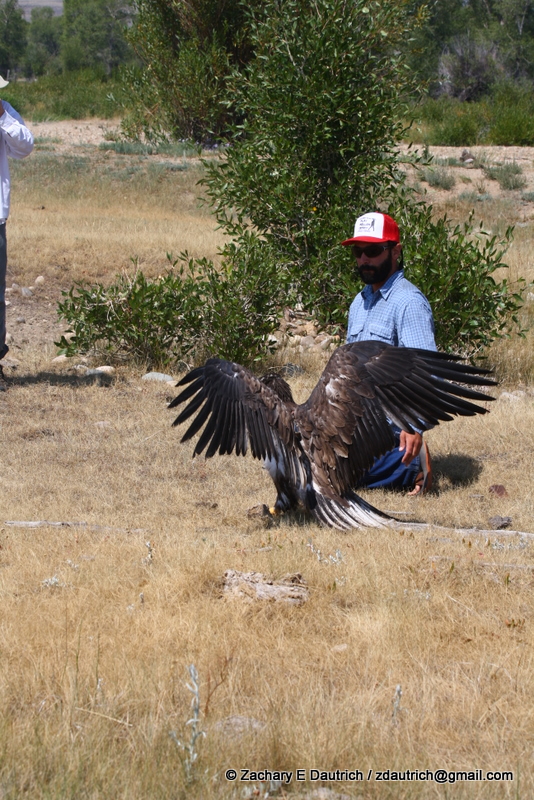
A hatch year bald eagle went for the fish, and although an adult was the preferred target, it could still be tagged for the study. Things happened VERY fast. We were posted up on a bluff above the river to monitor the trap, so when the bird hit it, we immediately drove down to the river bank, jumped out and ran to get close to it, before approaching the last bit of distance slowly and carefully. First priority was safety of the bird and us, and we didn’t want to create more stress than it was already experiencing. Brian handled it with amazing skill and professionalism. It had grabbed the fish, then when it realized it was caught, it flew/walked/swam over to a gravel bar in the shallow river where it was sitting when we got there.
To minimize stress (for the bird and us!), a falconers hood is placed over the head of the bird. This is also a common technique used in bird rescue and rehabilitation, and during exams of captive birds, because most birds tend to go into a hypnotized state of calm once the hood is over its eyes. The exam and attachment of the transmitter went quickly and smoothly.
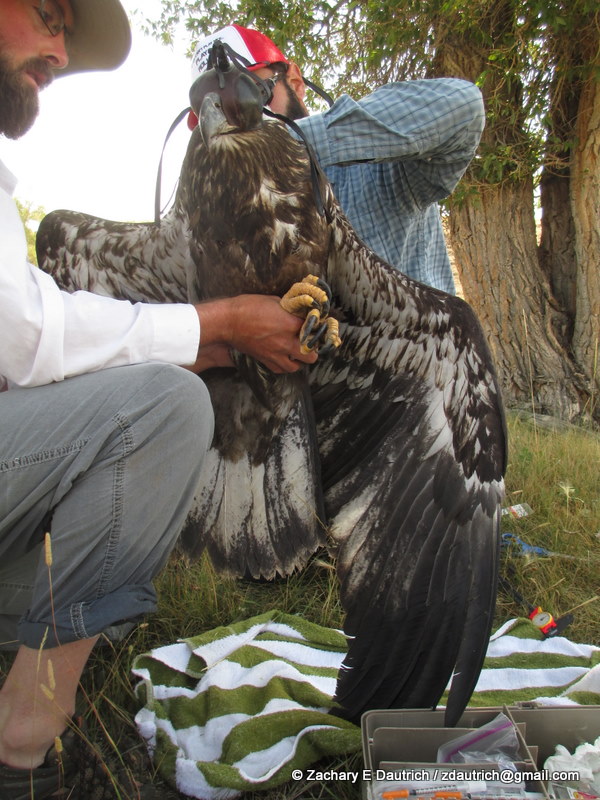 bald eagle exam 01 / New Fork River WY |
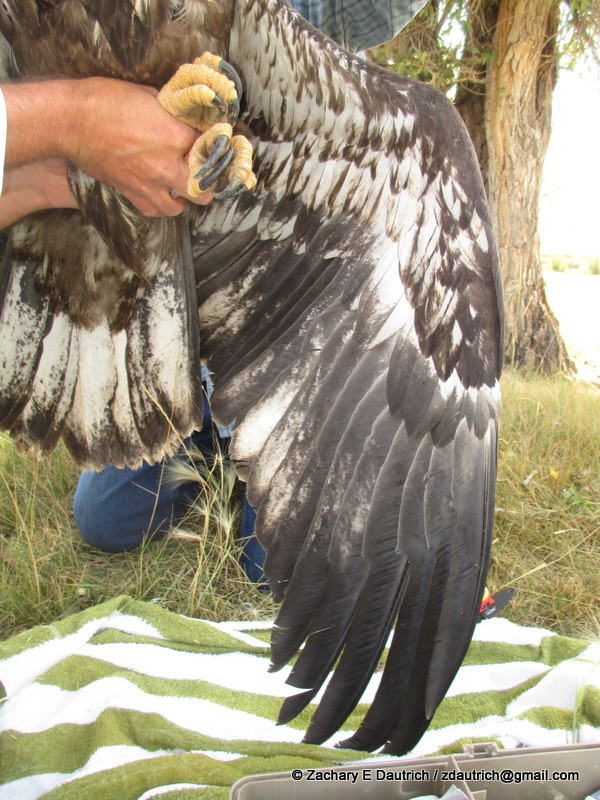 bald eagle exam 02 / New Fork River WY |
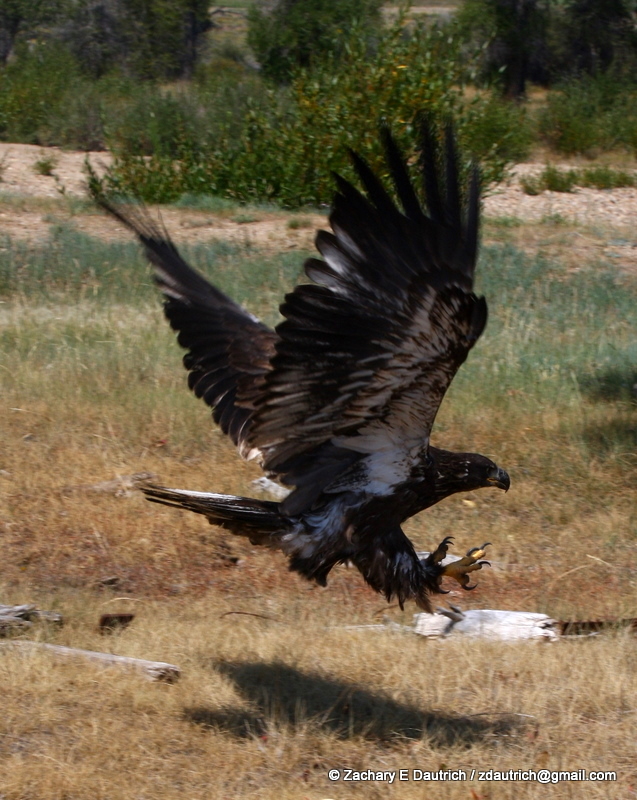
After feeding the eagle some trout and giving it some water to be sure it was hydrated after its ordeal, we released the eagle back onto the river. After the hood was removed and it was placed on the ground, it took a few seconds for it to get its bearings, then it flapped its gigantic wings and turned east, getting over a fence and landing in a stand of trees upriver. Mission accomplished.
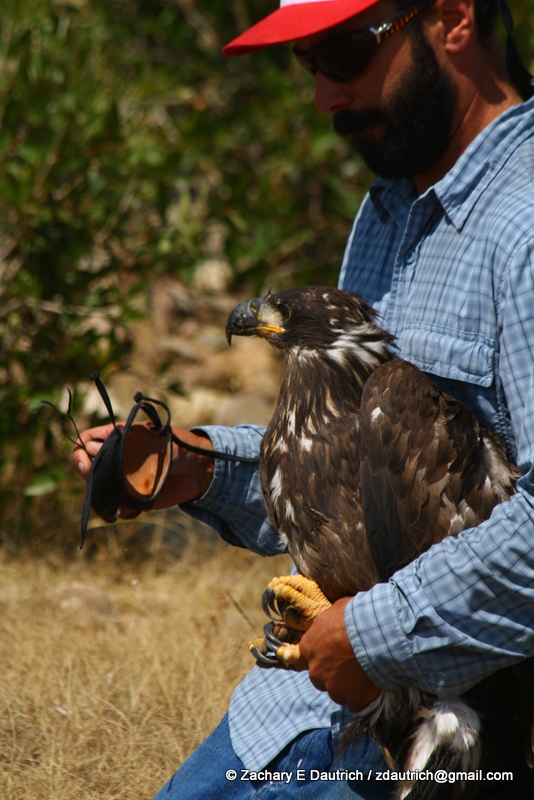 bald eagle release 01 / New Fork River WY |
 bald eagle release 02 / New Fork River WY |
I must say that I had a lot of mixed feelings about capturing the bird, and about putting a transmitter on it, as the device is attached by strapping it around its body, and it sits on its back like a very small backpack. I find some solace in knowing that professionals like Brian are executing trapping like this in a professional manner and minimizing stress for the birds, and that these birds are participating in studies that could help the lives of many of their kind in the future. Your sacrifice does not go unnoticed.
bald eagle release 03 / New Fork River WY
The visual and auditory impact alone of the gas pads is tremendous on the landscape. The night that we slept there amid them all on BLM land near the river, the remote area looked like it was covered with lots of small towns due to the number of lights. It wasn’t until morning that I realized most of these “towns” were drilling pads, with a few ranches interspersed. During the night, loud explosions occurred with regularity. Many people in the area believe that these extraction processes could be poisoning their air and water. The ethics and methods surrounding energy extraction are hot topics right now, and the long-term impacts on humans and the greater ecosystem have yet to be determined – but I know that I am certainly concerned. Nothing comes without a cost. I urge everyone to educate themselves about this issue and the next time you fill up your gas tank or turn on your stove, take a second to think about where your energy is coming from. And be thankful for it.
Good luck my eagle friend, I look forward to thinking of you and your kind flying free over clean waters for many generations to come.
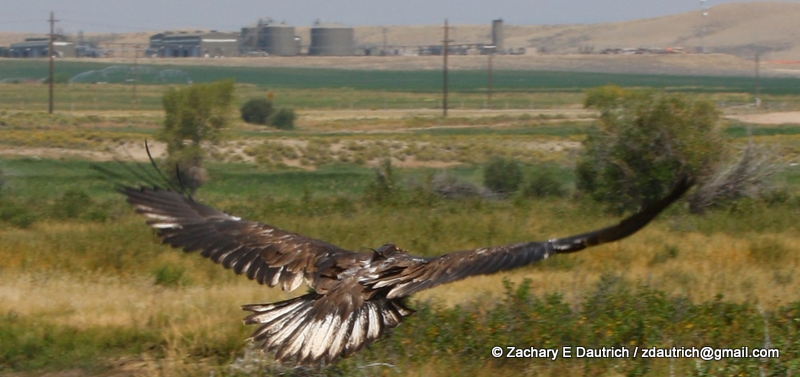
bald eagle release 05 / New Fork River WY
Swainson’s hawk … on the coast?
Yes. It was. I know all of you are flabbergasted.
Actually, it was my first (conscious) sighting of a Swainson’s hawk. During the winter they migrate to South America, around April they are found in the Central Valley of CA. I was surprised to see one so close to the coast, it was quite a treat in addition to the beauty of Pt Reyes.
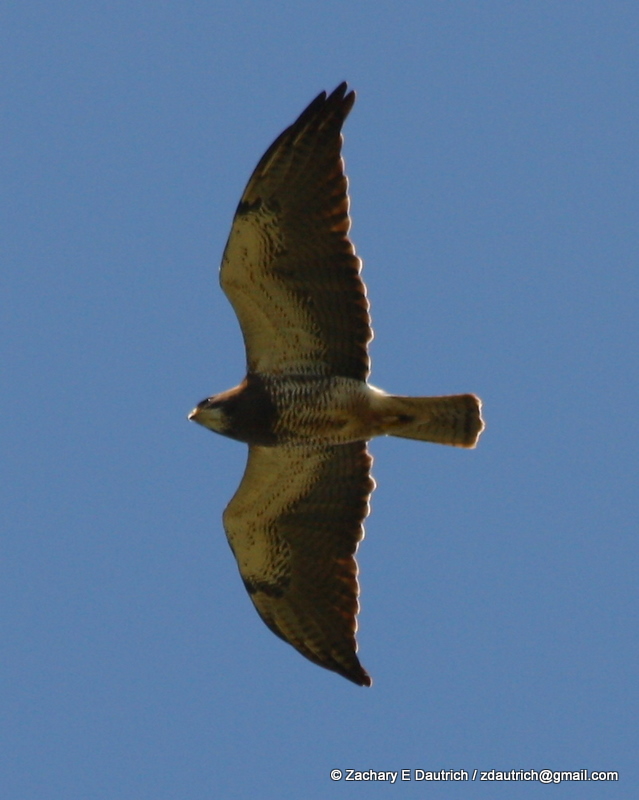
swainson’s hawk 01 / Pt Reyes NS CA
 feralzach