adventures in nature

Latest

Vernal Equinox, Indiana Jones, PCN Petroglyphs, and Tracking

This evening I debated about doing my almost daily walk/wander/hike in the hills. I was feeling kind of lazy. It was a warm and clear day, and despite being thankful for all the rain of late, I was happy for some sun after almost 10 consecutive days of rain. The light was sublime out there, and I was content to just stay at home as it illuminated my house with golden yellow light warmed by a slight orange hue. I started doing some mundane tasks, and I randomly started watching a classic movie in the background, Indiana Jones and the Raiders of the Lost Ark. Great flick. It was right at the part of the movie when he enters the map chamber and the sun shines through the amulet on top of the staff illuminating the location of the holy grail.

Soon I noticed that the sun was setting outside, and the rays were coming through my window reminding me it was soon time to go walk if that was to be.

I resisted.

And thankfully so.

After a bit, I walked outside to watch the sunset from my backyard in the warm, still, March air. As I looked West, towards Mount Tam, I realized that the sun was setting almost perfectly behind the peak. But just to the left.

Mount Tam, just after sunset

Then I thought, wow – I wonder if the sun will set exactly behind the peak on the vernal equinox, March 21st (four days from now)? Suddenly, I remembered the petroglyphs on the chlorite schist rock just 20 feet from me in my yard (that I blogged about over two years ago) …

Could they be related?
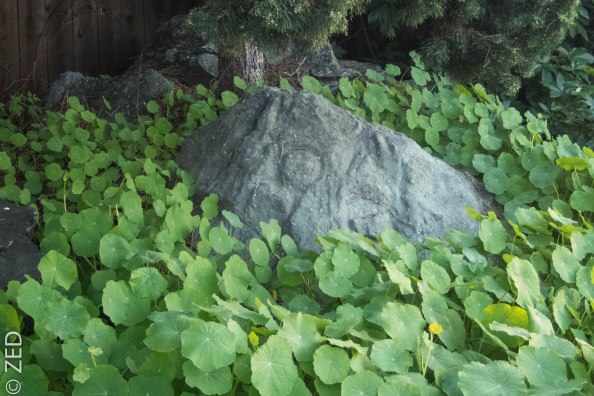
My mind continued on a virtual wander, as the sun illuminated the sky behind the Sacred Mountain across the Bay from me. What if the other petroglyphs-  similar to what are in my yard, but just to the south in Canyon Trail Park – lined up with another celestial event? Perhaps the summer solstice? And what if I searched to the north, along a north/south line from my current position – would I find more rocks with similar markings that aligned that position with Mt Tam and the winter solstice? Do they exist, or did they (it’s totally possible that they have already been destroyed or covered over by development – so proof could be hard to find)?

Maybe watching Indiana Jones had me fantasizing too much. But, what if?

As I looked at the rock with the petroglyphs, I realized that with some level of imagination the rocks actually looked like the silhouette of Mt Tam! Maybe that part is a stretch of the imagination, yes. But, the equinox alignment, at a minimum, seems too obvious to discount as coincidence. But why this rock? Why here, where there are higher elevation points that would seem to my modern mind more “appropriate” as a place for something like this? Perhaps the topology or plant cover at the time they were carved might have yielded more obvious clues about that.

Regardless, I think Dr. Jones would be proud.

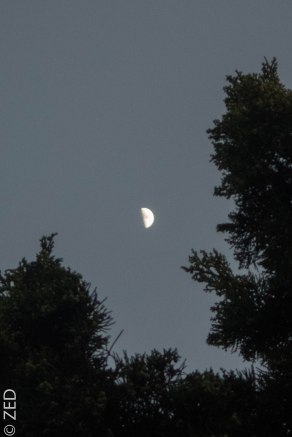
As I watched the light fading behind the Mountain, standing by the Rock, I looked up. Above the Rock that has a half-moon carved into it, and over the juniper tree beneath which it lies  – there was the half-moon shining through. Magical!
Tracking is not just about animal track and sign. Tracking is a 24/7 part of our existence, something we all do to one degree or another in almost every aspect of our lives – but each of us with different levels of consciousness around it. We can track animals, water, stars, moods, stock markets, traffic patterns – everything, really. It is about awareness. Practicing awareness. Taking a moment to observe, instead of always “doing.”

To finish the evening, I stopped at a restaurant called Jupiter and sat down in the courtyard by the fire. As I looked up into the sky in that courtyard, above the hanging sculpture of Jupiter, there shined a bright thing in the sky … the actual planet Jupiter!! Aha!!! Good stuff.

20160315_222658 v1

I asked the server if she realized that Jupiter was shining above their Jupiter sculpture above us – she did not, and really didn’t seem all that impressed to know. She was tracking other things I guess.

The adventure and questions go on, hopefully more to come on this …

night life updates

Some photos and updates from the last few weeks. Spring seems to have started in the beginning of February this year, the buckeye trees (usually the first to bud and the first to lose their leaves) were budding in some places as early as the end of January. Since then, the warm and sunny weather has drawn out flowers and buds all around. Fortunately, as I write this, the rains have started again – and we are due for much more.

Great-Horned Owl and Mount Tam at sunset / Contra Costa County CA

Two weeks ago (week of Feb 15th), on two different nights, I saw the Wildcat Canyon “Bottomhill” great-horned owl couple mate. The timing coincides almost exactly with when I saw another pair mate last year – I thought maybe the weather would affect the pattern, but apparently not. It’s somewhat odd as most literature indicates great-horned owls being an early breeder (compared to other raptor species), and in many areas are on nests in January in the snow. I guess owl culture, like human culture here in the Bay Area, is different in these parts as well (I joke – probably the Mediterranean climate is a factor, though I’d be curious to know how breeding behavior here compares to other warm areas). As I get deeper into my own observations of the world and its critters, I realize how little we actually know. Scientists in the past seem to have been content to generalize regarding behavior, and while there are patterns and a spectrum of those behaviors that are “typical,” often in reality it may be different based on local factors. That’s what makes it fun to be out there. Personality and local flavor.

The female always seems to initiate the act, and she starts by chasing down the male on the occasions that I’ve witnessed it. She lands close to him, and starts to do a vocalization very similar to a juvenile owl. When the male flies towards her, she starts a repetitive “hoo hoo hoo hoo” sound that reminds me of a monkey. As the male mounts her, flapping for a few seconds, she lets out a high pitched vibrato whistle and then its over. It will be interesting to see what happens this year, as last year many of the nests didn’t appear to successfully raise any young (drought related?). There are four pairs whose territories I regularly walk through, with a possible fifth – then another not far away. Of all those pairs, I only confirmed one successful nest last season.

Great-Horned Owl and moon / Wildcat Canyon Reg Park CA

Despite the very dry February, the vernal pools are deep and wide from all the rain in January, and have been extremely active with tree frogs and California newts. The newts migrate from their hiding spots under leaf litter back to the area from which they hatched to mate and lay eggs. The frog chorus, if you can sneak up on them, is incredibly loud when nearby. Nights of wandering under warm skies and no winds to a live symphony of frogs, and owls flitting around, is pizza for the soul.

California newts in a vernal pond / Wildcat Canyon Reg Park CA

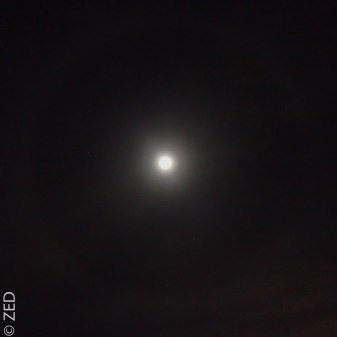
I caught a few interesting moon shots this month, one was a moon halo and the other was an interesting rainbow effect on clouds as the full moon rose last time.

canine track id study

the other week during a wander with my friend and mentor Jim Sullivan (see his website and tracking class offerings here)  – an amazing tracker, naturalist, and all-around brilliant fella – and other great trackers like Ginger; we had a suburb opportunity to see some canine species’ track diversity laid out before us. it’s not often you get to see four canine species’ tracks together in decent substrate. identifying the differences between them can often be very challenging, so any chance to see any of their trails, also in varying substrates, is incredibly illuminating. to get to see all of them in one day avails an incredible study opportunity.

coyote vs red fox vs gray fox vs domestic dog – it is a study that is always ongoing for me, especially with partial tracks and trails. these species don’t always overlap geographically, and even if they do, often their seasonal movement patterns don’t overlap in such a way that you can see their tracks together, especially in one day. sometimes it is very obvious the difference, but sometimes it can be confusing given the right circumstances.

gray fox track / Bodega Bay area Sonoma County CA

small red fox track (likely non-native species, on left) and western coyote track (right)

red fox (R) and western coyote track (L) / track plates copyright Mark Elbrock’s book

the red fox tracks we found were on the small end of the spectrum – there was some debate about id due to the size. it was at the small end of the red fox size spectrum  (and at the large end of the spectrum for gray fox), especially upon initial (eye-ball) inspection. but further analysis (and healthy, civil debate among accomplished trackers) left us concluding red fox. context, the full trail, and multiple tracks often help in track id. actually it’s often about context. having the chance to see full trails, and the way the tracks vary within each substrate, really help in honing the ability to discern one species from the other in the future when there is only a partial track or trail.

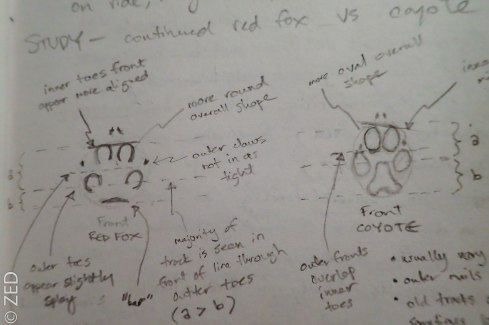
a snippet from my journal analysis of red fox vs coyote 2015

drawing and journaling is a great way to solidify the memory of ideas and patterns in the ol’ brain.

great day

old friends in the Sky – and five planets in view over the next two weeks!

There is something familiar to me about this scene, and during this time of year I find it comforting to look up into a clear sky to see these stars shining down on me. How many of my ancestors looked up at the same sky and felt comforted too?

Easy to identify in the middle of the picture is the belt of Orion. In the bottom left portion of the frame is our brightest star in the sky, Sirius, the “Dog Star” (part of Canis major), one that has long been used for navigation and other purposes by our ancestors. Above it to the left is Procyon (8th brightest star in the sky, part of Canis minor), and forming a triangle with those two is Betelgeuse (9th brightest star in the sky) shining just above the Orion’s belt, also part of that constellation. The light of the waning moon (full yesterday) is illuminating some clouds on the left portion of the photo.

Don’t miss the special event over the next few weeks when all five of the planets visible to the naked eye are in view together! It occurs each morning just before dawn (45 min before) on the Eastern horizon. See this article in the Sky and Telescope magazine website for more details (SkyandTelescope.com).

Here's the view 45 minutes before sunrise as plotted for February 1st, about when Mercury should be easiest to spot. For several days the waning Moon is marching eastward among the assembled planets. Sky & Telescope diagram - See more at: http://www.skyandtelescope.com/press-releases/five-planets-at-once/#sthash.rfuYXBXp.dpuf

Here’s the view 45 minutes before sunrise as plotted for February 1st, about when Mercury should be easiest to spot. For several days the waning Moon is marching eastward among the assembled planets.
Sky & Telescope diagram – See more at: http://www.skyandtelescope.com/press-releases/five-planets-at-once/#sthash.rfuYXBXp.dpuf

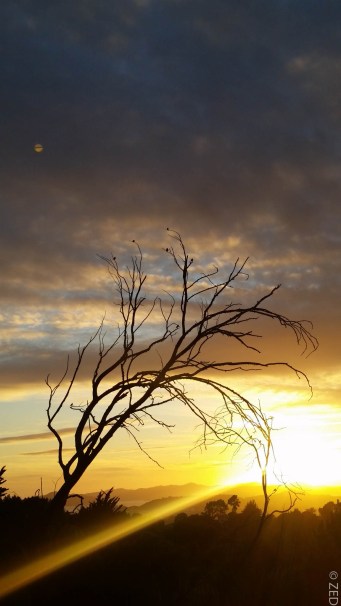
the sunset tree

20160124_170950 v1

most nights when there is a visible Sun setting

small Birds of various plumage, perch

to watch the golden Sun disappear

behind the mountains holding back the sea

as our planet Earth spins into darkness;

they are at total ease … in a trance

as they sit and watch.

it seems they are getting a heavenly download

planted in their hearts

instructing them of their next birdly endeavors;

the sense of Peace that envelops them, and me

is Divine.


i think they are onto something,

those birds.

ZED

2016 Jan 17 – a quick Arizona experience

I found myself briefly in Arizona this weekend, and despite it not being a planned “adventure,” of course I’m always tracking. Got some new tracks I’d never seen before.

I was in an area that is renowned as a birding hot spot, and it’s also not far from where there have been jaguar sightings. That’s right, JAGUAR. This place in southern Arizona in the Santa Rita mountains is an interesting ecology, high desert, and home to some of the only perennial creeks in these deserts. The Santa Rita mountains are in the shadows of Mount Wrightson.We broke out for a short hike in the Patagonia-Sonoita Creek Preserve, and though we didn’t see a lot of wildlife (it was midday), we spotted some nice tracks.

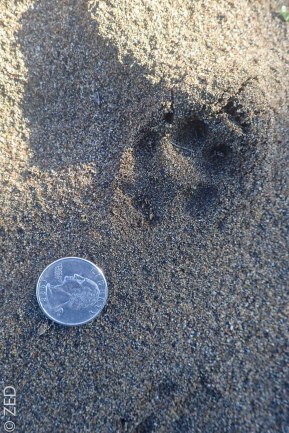
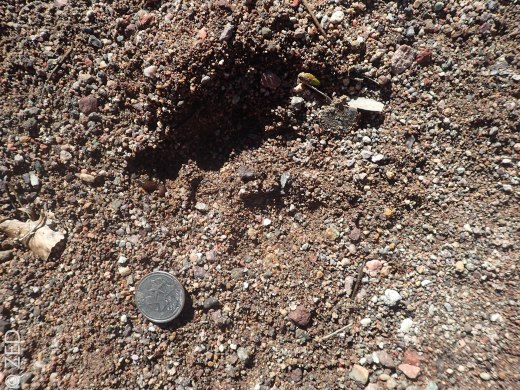
cOLYMPUS DIGITAL CAMERAfresh small mountain lion track (probably female) / Patagonia-Sonoita Creek Preserve AZ
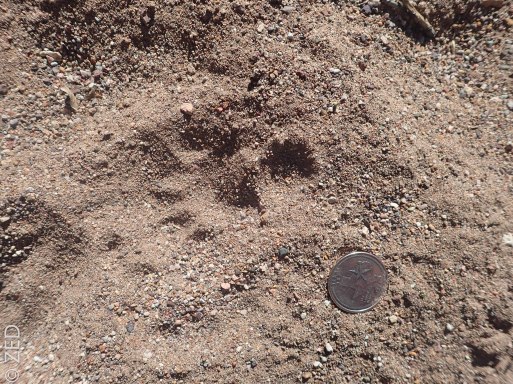
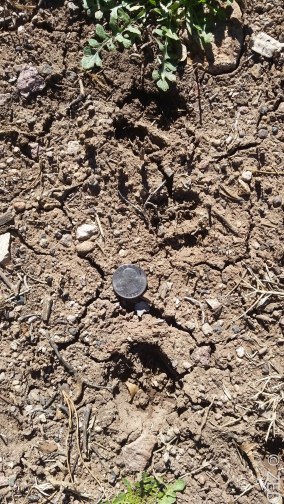
coati track / Patagonia-Sonoita Creek Preserve AZ
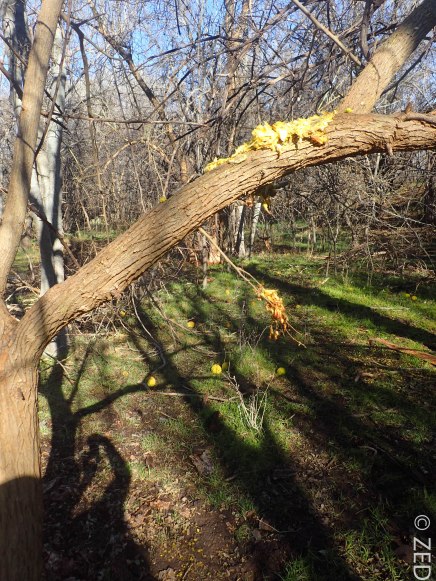
We stumbled on some mysterious feed sign, it looked like broccoli barfed up in the middle of the trail. As we considered all possible solutions, including vegetarian humans that might have puked on the trail after a rough night at the Wagon Wheel, we finally came upon a solution …

osage orange fruits, a non-native that is present in the area

I determined that likely it was wood rats (tracks below) and also possibly squirrels that were opening up the fruits and leaving the broccoli-like remnant behind …

woodrat tracks

Beautiful country, I can’t wait to return.

20160117_152518 v1

20160117_113540 v1

javelina (collared peccary) tracks


Klamath Basin report VI – Butte Valley Finale

IMG_1761 v1-3

Cowboy boots ‘n mountain buttes
Pick-up trucks ‘n luckless ducks
Hungry hawks ‘n too-thin socks
Saw eagle with coyote, like I was on peyote
So comes to a close, my trip to the Klamath Basin

Ha!! Ah jeez. Not my best work there.

Regardless, some of the best action on my trip was saved for last. As I left the area, I stopped off in an spot that was reported to have large numbers of ferruginous hawks, a species that I had seen scant sign of in the Klamath Basin just to the north.

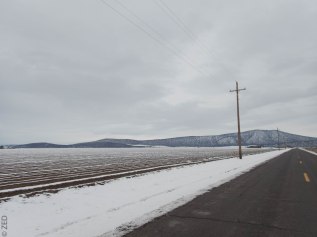
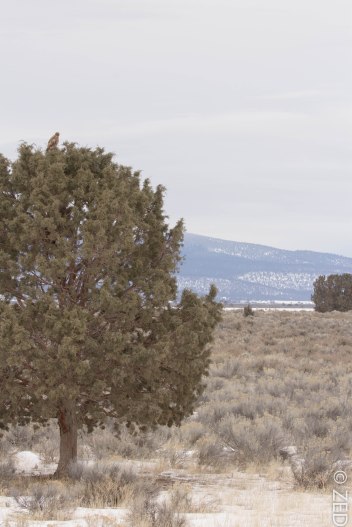
Initially I wasn’t seeing any raptors at all as I drove along some of the roads in the snowy flat lands that consisted primarily of ag fields or open, high desert ecosystems. Thee wild areas featured primarily rabbit brush and desert sage, with the occasional juniper tree. There were jack rabbit and coyote tracks all over the place.

OLYMPUS DIGITAL CAMERA

Butte Valley CA

OLYMPUS DIGITAL CAMERA

Butte Valley CA

I was shocked that there didn’t seem to be ANY raptors around an area that seemed like it would be full of prey. The reason? They were all in one spot. Literally. When I finally found the raptor swarm, there must have been over 100 birds of prey in the 360 degree view around me – and two coyotes! They were in a number of adjacent ag fields that hadn’t been plowed. The mice/vole/ground squirrels populations there must be outrageous. Everyone was there for lunch!

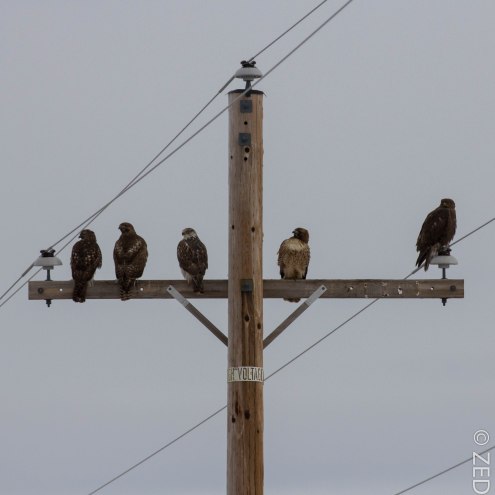
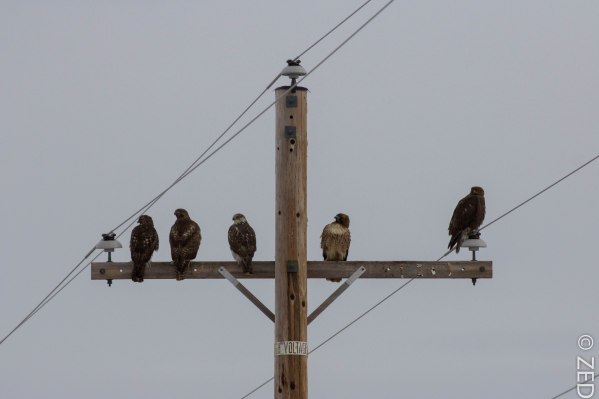
There was a line of telephone poles along the country road, and on almost every other pole there was at least one raptor – but sometimes as many as five on one pole! And sometimes multiple species! I had never seen anything like this.

IMG_1761 v1-2

Five! raptors on one telephone pole – (from left): 2 juvenile red-tailed hawks, 1 juvenile ferruginous hawk, one adult red-tailed hawk, and one dark morph ferruginous hawk) / Butte Valley CA

IMG_1763 v1

same crew as the above picture, but with an adult ferruginous hawk doing a fly-by! / Butte Valley CA

IMG_1785 v1-2

immature bald eagle on the front pole, and raptors on almost every pole thereafter down the road / Butte Valley CA

20160103_142106 v1

and more …

IMG_1773 v1

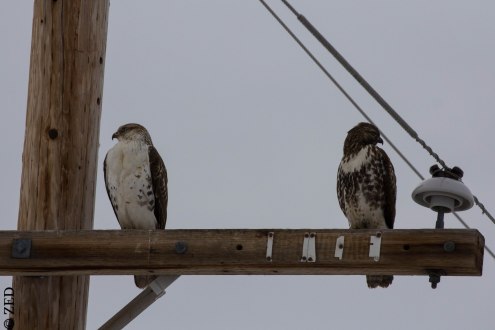
“If I ignore him maybe he won’t see me …” – juvenile FEHA (ferruginous hawk) on left, juvenile RTHA (red-tailed hawk) on right / Butte Valley CA

IMG_1777 v1

“Wait, does he know I’m here?”

IMG_1769 v1-2

“Well hello there” (juv RTHA on left, juv FEHA on right)

IMG_1779 v1

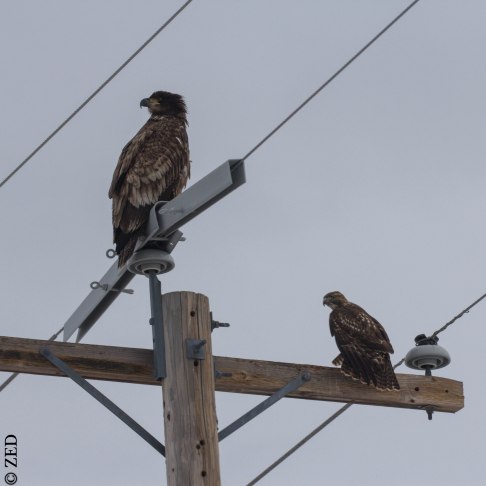
immature bald eagle (Basic I?) with juvenile RTHA / Butte Valley CA

There was an irrigation wheel line with eight segments on it, and I counted 19 raptors on it (including bald eagles, ferruginous hawks, rough-legged hawks, and red-tails)! In the immediate area were a lot of red-tailed hawks mostly perched on something, and all over the ground in the fields there were ferruginous hawks everywhere (probably 50+ of that species alone)!! There were also a good number of Northern harriers, bald eagles, rough-legged hawks, and at least one golden eagle. Plus the two coyotes. It was unbelievable.

IMG_1791 v1-2

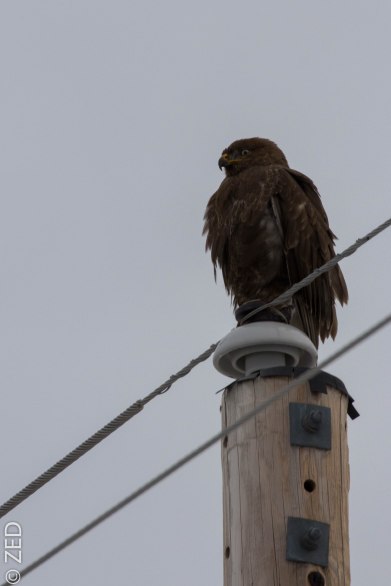
dark morph FEHA / Butte Valley CA

IMG_1788 v1-4

dark morph FEHA / Butte Valley CA

What an incredible finale to my trip. It often happens that way – as if the Spirits of the Land are trying to get me to stay. I will certainly be back there soon.

IMG_1803 v1-3

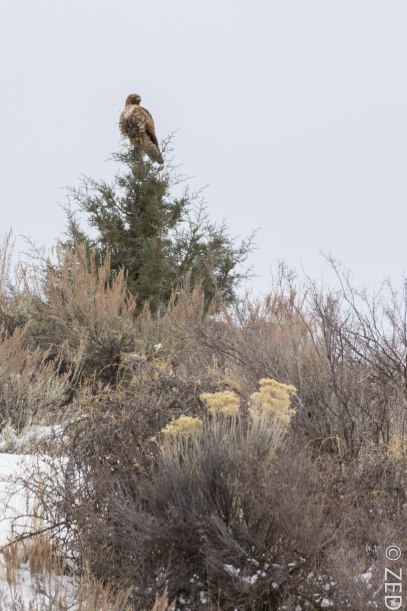
red-tailed hawk on juniper / Butte Valley CA

IMG_1797 v1-2

red-tailed hawk on doug fir (?) / Butte Valley CA

Thank you Klamath Basin!

Links to more information on Klamath Basin:

KS Wild

Winter Wings Festival – being held this Feb 11-14th 2016!

Klamath Audobon

Klamath Birding

Klamath Basin National Wildlife Complex

Klamath Basin report V – immature bald eagles

No, they weren’t misbehaving.

IMG_1719 v1-7

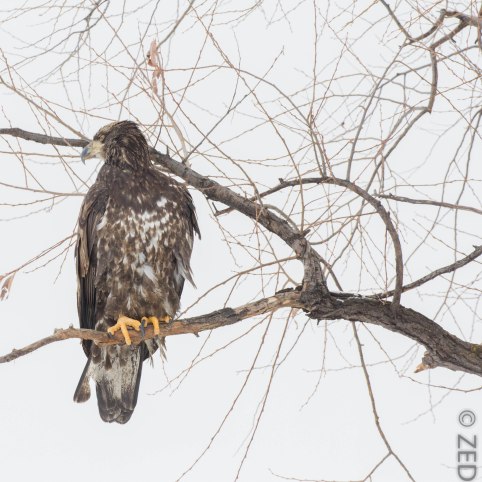
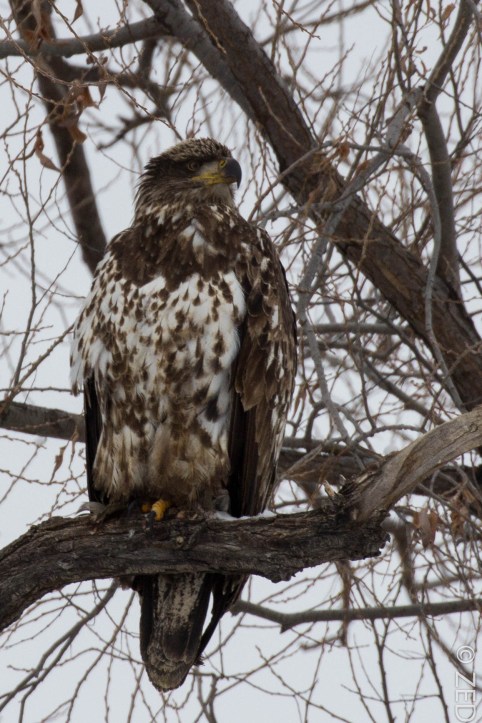
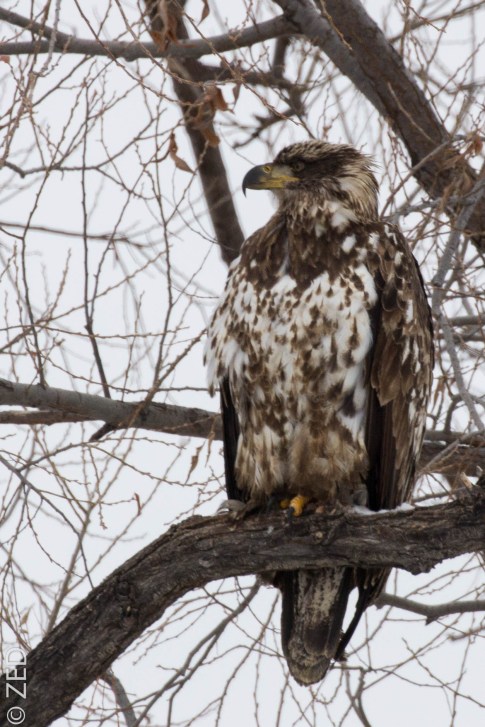
immature bald eagle (Basic I plumage – aka on its second year of life, likely approaching its 2nd birthday)

Bald eagles take five years before they grow their adult plumage, and in the early years many people can mistake them for golden eagles since they don’t acquire the characteristic white head and tail until adulthood.

One bird was perched on a branch very close to the road, and we spent a long period of time together at a very close distance. The bird preened and seemed relaxed (which let me know I wasn’t too close, something I’m always ultra-sensitive to – I try to always be far enough away that the wildlife feels comfortable and not threatened). This bird appears to be a young bird in its second year of life (now approaching its second birthday) – wearing what is referred to as a Basic I plumage (1st year, or hatch year is called a “juvenile,” second year is Basic I, then Basic II, Basic III and adult). The feather pattern for each year are variable but generally unique, combined with beak and eye coloring, and help to distinguish the age.

IMG_1699 v1

immature bald eagle (Basic I plumage) / Lower Klamath NWR

IMG_1727 v1-2

immature bald eagle (Basic I plumage) / Lower Klamath NWR

IMG_1718 v1

Nearby was another young bird, and this one had plumage that was different than the first – indicative of Basic II plumage (a bird in its third year of life).

IMG_1750 v1-2

immature bald eagle (Basic II plumage – a bird in its third year of life) – Lower Klamath NWR

IMG_1752 v1-2

immature bald eagle (Basic II plumage) – Lower Klamath NWR

IMG_1753 v1-2

immature bald eagle (Basic II plumage) / Lower Klamath NWR

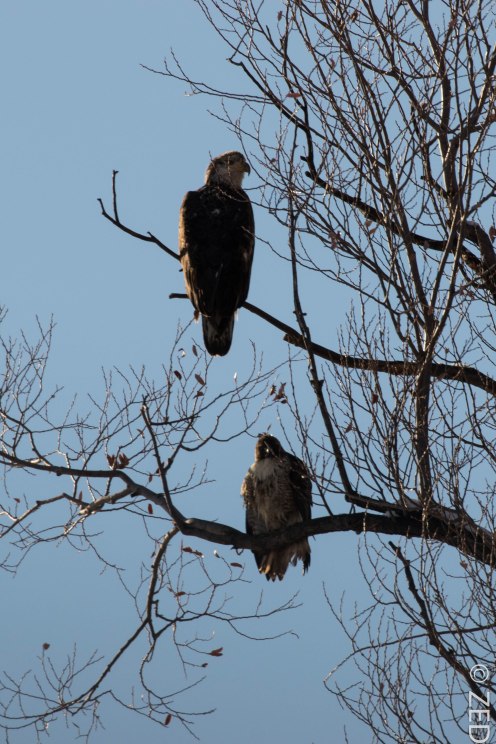
Along this same part of the Lower Klamath National Wildlife Refuge, there was a solitary treeline that had almost 15 bald eagles in it – along with many red-tailed hawks and one golden eagle. A ranger I spoke to said that two weeks prior, he counted over 60 bald eagles (and a golden eagle) in the immediate area of the treeline! The density of birds makes it such that species that usually don’t tolerate each other in close proximity end up roosting right next to each other, as did many bald eagles and red-tails that I witnessed over the two days (though occasionally a red-tail would go after an eagle, just to remind it who was in charge).

A74A0114 v1

adult bald eagle perched next to a red-tailed hawk / Lower Klamath NWR

Being in an area like this really allows for a deep study into field identification of birds because there are so many species in the area.

A great time of year to visit is in February during the Winter Wings Festival – events are planned over a long weekend catering to raptor viewing, including guided trips in the Basin, education programs, vendor displays (optics mostly), and more. This year it takes place the weekend of February 11-14, 2016.