adventures in nature

Latest

20150913 salmon creek wander

Beautiful day out by Salmon Creek in Sonoma County – a bit of sun before the marine layer rolled in thick like a fluffy down comforter over the beaches and dunes. Lots of red and gray fox track and sign, even more striped skunk track and sign. Almost no new rabbit sign. I’m beginning to think that perhaps the area is like an animal beach-condo timeshare – evidently the skunks have it this time of year and the rabbits are vacationing elsewhere.

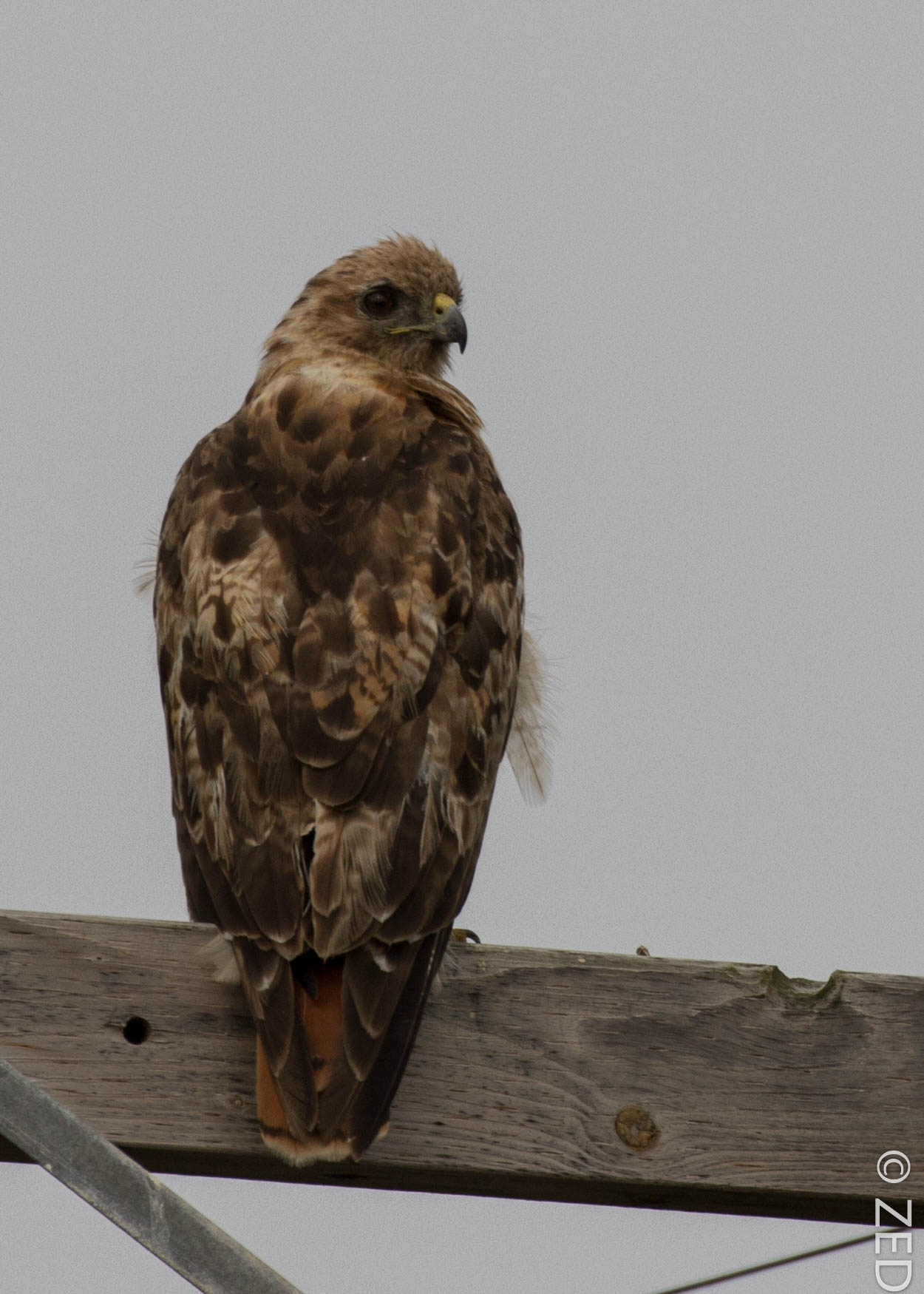
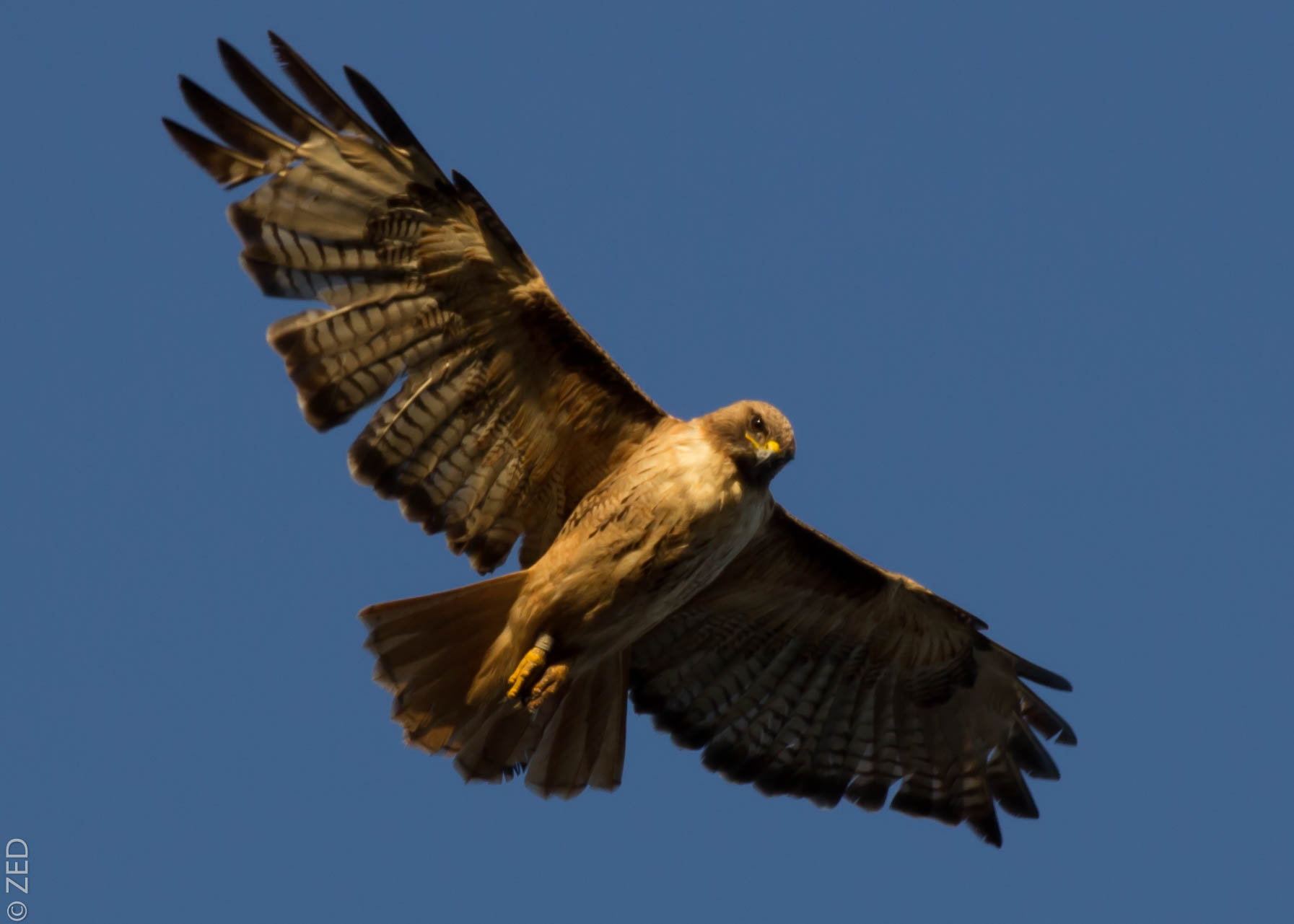
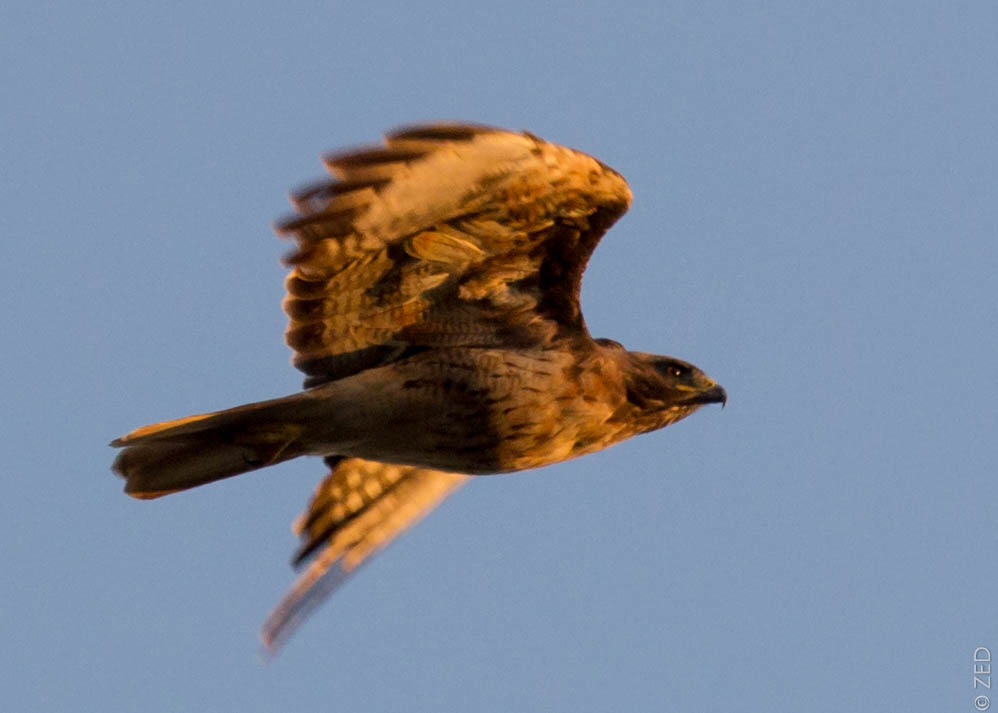
This red-tailed hawk has some really interesting plumage, it reminds me of a bird I saw once in the high desert in Washington. You can see there is tan mixed in with the brown and white on the back, and its head and especially neck feathers are really light. Beautiful bird, very striking.
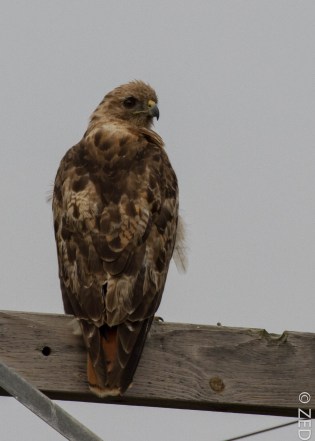
red-tailed hawk

This osprey and I were able to see eye-to-eye today on composing this photo. Much appreciated! Their eyes are HUGE compared to the rest of their head.
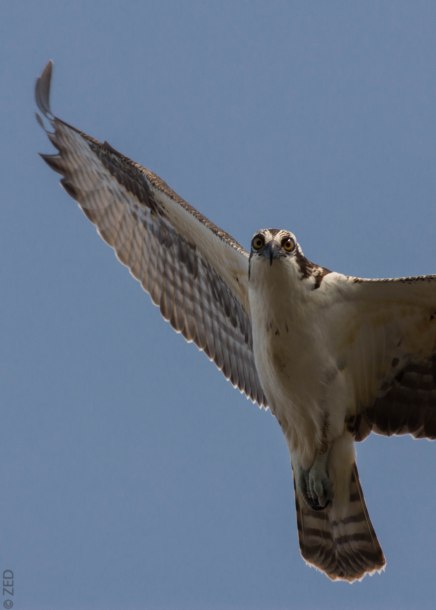
osprey

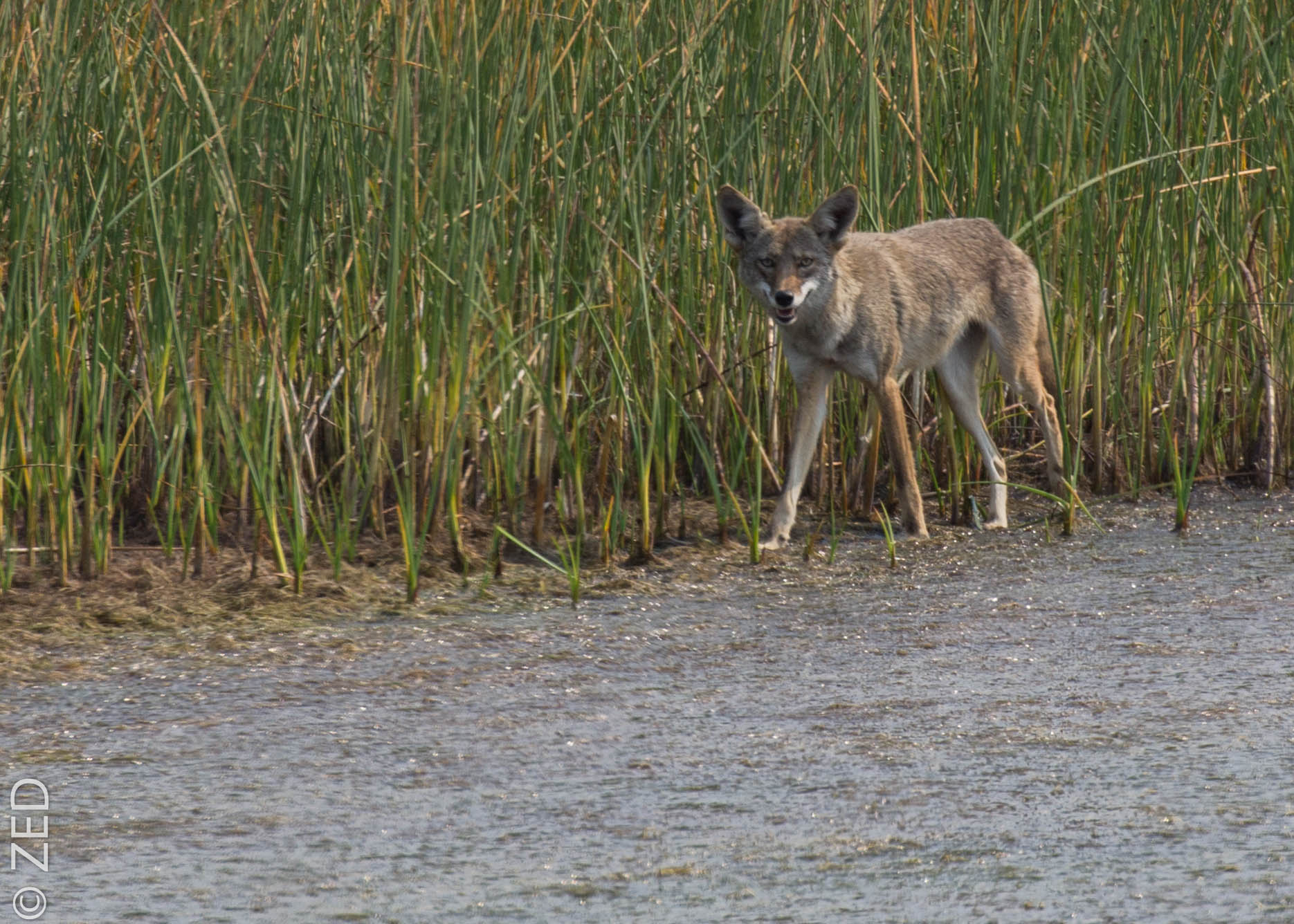
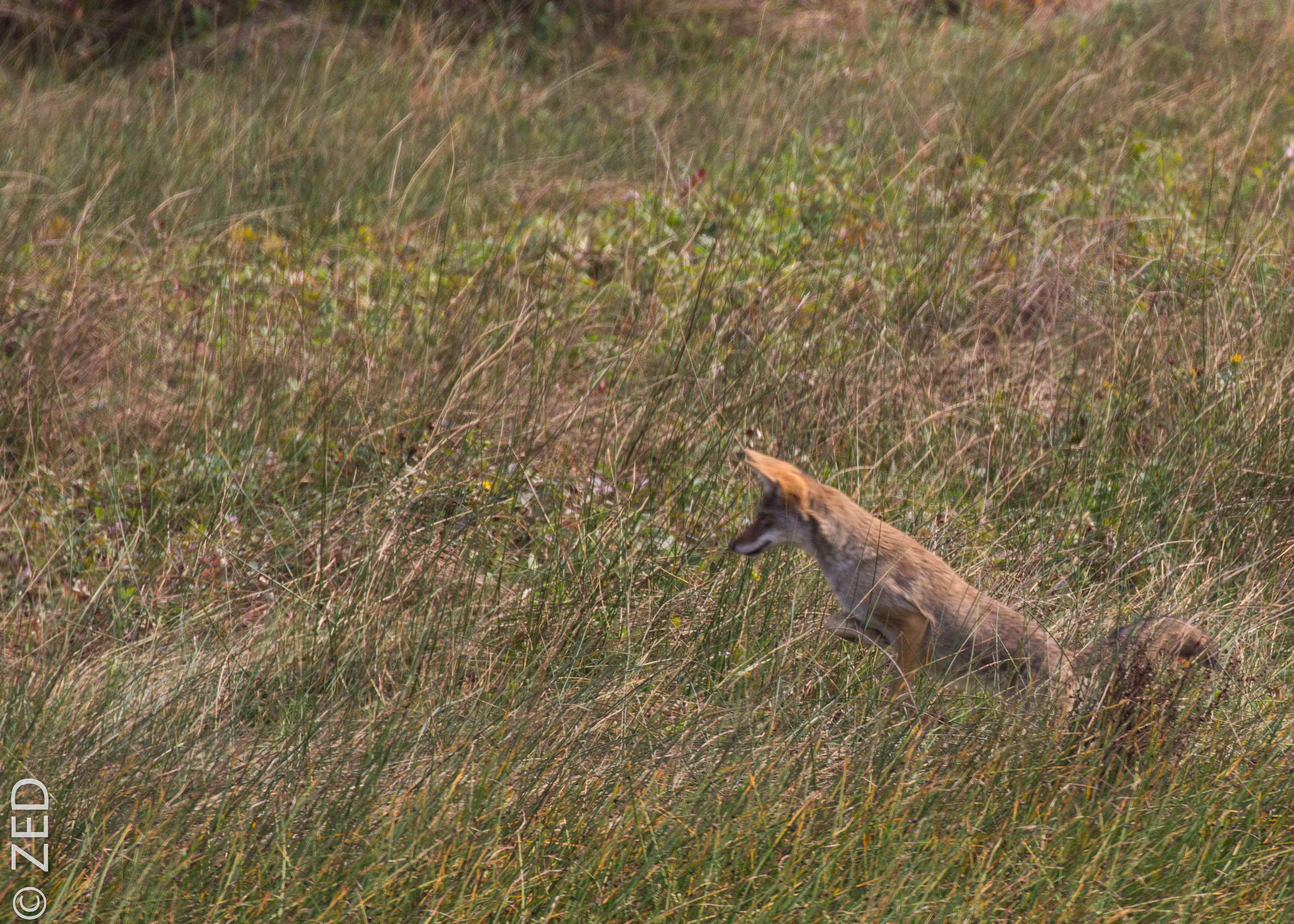
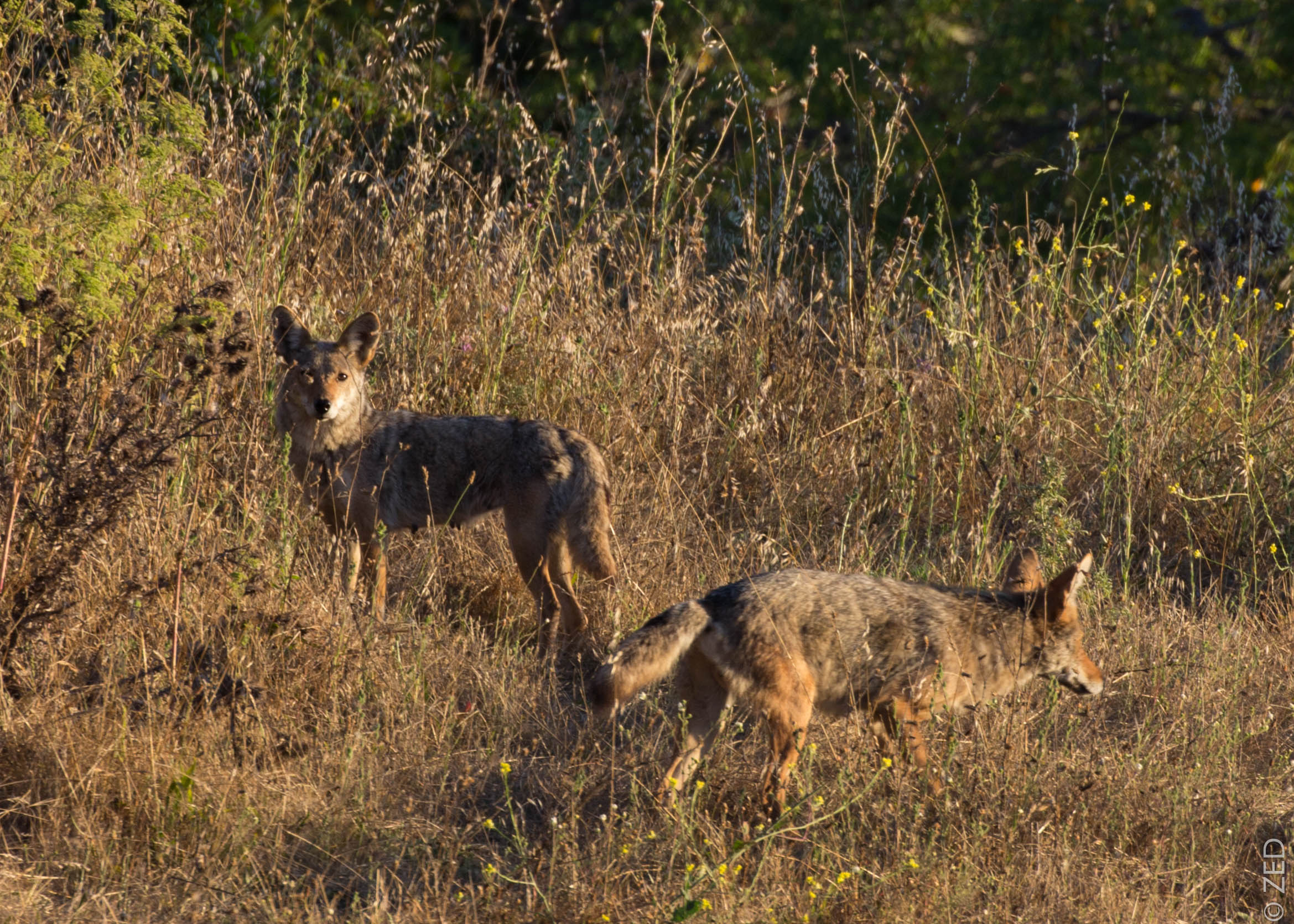
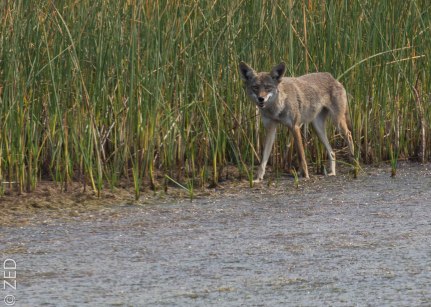
We watched a coyote hunting from across the creek for quite some time, it seemed to be stalking through the high grass, occasionally stopping to dig or pounce. Sometimes it would get really excited and stand with its ears facing the ground, while its tail whirled around like a helicopter blade behind it! It made a short trip to the waters edge, but all the water fowl were already tuned-in to its presence. A doe and two fawns watched it with interest from within 50 feet – the coyote didn’t even give them a look. Rodents and insects seemed to be on the menu today. So fun to watch this guy hunt!
IMG_1002 v1-2

IMG_1003 v1-2

The pounce!

IMG_1007 v1-3

IMG_1008 v1-2

We had quite a few nice red fox trails to study today, this is a good example of a classic red fox track (front foot on the bottom). The diagnostic “bar” in the metacarpal pad of the front foot is very evident in this track – it’s not always clear, but if it is it can be one helpful sign (of many) to differentiate red fox tracks from coyote tracks.

OLYMPUS DIGITAL CAMERA

I didn’t get a picture, but we observed what we believed to be two or three pomarine jaegers (a type of flying sea bird) offshore attacking some elegant terns out at an area where many birds were feeding. It was my first sighting of this species, and evidently it’s uncommon to see them from shore (usually they are seen from boats further out to sea). There were quite a few dead murres along the beach, these are also ocean-going birds, but curiously they come onshore almost exclusively to die. Often people see these birds on the beach and try to save them, not realizing that they are already doomed. Many a kind-hearted person has been confused and heart-broken trying to help these birds. I photographed one last year down towards Moss Landing near Monterey. They look a bit like penguins when they are sitting or moving out of the water.

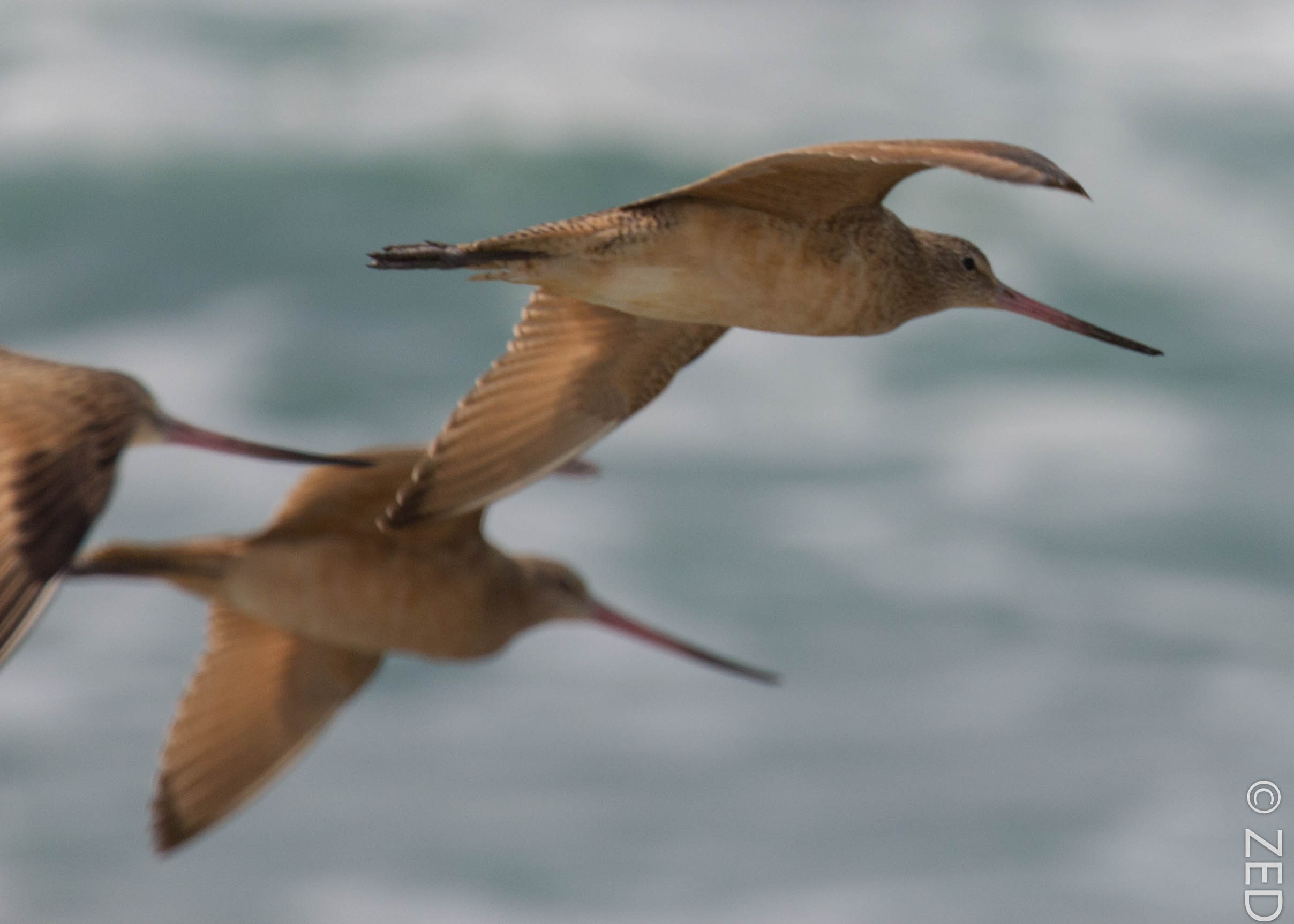
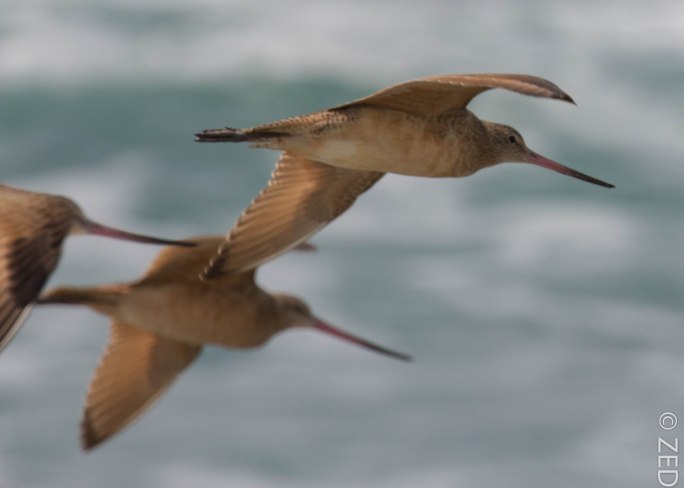
Down on the beach there was a large flock of marbled godwits feeding in the surf line, using their long beaks to probe in the sand for crustaceans – occasionally they would flush and fly down the beach all together.
IMG_1016 v1

Great day out on the coast, very thankful to live close by to such natural beauty.

20150907 owl pics

IMG_0969 v1-2

great-horned owl / Contra Costa County CA (East Bay Regional Parks)

IMG_0966 v1

Tonight I gifted with another evening watching the sunset with Lady Owl (of the “bottom of the hill” pair) – another exquisite early autumn night.

20150906 observations of the season

One of my favorite times of year – things are shifting! The patterns are changing all over, some more subtle than others. I’m hearing and seeing new birds as they pass through on their way south, and the resident birds and animals are starting to shift their patterns as well. Fox squirrels seem to be everywhere I turn, busy running and gathering. The mornings are sunny and there’s a slight crispness in the air starting to build, almost a bit electric. The light has a softness to it, despite the heat that today was above 90 deg F in the immediate Bay Area. Not easy weather, to, um, weather, for a landscape already parched with drought. Even the winds have gone elsewhere, allowing a degree of peace to settle over the stressed landscape. Sitting still I can hear bugs crawling through the leaves, and the occasional falling leaf even makes a sound as it falls through the dry undergrowth to join its crunchy fallen partners on the ground, who are now having the chance to use their voice – while not drowned out by Wind – to announce Coyote or Deer moving nearby. So fun!

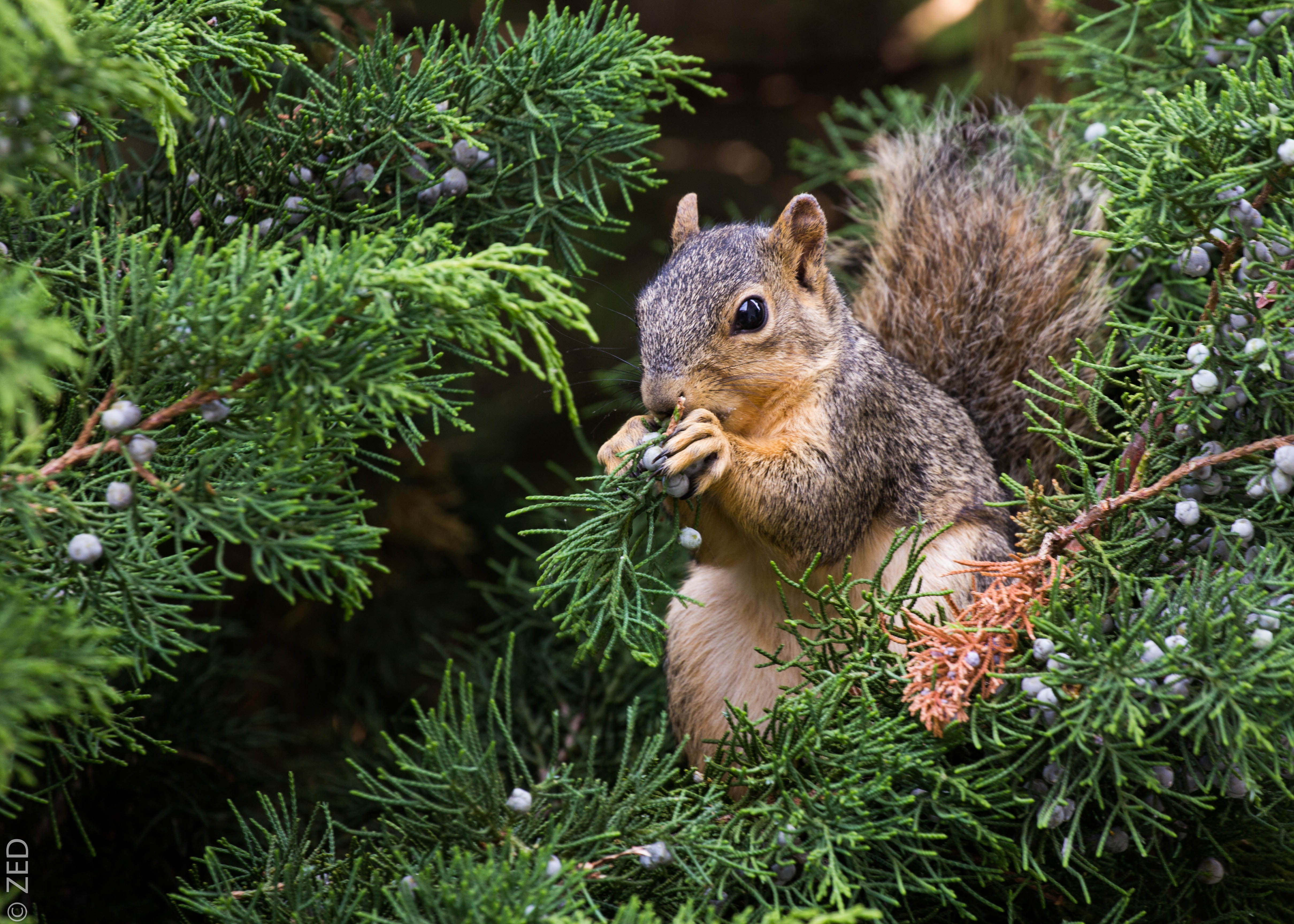
IMG_0917 v1-2fox squirrel chowing on juniper berries

Things are incredibly dry here – you can read about it all over in the news, worst drought in over a century and possibly since settlers have been keeping records here. But, to really understand it all one needs to do is to go out to FEEL it and see it yourself. Springs and creeks are dry. The evergreen trees, such as the live oaks, are even losing some of their leaves (which I understand is a drought response tactic to minimize moisture loss). Many of the under story leaves and any leaves not at the top of the tree or on the exteriors have fallen away, to varying degrees, depending on the location of the trees. I’m able to see wood rat nests high up in canopies that were very difficult to see before. Even the California buckeyes, who are some of the first obvious beacons of autumn since they lose their leaves before most other deciduous trees, have been bare for weeks in some locations. Redwoods and cedars are looking wilted and brown. Even the non-native eucalytpus trees look scraggly. A fine dust encapsulates many of the leaves, and the hillsides are painted brown with wilted grasses.

I’m happy to report that I’m doing my best to help conserve water – infrequent showers, I don’t clean my bathroom, and I occasionally drink distilled beverages instead of water (the distillation process releases water back into the atmosphere – that’s science). Little gestures, they add up.

One benefit of the trees being thinned out (if one wants to be a “glass half-full type of person” – though a water analogy is probably not appropriate here), is that there aren’t many places for a large bird to hide. Until about two weeks ago, I was seeing with some regularity a family of Cooper’s hawks hanging in one particular area. I thought it was interesting that they were all still together this late in the season – the migration has begun for many birds already. The first day that I saw them, about three weeks ago, two juveniles suddenly appeared indiscreetly in the branches 20 feet above my head, crashing around either chasing each other or chasing potential prey (a bird). They finally settled into the interior live oaks next to me, and soon were joined by an adult. A few days later, I saw the same trio in a nearby tree near sunset. I don’t know much about these hawks’ chick-rearing patterns, but I couldn’t help but wonder if these hawks stay around parents longer than some other raptor species to learn from them. It could be a late nest, but it seems extremely late if so. Cooper’s hawks (and sharp-shinned hawks, their mini look-alikes) often tandem hunt in pairs, one flushing birds as the other wake hunts and catches them. Could it be that this is a learned behavior?

Of course I must mention the owls.

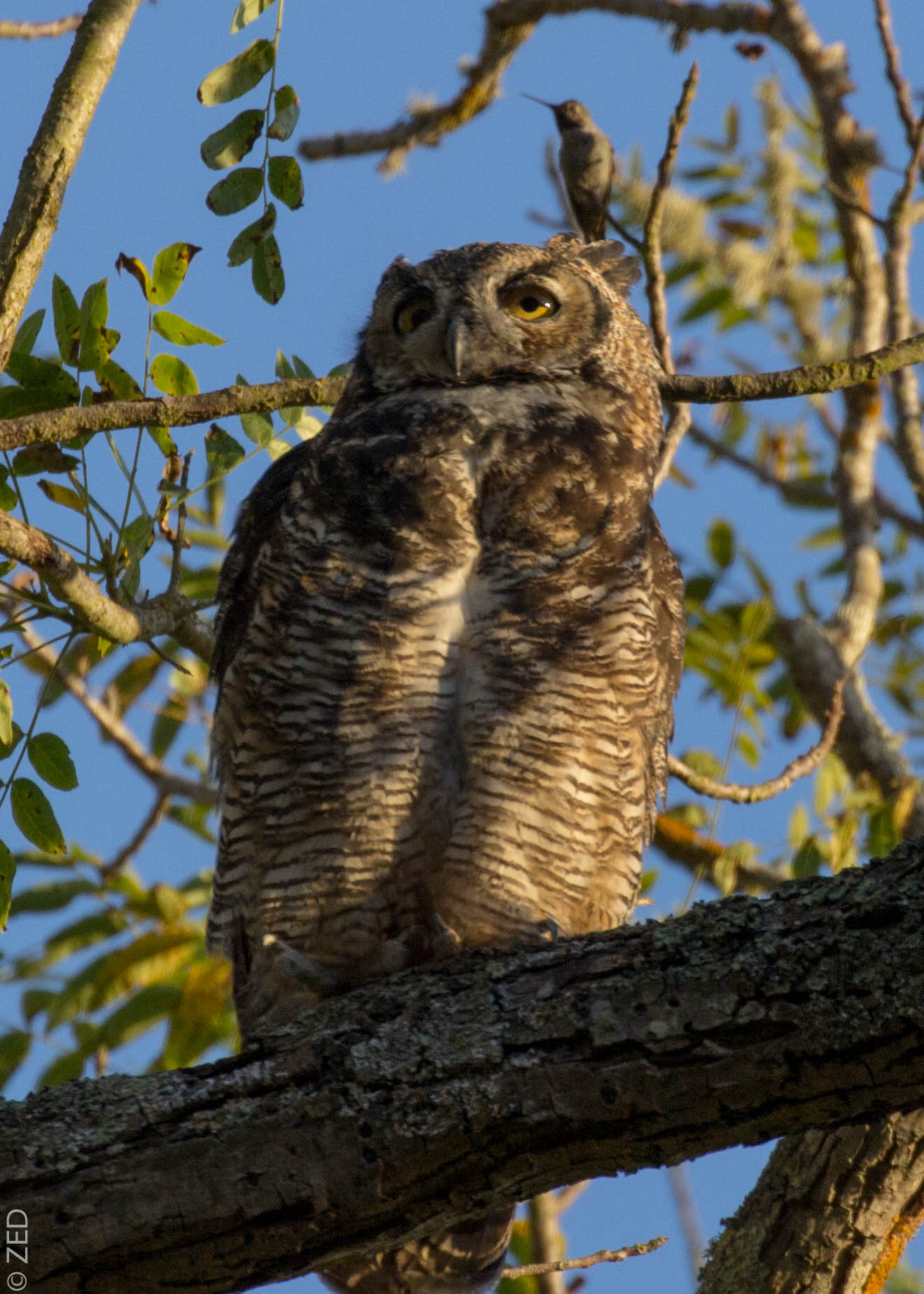
IMG_0950 v1great-horned owl

This gal has been very visible the last few nights in her “typical” spot, though it’s been a number of months since I’ve seen her with regularity. The male and the female do not seem to be together much this time of year, and I am convinced the male is roosting in a grove of trees about 1/2 mile away from the spot the females frequents, an area that seems to be their core area during mating season. She let me watch her as she was waking up two nights ago, doing some preening and stretching, then she hit “snooze” for a bit after she placed a hex on someone or something evidently right behind me …

IMG_0936 v1-3

IMG_0951 v1

This photo was interesting, I wish I could have gotten both birds in focus – do you see it?

IMG_0940 v1

Hummingbird came in to scold the owl! It hung around for a minute or so, just behind the owl.

IMG_0941 v1

The next night, I wandered without my camera but was excited to get to spend some time with the female owl again. After she flew off to look for breakfast, I followed her out a path under the fading light of the sun that had already disappeared behind the mountains to the west. As I was about to crest a hill and descend into a small valley, another raptor caught my eye – juvenile cooper’s hawk! Likely one of the juveniles from the trio described earlier, though I didn’t see any of the others. This young one did some flights through some small oaks attempting to scare up some birds from their night perch, then having failed to get any takers, it landed on an old wood fence post and began to vocalize repeatedly – in what felt to me like frustration and irritation. It’s not easy being a young raptor (many species up to 70% don’t survive their first year). The young one made another attempt, alighted on a high tree nearby, then took off after three flying birds (who were not keen on the company).

As it finally flew off, I heard some coyotes howling just beneath me! I silently walked in that direction – then … crunching! Coming my way! I froze, and sure enough one, then another, then another appeared in the fading light. They didn’t seem to see me (or maybe they just didn’t care), once they all were in line together they trotted with purpose to the south to start their nightly excursions.

Last sounds I heard were the crickets calling as I walked through the “portal,” and the sound of cars from the highway took over the soothing sounds of nature. I’m so grateful for the parks that we have here in the Bay Area, like many of the creatures around, I wouldn’t survive here without them.

2015 august 30 – california CONDOR chick!

Quite a site, quite a sight! A day to remember.

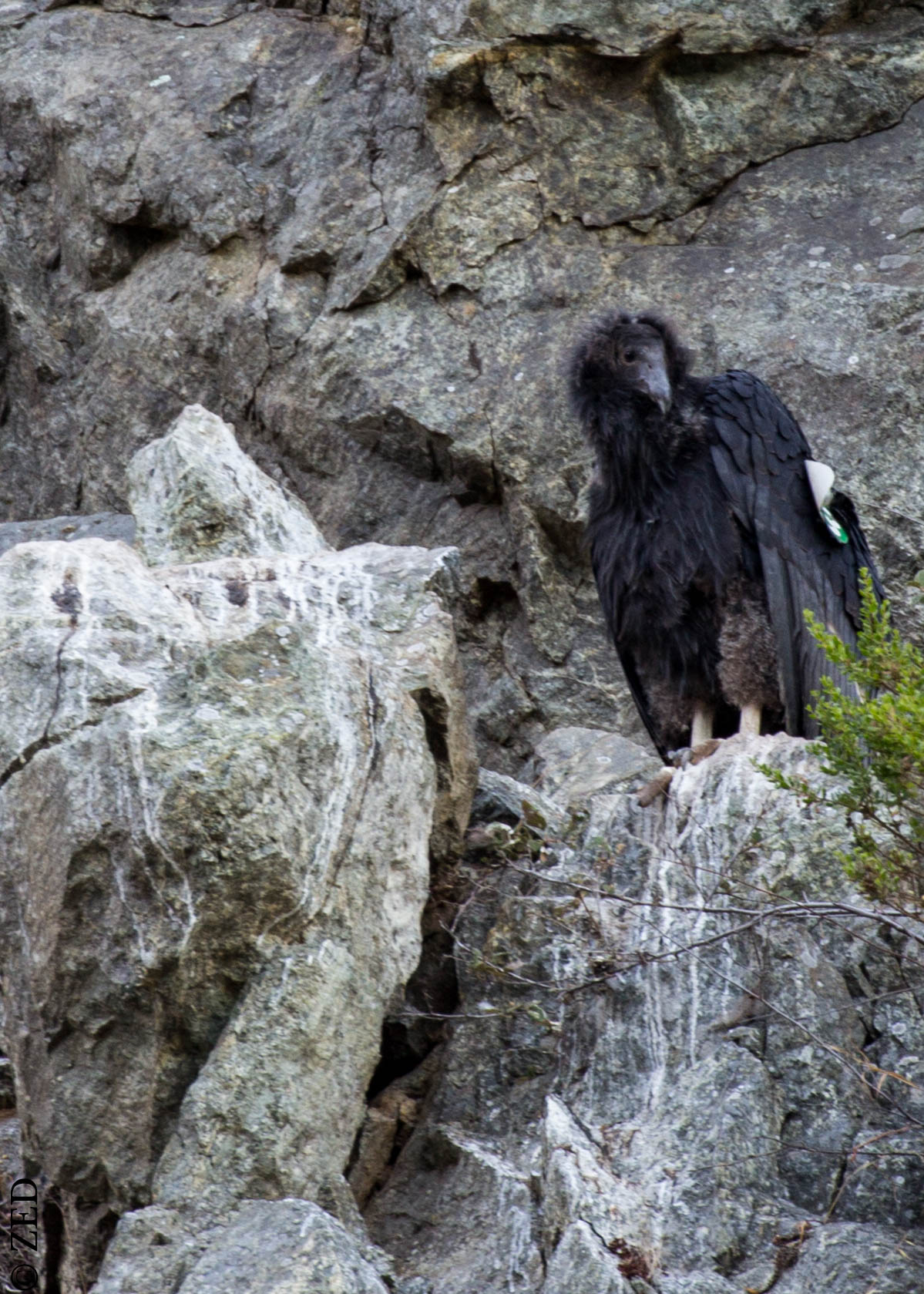
California Condor chick / Ventana Wilderness of Los Padres National Forest near Big Sur

California Condor chick / Ventana Wilderness of Los Padres National Forest near Big Sur, CA

Rites of passage, flights to come. Big day. Big sky. Many thanks.

This is a California Condor chick, almost ready to fledge, at a cliff near Big Sur in the Ventana Wilderness, part of Los Padres National Forest. An incredibly endangered bird, there are less than 500 in the world (of which only about 240 are free-flying and wild, with only about 70 in this area of California) – brought back from a population of just 22 remaining in 1987! Thanks to the incredible dedication and cooperation of many groups, these birds have a second chance.

California Condor chick / Ventana Wilderness of Los Padres National Forest near Big Sur

California Condor chick / Ventana Wilderness of Los Padres National Forest near Big Sur, CA

The California Condor adult has a wingspan of almost 10 feet! They have the longest wingspan of any bird in North America, and there are only a few types of birds that weigh more (two types of swans). These birds live 60 years in the wild, and they are very social birds – the young take many months to leave the nest, and once they do they stay around to learn “condor life” from their parents and community for quite a while.

One flying above leaves me breathless, making it easier to hear the sound of the wind flowing through its feathers as it soars close over my head. It doesn’t seem possible that a bird this size can fly, until it leaps off a perch into the sky above the sea cliffs and extends those giant wings. THOSE WINGS! Seeing one flying above the redwood trees and this steep, rugged wilderness, I am instantly transported to another time, a time when things were much bigger and time moved a little bit slower. We could all use a little of that medicine.

California Condor chick / Ventana Wilderness of Los Padres National Forest near Big Sur

California Condor chick / Ventana Wilderness of Los Padres National Forest near Big Sur

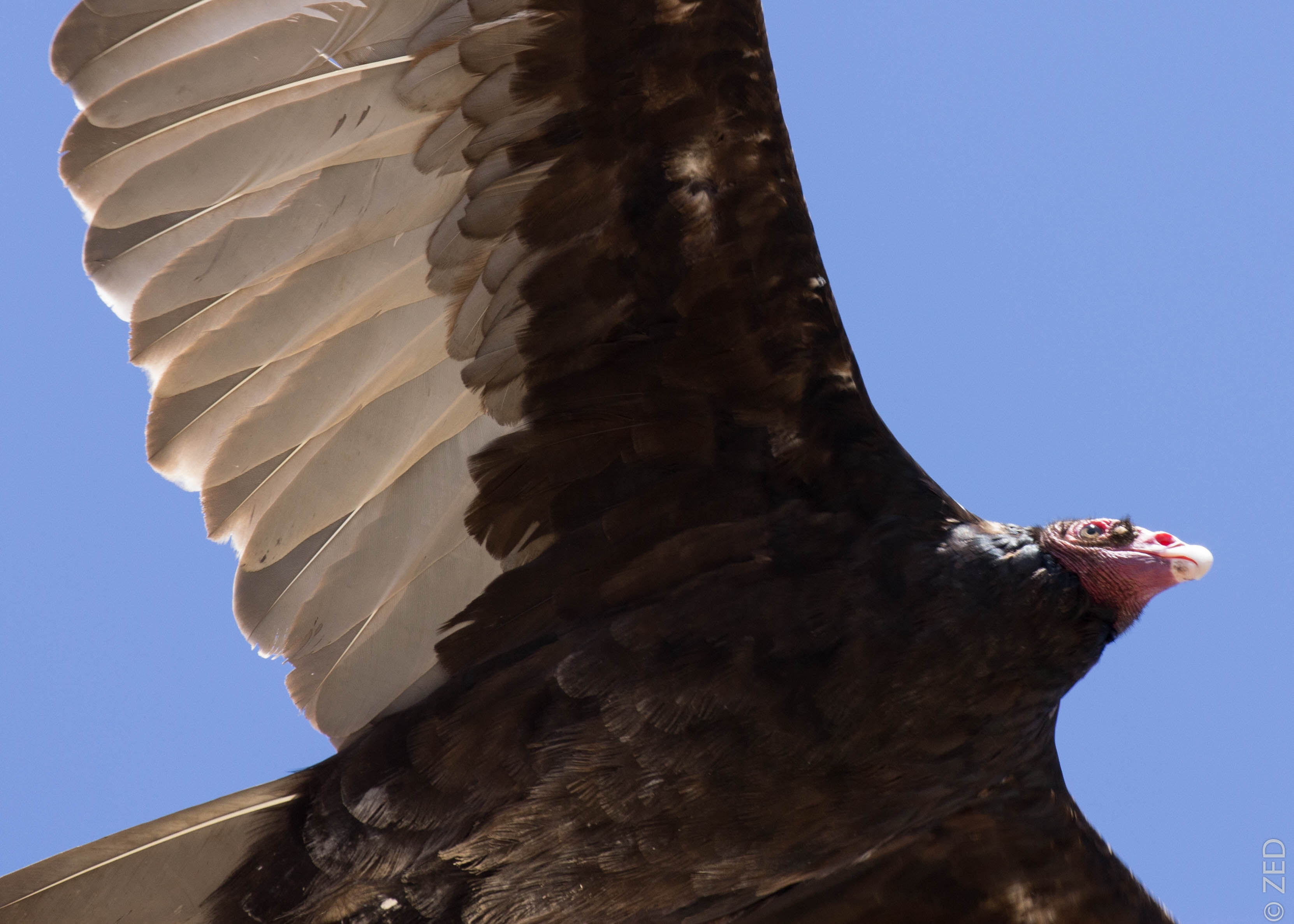
These birds are still desperately in need of assistance to survive in the wild, the biggest risks being suitable habitat and having food that isn’t contaminated with lead bullets. Lead poisoning is one of the biggest risks to these birds’ survival, since they feed only on prey that is dead. Hunters and ranchers using non-lead bullets is a huge help, not just to these birds who are scavengers, but to all the scavengers including bears, foxes, coyotes, golden eagles, turkey vultures, bald eagles, jays, mice, and more. Keeping lead and all types of poisons out of the food chain is key to a healthy ecosystem. There are many incredible non-poison predator deterrent systems being developed that are incredibly effective and have minimal impact on the food chain. Check out Project Coyote for more great information about non-lethal predator control – and there are many other resources as well (contact me for more).

To help with the effort to restore condors to the skies, with a donation or just to see some really cool webcams and pictures, check out the Ventana Wildlife Society’s webpage and blog!

Thank you Condors and the rugged Ventana Wilderness for reminding me of what is true.

20150711 – finally!! young owls

I had pretty much given up on seeing baby owls in the area I typically roam, despite there being about five pairs that I see with some regularity. I’ve seen some in other areas, all fledged, flying and without any downy white feathers left on them. Tonight during twilight with very little light left in the sky I finally heard that familiar sound – a young owl! I made my way in the direction of its call, and sure enough, there it was – along with a brother or sister nearby. The pictures are rough with so little light, but they allowed me to get very close to them as we looked at each other in wonder.

young great-horned owl

young great-horned owl

young great-horned owl

young great-horned owl

young great-horned owl

young great-horned owl

young great-horned owl

young great-horned owl

These two still have some of their white downy feathers, but they are able to fly. They are from a nest that is likely on private property right next to the park – I see the parents with some frequency in the park, but this is the first time I’ve seen or heard young owls from any of the three pairs of adult owls that I see most often. This pair also had at least one youngster last year. I’m excited to see them again soon, maybe even with some better light.

20150711 coyotes n crows

adult feeding young crow a goose berry

adult feeding young crow a goose berry in my backyard

coyotes

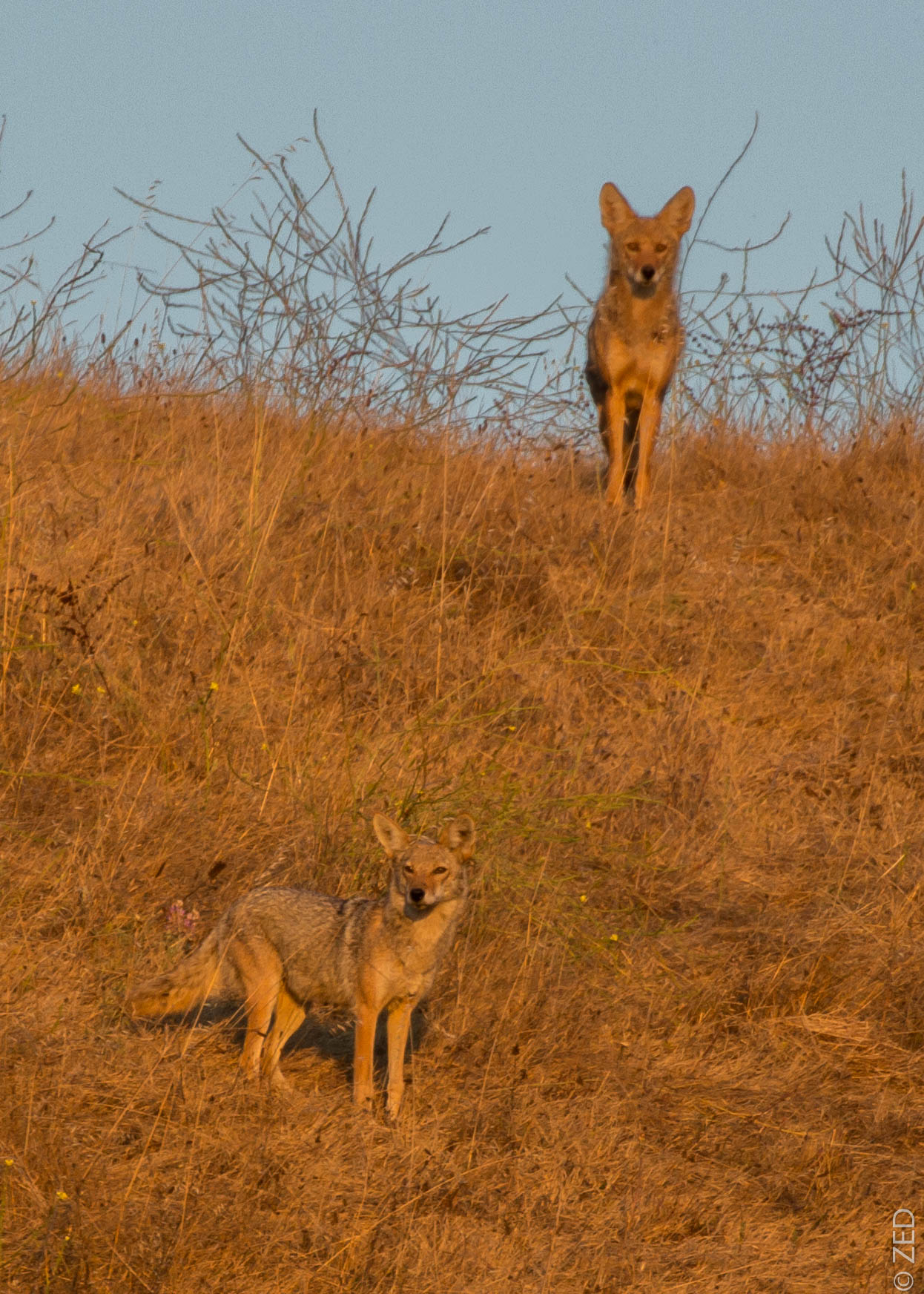
coyotes in an East Bay Regional Park

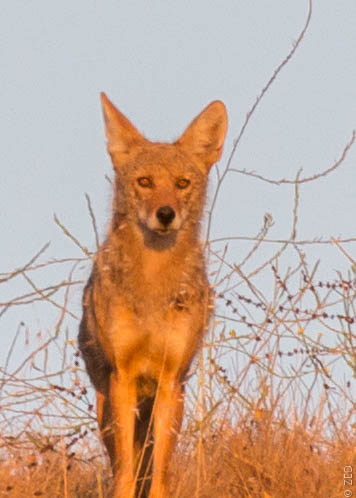
the eyes on the top coyote in the above picture have such a wild intensity in the setting light of the sun, below is an extremely digitally zoomed-in close-up of that coyote. beautiful, wild, and a little bit eerie! i did nothing to enhance its eyes.

IMG_0563 v1 - Copy

possibly the same pair the previous night:

IMG_0536 v1-3 - Copy